

Snapchat has always had a way of turning everyday interactions into something a little more… game-like. Streaks, scores, emojis—you name it. But Snapchat Planets? That one caught people off guard.
Suddenly, your friendships weren’t just chats or streaks anymore. They were a solar system. And depending on where you landed, you were either feeling pretty good… or quietly questioning everything.
Let’s get into what Snapchat Planets actually are, how they work, and why they’ve become such a strangely emotional feature.
The basic idea behind Snapchat Planets
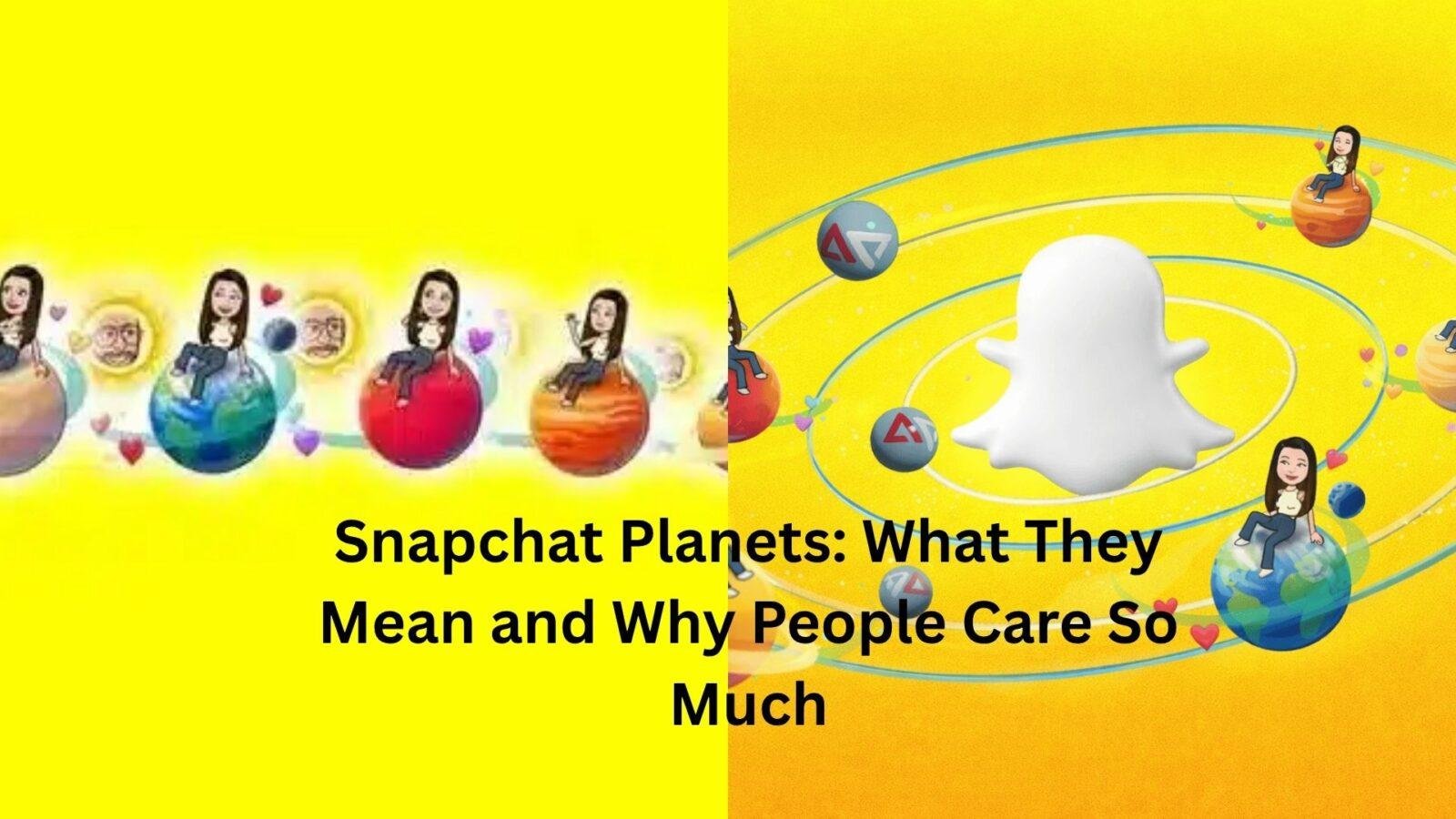
Snapchat Planets are part of Snapchat+ (the paid subscription). If you’re subscribed, you get access to a “Friend Solar System.” It sounds cute—and it is—but there’s a subtle intensity baked into it.
Here’s the core concept:
You are the Sun. Your closest friends are assigned planets based on how much you interact with them.
The more you snap and chat with someone, the closer their planet is to you.
So your number one best friend? They’re Mercury.
Your eighth? Neptune.
Simple enough. But it doesn’t always feel simple.
What each planet represents
Snapchat doesn’t just throw random planets around. Each one represents a ranking in your top eight friends.
Mercury is your closest friend—the person you interact with the most. That’s your daily go-to, the one you send random updates to, the one who sees your blurry late-night selfies.
Venus is second. Still close, just slightly less frequent.
Earth is third, Mars fourth… all the way out to Neptune at number eight.
Visually, Snapchat even styles each planet differently. Mercury might look small and close, while Neptune sits far out with a cooler, more distant vibe. It’s a clever touch, and honestly, it makes the whole thing feel more real than it should.
And that’s where things get interesting.
Why people get weirdly invested in it
Let’s be honest—ranking friendships is a dangerous game.
You might think you don’t care. Then you check, and suddenly you’re asking yourself questions like:
“Wait… why am I Mars now?”
It doesn’t take much. One person starts snapping someone else more often, and your position shifts. No announcement. No warning. Just a quiet planetary demotion.
It’s subtle, but it hits.
Imagine this: you’ve been talking to someone every day. You assume you’re close. Then you check Snapchat Planets and realize you’re not even in their top three.
That stings a little.
Not because the system is perfect—it’s definitely not—but because it reflects something real: attention.
It’s not really about friendship—it’s about activity
Here’s the thing most people figure out eventually.
Snapchat Planets don’t measure how much someone likes you. They measure how often you interact.
That’s a big difference.
You could have a close friend you barely snap because you text or call instead. Meanwhile, someone you send memes to daily could outrank them.
So if you see someone ranked lower than expected, it doesn’t necessarily mean anything emotional. It just means your communication habits are different.
Still… knowing that doesn’t always stop the feeling.
A small example that feels very real
Picture this.
You’ve got a friend named Alex. You’ve known each other for years. You hang out, talk about real stuff, share life updates.
But on Snapchat? You’re not super active with each other.
Now there’s someone else—Jamie. You send random snaps back and forth all day. Nothing deep. Just constant interaction.
Guess who’s Mercury?
Jamie.
Alex might not even make the top five.
If you look at the planets without context, it tells a completely different story than your actual life.
The subtle pressure it creates
Snapchat didn’t invent social comparison, but this feature definitely feeds into it.
Once you know there’s a ranking, it’s hard not to notice it.
You might find yourself thinking:
“Should I snap them more?”
“Did they stop replying as much?”
“Are they closer to someone else now?”
Even if you don’t act on those thoughts, they pop up.
And for some people, it quietly changes how they use the app. They start snapping certain people more often—not because they want to, but because they don’t want to lose their spot.
That’s where things can get a little unhealthy.
But it’s also kind of fun
To be fair, not everyone spirals about it.
Some people treat Snapchat Planets like what they are—a feature, a curiosity, a little digital toy.
They check it once, laugh about it, maybe send a screenshot to a friend like,
“Look, you’re literally Mars 💀”
And that’s it.
Used that way, it’s harmless. Even entertaining.
The problem only starts when you treat it like a scoreboard for your relationships.
How accurate is it, really?
Not very. At least not in the way people assume.
Snapchat’s algorithm looks at things like:
- How often you send snaps
- How often you chat
- How consistently you interact
But it doesn’t understand context. It doesn’t know who you trust, who you call when something goes wrong, or who you’ve known for ten years.
It’s tracking behavior, not meaning.
So yes, it’s accurate in terms of activity. But it’s incomplete when it comes to actual connection.
Why Snapchat added it in the first place
Features like this aren’t random.
Snapchat knows that people enjoy seeing their relationships visualized. It makes the app feel more personal. More dynamic.
But there’s another layer: engagement.
If you’re checking your friend rankings, thinking about interactions, and sending more snaps to maintain them—you’re spending more time on the app.
It’s subtle, but effective.
And to be clear, that doesn’t make it evil. It just means you should be aware of what’s going on behind the scenes.
Should you take Snapchat Planets seriously?
Short answer: no.
Longer answer: it depends on how you use it.
If you’re just curious, it’s fine. If you enjoy seeing how your interactions shift over time, go for it.
But if it starts affecting how you feel about your friendships—or worse, how you behave in them—it’s worth stepping back.
A real relationship doesn’t need constant snapping to stay strong.
And if you’ve ever had a friend you barely text but instantly pick up with when you talk, you already know that.
A healthier way to look at it
Think of Snapchat Planets like a snapshot of your communication habits, not your relationships.
That shift in perspective helps a lot.
Instead of asking, “Why am I not Mercury?” you start asking, “How often do we actually talk on here?”
It turns it into something neutral instead of emotional.
And honestly, that’s a better place to be.
When it can actually be useful
There is one upside people don’t talk about enough.
Snapchat Planets can show you patterns you might not notice otherwise.
Maybe you realize you’ve drifted from someone you used to talk to every day. Or you notice you’re spending most of your time chatting with people you don’t actually feel that close to.
That awareness can be helpful.
Not in a dramatic, life-changing way—but in a small, “huh, that’s interesting” kind of way.
Final thoughts
Snapchat Planets are one of those features that seem simple on the surface but hit deeper than expected.
They turn something invisible—your daily interactions—into something you can see and compare. And once it’s visible, it’s hard to ignore.
Here’s the thing, though.
No app can map your relationships perfectly. Not with planets, not with emojis, not with scores.
So if you check your solar system and something feels off, don’t jump to conclusions. Look at the bigger picture.
Who do you actually talk to when it matters?
Who shows up for you?
Who do you enjoy being around?
That’s your real inner circle. The rest is just orbit.