

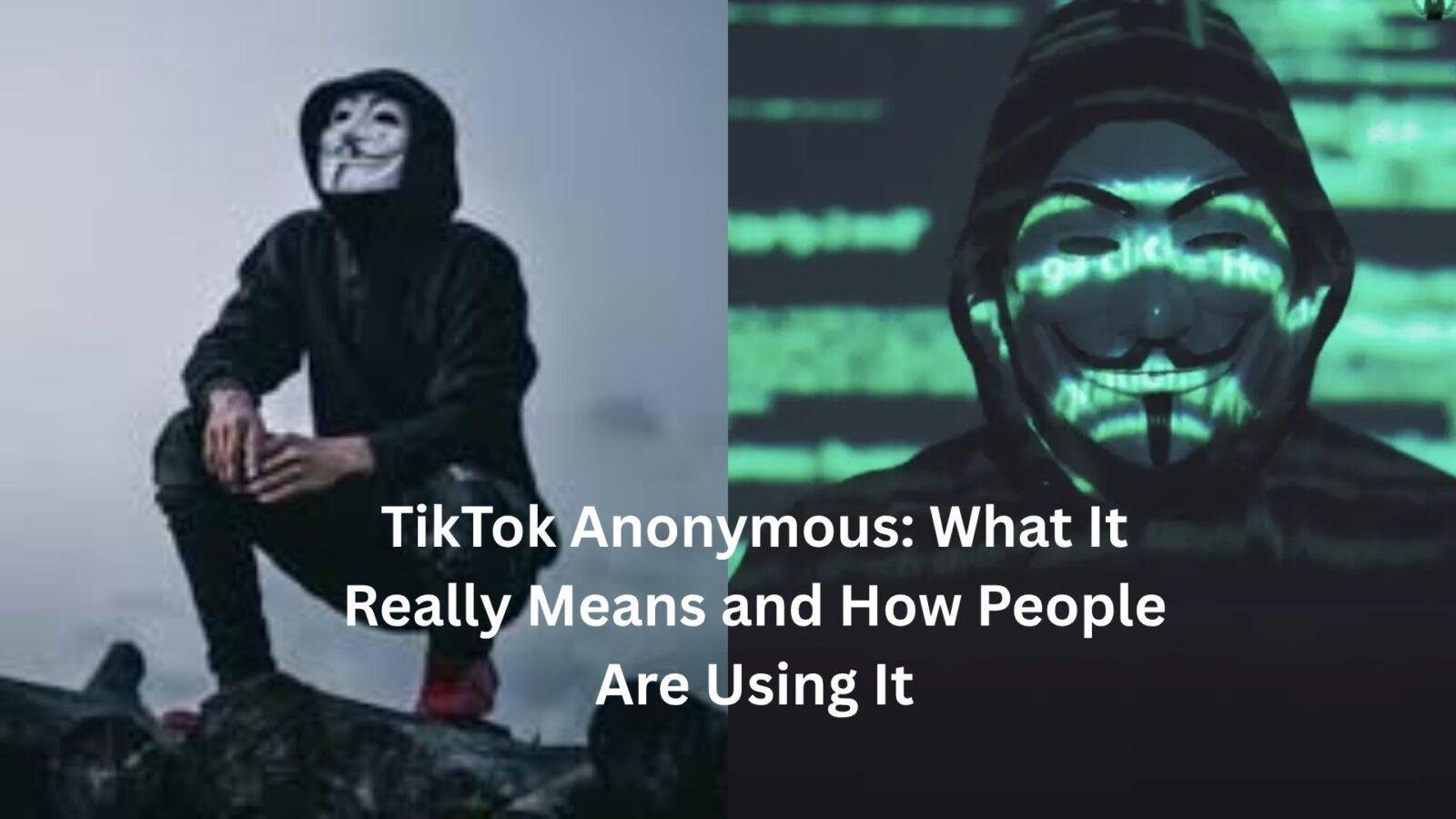
There’s something oddly appealing about being unseen online.
TikTok, for all its bright filters and viral dances, has quietly become a place where people experiment with anonymity. Not completely invisible—but just hidden enough. No real name. No face. No obvious identity. And somehow, that changes everything.
If you’ve ever hesitated before posting, wondering who might see it or what they’d think, you already understand the pull of “TikTok anonymous.” It’s not just a trend. It’s a shift in how people want to exist online.
Let’s dig into what that actually looks like in real life—and why more people are choosing it.
What “TikTok Anonymous” Actually Means
First thing to clear up: TikTok doesn’t have a built-in “anonymous mode.”
So when people talk about being anonymous on TikTok, they’re usually doing one (or more) of these things:
They create accounts without their real name
They avoid showing their face
They use voiceovers instead of speaking on camera
They build entire identities around themes, not people
Think of those accounts that post Reddit stories with gameplay footage in the background. Or the ones sharing “confessions” with text on screen and some lo-fi music. You don’t know who’s behind them—and that’s the point.
It’s not total anonymity like an old-school forum. But it’s enough distance to feel safe.
Why People Are Choosing to Stay Anonymous
Let’s be honest—being visible online comes with pressure.
There’s the obvious stuff: judgment, criticism, random strangers leaving weird comments. But there’s also something more subtle. Once your identity is tied to your content, everything feels a bit… permanent.
Anonymity loosens that grip.
Someone might start an anonymous TikTok to talk about their job struggles without coworkers finding out. Or share mental health experiences without attaching it to their real-life identity. Or even just test content ideas without the fear of embarrassment.
Here’s a simple scenario: imagine you want to talk about quitting your career and starting over. If your name and face are attached, you might hold back. But behind a faceless account? You might say exactly what you mean.
That freedom is the real appeal.
The Rise of Faceless Content
Scroll TikTok for ten minutes and you’ll notice a pattern.
Not everyone is dancing in front of a camera anymore. A lot of content doesn’t show a person at all.
You’ll see:
Cooking videos filmed from above
Storytelling with stock clips
Motivational text over calming visuals
Gaming footage with narrated experiences
These aren’t low-effort. In many cases, they’re carefully crafted. And they work.
Why? Because the focus shifts from the creator to the content.
It’s a bit ironic. TikTok started as a personality-driven platform, but now some of the fastest-growing accounts are the ones that deliberately remove personality from the visuals.
Or at least… hide it.
Does Anonymous TikTok Still Build an Audience?
Short answer: yes.
Longer answer: it depends on how you approach it.
People don’t follow accounts just for faces. They follow consistency, value, and emotional connection. And those can exist without identity.
Think about storytelling accounts. If someone posts gripping, relatable stories every day, viewers come back. They don’t need to know who’s behind the screen—they just want the next story.
Same goes for niche content. Finance tips. Productivity hacks. Even humor.
The catch? You have to be intentional.
Without a visible personality, your content has to carry more weight. Your tone, your pacing, your ideas—they matter more because there’s nothing else to lean on.
The Trade-Offs No One Talks About
Anonymity sounds great, but it’s not perfect.
For one, it can limit trust.
If you’re giving advice—especially in areas like health, money, or relationships—people naturally want to know who you are. Credentials matter more when your identity is hidden.
There’s also the issue of connection. A face creates familiarity. It builds a kind of relationship, even if it’s one-sided. Without that, engagement can feel a bit colder.
And then there’s growth beyond TikTok.
If you ever want to turn your account into something bigger—a brand, a business, a personal platform—being anonymous can make that harder. Not impossible, just… more complicated.
You might find yourself at a crossroads later: stay hidden, or step into the spotlight.
How People Stay Anonymous (Without Making It Obvious)
The interesting part is how subtle anonymity can be.
It’s not always about hiding completely. Sometimes it’s just controlling what’s revealed.
People use:
Usernames that don’t hint at identity
Generic or themed profile pictures
Voice changers or text-to-speech
Angles that avoid showing faces
Content that focuses outward, not inward
But the smartest creators don’t make anonymity the “feature.” They make it invisible.
You don’t watch their content thinking, “Who is this?”
You watch it thinking, “That was interesting.”
That’s the difference.
Is It Actually Safer?
It can be—but don’t assume it’s foolproof.
Even anonymous accounts leave digital traces. Reused usernames, voice recognition, background details—these things add up. Someone determined enough can sometimes connect the dots.
But for everyday use, anonymity does reduce exposure.
It creates a buffer between your online presence and your real life. That alone can make posting feel less risky.
Still, it’s worth being mindful. Avoid sharing identifiable details without realizing it. It’s easy to slip up when you feel “hidden.”
The Psychology Behind It
There’s a deeper layer here.
When people are less identifiable, they often become more honest. Sometimes more creative. Sometimes more extreme, too—but that’s another conversation.
On TikTok, anonymity tends to bring out vulnerability.
You’ll see accounts talking about grief, burnout, identity struggles—things people might never share on their personal profiles.
It’s not just about hiding. It’s about expressing without filters.
And for viewers, that honesty can feel refreshing. Even comforting.
Should You Try It?
That depends on what you want.
If you’re curious about creating content but feel held back, anonymity is a solid way to start. It lowers the stakes. You can experiment, learn, and build confidence without putting your full identity on display.
If you’re aiming to build a personal brand tied to who you are, going anonymous might slow you down. Not ruin it—but change the path.
There’s also a middle ground. Plenty of creators start anonymous and gradually reveal more over time. A voice first. Then maybe a partial face. Then eventually, full visibility.
You don’t have to decide everything upfront.
A Quiet Shift in Online Culture
Here’s the thing—this isn’t just about TikTok.
It’s part of a broader shift.
People are rethinking how much of themselves they want online. Not everyone wants to be searchable, recognizable, or constantly “on.” There’s a growing preference for control over visibility.
TikTok anonymous fits right into that.
It gives people a way to participate without fully exposing themselves. To create without committing their identity to it. To test ideas without long-term consequences.
And honestly, that’s a pretty reasonable response to how intense online spaces have become.
Final Thoughts
Anonymity on TikTok isn’t about hiding for the sake of it. It’s about choosing what to share—and what to keep.
For some, it’s a stepping stone. For others, it’s the whole strategy.
Either way, it opens the door to a different kind of creativity. One that isn’t driven by appearance or personal branding, but by ideas, storytelling, and consistency.
If you’ve been sitting on the edge, unsure whether to post, this might be the nudge you need.
You don’t have to show everything to say something worth hearing.