

Timing on Twitter isn’t everything—but it’s a lot more important than people like to admit.
You can write something sharp, funny, or genuinely useful, hit “post,” and… nothing. A few likes. Maybe a reply if you’re lucky. Meanwhile, someone else tweets a half-baked thought and it takes off. That gap often comes down to timing.
Not magic. Not luck. Just showing up when people are actually there to see you.
Let’s get into what really affects the best time to post on Twitter—and how to find your own sweet spot without overthinking it.
The simple truth: Twitter is a timing game
Twitter moves fast. Faster than most platforms. A tweet’s lifespan is short—often just minutes before it gets buried.
That’s why timing matters more here than on Instagram or LinkedIn. You’re not just posting content. You’re dropping it into a live stream that never stops flowing.
Here’s the thing: if your audience isn’t online when you tweet, it doesn’t matter how good it is. It’s like telling a great joke in an empty room.
But when you hit the right moment? Even an average tweet can catch momentum.
When people are actually on Twitter
Let’s talk about general patterns first, because they do matter.
Most users check Twitter during little breaks in their day. Not long sessions—quick scrolls. Think:
Morning routines
Lunch breaks
Late afternoon slumps
Evening wind-down time
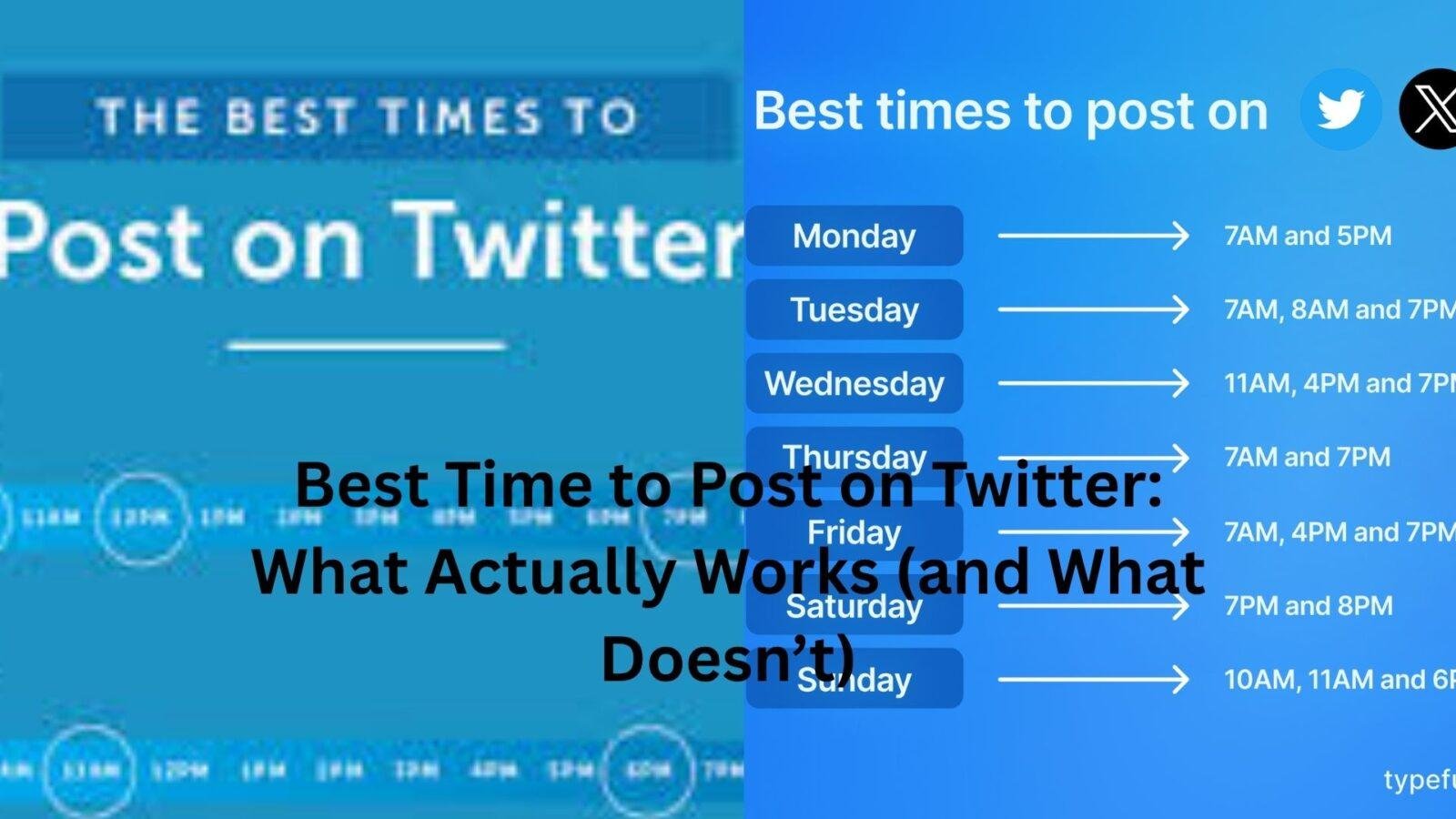
That usually translates to a few strong windows:
Early morning (around 7–9 AM)
Midday (12–1 PM)
Late afternoon (4–6 PM)
Evening (8–10 PM)
But don’t treat these like rigid rules. They’re starting points.
For example, a tech founder tweeting at 7 AM might hit other early risers and productivity-focused people. But a gaming creator? Their audience might be far more active at 10 PM or later.
Context matters.
Weekdays vs weekends feel different
Weekdays tend to be more predictable. People follow routines, check their phones at similar times, and scroll during breaks.
Weekends are looser.
Some audiences disappear. Others show up more.
If you’ve ever posted something on a Saturday and gotten way less engagement than usual, you’re not imagining it. A lot of people simply aren’t checking Twitter as much.
But here’s where it gets interesting: weekends can work really well if your content feels casual, entertaining, or personal.
Think about it like this:
A thoughtful thread about career growth might do better on a Tuesday morning.
A funny or relatable tweet might hit harder on a Sunday night.
Same platform. Different mood.
Your audience is not “everyone”
This is where most advice falls apart.
You’ll see generic statements like “the best time to post is 9 AM” or “post at 3 PM for maximum engagement.” That’s based on averages. And averages don’t help much when your audience is specific.
Let’s say you’re writing for:
Freelancers
Startup founders
Students
Parents
Night shift workers
Each of those groups lives on a different schedule.
A freelancer might scroll throughout the day.
A parent might only check Twitter late at night.
A student might be active between classes or after midnight.
So if you blindly follow general timing advice, you’re basically guessing.
The better move? Watch your own data.
What your analytics quietly tell you
You don’t need fancy tools for this. Twitter already gives you enough signals—you just have to pay attention.
Start noticing patterns:
When do your tweets get replies quickly?
At what time do your likes spike?
Which posts seem to “take off” compared to others?
You might start to see something like:
“Whenever I post around 8:30 AM, I get solid engagement.”
“My evening tweets get more replies but fewer likes.”
“Midday posts barely move.”
That’s gold.
Now you’re not guessing—you’re observing behavior.
One simple trick: post similar types of tweets at different times over a couple of weeks. Not in a rigid experiment way, just naturally. Then compare how they perform.
You’ll start to feel your timing rather than forcing it.
The first hour matters more than the exact minute
People obsess over the exact minute to post. 9:03 vs 9:15. It’s not that precise.
What actually matters is the first hour after you post.
Twitter’s algorithm pays attention to how people react early on. If your tweet gets engagement quickly—likes, replies, reposts—it’s more likely to be shown to more people.
So instead of asking, “What’s the perfect time?” a better question is:
“When can I be present right after I post?”
If you tweet something and then disappear for three hours, you’re missing a key window.
But if you’re around—replying, engaging, keeping the conversation alive—that tweet has a better chance of spreading.
Timing isn’t just about when you post. It’s about what you do right after.
Consistency quietly beats perfect timing
Let’s be honest. You can spend hours trying to find the “best time,” or you can just show up regularly.
Consistency builds familiarity. People start to expect your voice in their feed.
If you tend to tweet every morning, your audience begins to associate that time with your content—even if they don’t realize it.
It’s similar to a favorite podcast that drops episodes on the same day each week. You get used to it.
That doesn’t mean you should post at the exact same minute every day. But having a general rhythm helps more than chasing perfect timing.
Different tweets want different timing
Not all tweets are the same, so they don’t all belong in the same time slot.
A thoughtful thread needs attention. People have to slow down and read. That usually works better when they’re not rushed—morning or early evening can be great.
A quick, witty one-liner? That can land almost anytime, especially during peak scrolling hours.
Something personal or reflective might do better at night, when people are more relaxed and open.
Here’s a simple way to think about it:
Match the mood of your tweet to the mood of your audience at that time of day.
Morning = focused, practical
Midday = quick and light
Evening = relaxed, reflective, or entertaining
It’s not a strict rule, but it’s surprisingly accurate.
Time zones can quietly mess you up
This one catches a lot of people off guard.
You might be posting at what feels like a great time—say, 9 AM—but if most of your audience is in a different time zone, you’re off.
For example, if you’re in Europe but your audience is mostly in the US, your “morning tweet” might actually be hitting them while they’re asleep.
That doesn’t mean you need to completely change your schedule. But it’s worth being aware of where your audience is.
If you notice a large portion of your followers are in another region, experiment with posting at times that match their active hours.
Even shifting by a couple of hours can make a noticeable difference.
There’s no single “best” time—there’s a best window
This is the part most people don’t want to hear, but it’s the truth.
There isn’t one perfect time to post on Twitter.
There’s a range.
A window where your audience is likely active, where your content fits the moment, and where you can engage right after posting.
For one person, that window might be 7–9 AM.
For another, it could be 8–11 PM.
And it can change over time as your audience grows or shifts.
So instead of hunting for a single perfect slot, think in terms of zones.
Find two or three time ranges that consistently work, and use those as your base.
A quick real-world example
Imagine two people tweeting the exact same idea.
One posts at 2 PM on a weekday, right when people are busy or distracted. The tweet gets a few likes and fades.
The other posts at 8:30 PM, when people are scrolling more casually. They stick around, reply to comments, and the tweet picks up momentum.
Same content. Different outcome.
That’s timing doing its thing.
Don’t over-optimize the life out of it
It’s easy to get stuck here. Checking analytics, adjusting times, trying to “hack” engagement.
But if you go too far, your content starts to feel calculated. And people can sense that.
Good timing helps. No question.
But strong ideas, clear voice, and genuine interaction matter more in the long run.
You don’t need to post at the perfect second. You just need to show up when people are around and give them something worth engaging with.
The takeaway
The best time to post on Twitter isn’t a fixed number—it’s a moving target shaped by your audience, your content, and your habits.
Start with general high-activity windows. Pay attention to what actually works for you. Stay present after you post. And keep things consistent enough that people recognize your rhythm.
Do that, and timing becomes less of a mystery—and more of a quiet advantage working in your favor.