

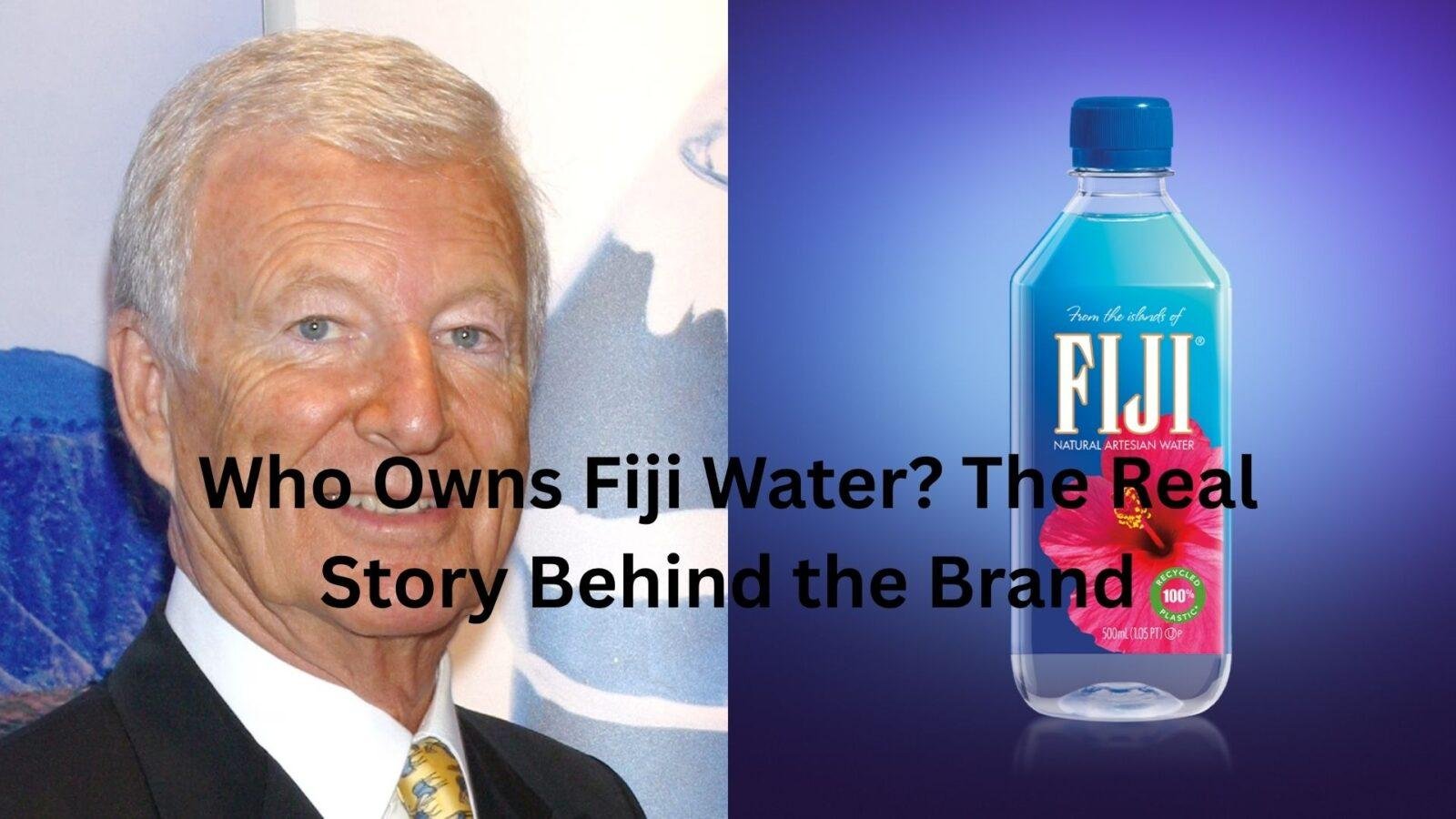
Walk into almost any upscale grocery store, airport shop, or hotel minibar and you’ll spot it immediately—that square bottle with soft tropical imagery and a clean, premium feel. Fiji Water has become more than just bottled water. It’s a lifestyle signal. But that raises a simple question a lot of people don’t actually know the answer to: who owns Fiji Water?
The answer isn’t complicated, but the story behind it is more interesting than you might expect. It involves billionaires, Hollywood-level business drama, environmental debates, and a brand that carefully built an image of purity while navigating very real corporate realities.
Let’s unpack it.
The Current Owner: The Wonderful Company
Fiji Water is owned by The Wonderful Company, a large privately held business based in the United States. If the name doesn’t ring a bell right away, the products probably will. This is the same company behind brands like Wonderful Pistachios, POM Wonderful juice, and Wonderful Halos mandarins.
It’s owned by Stewart and Lynda Resnick, a billionaire couple who’ve built one of the largest privately held agricultural empires in the U.S.
Now, here’s the thing—The Wonderful Company isn’t a beverage company in the traditional sense. It’s more of a vertically integrated agricultural and consumer goods powerhouse. That means they don’t just sell products; they often control large parts of the supply chain. With Fiji Water, though, the appeal is a bit different. You can’t exactly grow water like pistachios.
Instead, they’ve positioned Fiji Water as a premium natural resource—something rare, untouched, and geographically unique.
And that positioning is everything.
Before the Resnicks: How Fiji Water Started
Fiji Water didn’t begin as part of a big corporate empire. It actually started in 1996, founded by a Canadian businessman named David Gilmour.
His idea was simple but clever: bottle water from an artesian aquifer in Fiji and sell it to high-end markets abroad. At the time, bottled water was already a thing, but most brands didn’t have a compelling story behind them.
Fiji Water leaned heavily into its origin.
Remote island. Protected source. Untouched by modern pollution.
It wasn’t just water—it was an escape in a bottle.
Early on, the company targeted luxury hotels, upscale restaurants, and celebrity circles. You didn’t see it everywhere. And that exclusivity helped build its reputation.
Then things got complicated.
The Billionaire Battle
In the early 2000s, Fiji Water was acquired by Roll International, which later rebranded as The Wonderful Company. That’s when Stewart and Lynda Resnick took control.
But for a brief period, ownership of Fiji Water turned into a very public dispute.
David Gilmour, the founder, and the Resnicks clashed over control of the company. It wasn’t just a quiet business disagreement—it escalated into lawsuits and headlines. At one point, both sides claimed they had rightful ownership.
Imagine running a company and suddenly seeing someone else claim it’s theirs too. Not exactly a smooth transition.
Eventually, the Resnicks secured full control, and Fiji Water became firmly part of their expanding portfolio.
From that point on, the brand scaled aggressively.
Why Ownership Matters More Than You Think
You might wonder—why does it even matter who owns Fiji Water? It’s just bottled water, right?
Not really.
Ownership shapes everything about a brand. Pricing, distribution, marketing, even how it responds to criticism.
Take Fiji Water’s premium pricing. You’re not just paying for water. You’re paying for branding, logistics, and the positioning that The Wonderful Company has carefully built.
Or consider availability. The reason you can find Fiji Water in so many places today—from gas stations to luxury resorts—is because of the scale and distribution power behind it.
A smaller independent company likely wouldn’t have pulled that off.
The “Untouched” Image vs Reality
Here’s where things get a bit more nuanced.
Fiji Water markets itself as coming from a pristine, untouched environment. The story is that the water is filtered through volcanic rock and bottled at the source, far away from industrial pollution.
That part is largely true.
But critics have pointed out the contradiction: the water travels thousands of miles to reach consumers, especially in the U.S. and Europe.
So while the source is remote, the supply chain isn’t exactly low-impact.
This tension—between natural purity and global distribution—is something the company has had to navigate carefully.
At one point, Fiji Water even ran ads comparing its carbon footprint to tap water. That didn’t go over well with environmental groups.
It’s a good reminder that ownership also means responsibility for how a brand handles scrutiny.
The Fiji Government Factor
There’s another layer to this story that often gets overlooked: the role of the Fiji government.
Fiji Water operates in Fiji, obviously, but it’s owned by a U.S.-based company. That creates an interesting dynamic.
Over the years, there have been disputes between the company and the Fijian government, especially around taxes and water extraction rights.
In 2010, things escalated when the government imposed a significant tax increase on water extraction. Fiji Water temporarily shut down operations in response.
That’s not a small move. Shutting down a major export operation sends a strong message.
Eventually, the company resumed operations after negotiations, but it highlighted something important: even though The Wonderful Company owns Fiji Water, it still operates within the political and economic framework of Fiji.
Ownership doesn’t mean total control.
How the Brand Became a Status Symbol
Let’s be honest—Fiji Water didn’t become famous just because it tastes different.
Most people wouldn’t pass a blind taste test between premium bottled waters.
What Fiji Water really mastered is perception.
The square bottle stands out immediately. It looks different in a sea of round plastic bottles. The label feels calm and tropical, almost like a mini vacation in your hand.
And then there’s placement.
You see Fiji Water in places where image matters—fashion events, film sets, executive offices. Once celebrities and influencers started carrying it, the brand took on a life of its own.
There’s a famous example from the Golden Globes where a model unofficially became “Fiji Water Girl” just by standing in the background of photos holding the bottle. That moment alone generated massive visibility.
That kind of exposure isn’t accidental. It’s the result of strategic branding decisions made under current ownership.
Is Fiji Water Still a “Luxury” Brand?
This is where opinions start to differ.
On one hand, Fiji Water still carries a premium price compared to standard bottled water. It’s often positioned as a higher-end option.
On the other hand, it’s become much more widely available.
You can grab a bottle at a convenience store now. That wasn’t always the case.
So is it still luxury?
Kind of. But it’s more like “accessible luxury”—the kind of product that feels a bit upscale without being out of reach.
That shift reflects how The Wonderful Company has expanded the brand while trying to keep its original image intact.
Not an easy balance.
What You’re Really Paying For
If you strip everything down, Fiji Water is still water.
So why do people keep buying it?
Part of it is taste—some people genuinely prefer the mineral profile.
But a bigger part is psychological.
You’re buying into a story. A remote island. A protected aquifer. A sense of purity.
You’re also buying convenience. It’s widely available, consistently branded, and easy to recognize.
And then there’s the subtle status signal. Pulling out a Fiji Water bottle in a meeting or at an event sends a different message than a generic store brand.
Whether that matters to you is a personal call.
So, Who Really Owns Fiji Water?
On paper, the answer is clear: The Wonderful Company, owned by Stewart and Lynda Resnick.
But in a broader sense, ownership is layered.
The company controls the brand, operations, and global distribution.
The Fiji government controls the land and resources.
Consumers, in a way, influence the brand’s direction through demand and perception.
And the brand itself sits somewhere between a natural resource and a carefully crafted image.
Final Thoughts
Fiji Water’s ownership story is a mix of entrepreneurship, corporate strategy, and global economics.
It started as a niche idea—bottling water from a remote island—and grew into a globally recognized brand under billionaire ownership.
What makes it interesting isn’t just who owns it, but how that ownership has shaped what the brand represents today.
Next time you see that square bottle, you’ll know there’s more behind it than just water. There’s a whole chain of decisions, conflicts, and strategies that turned it into what it is now.
And whether you buy it or not, that story is part of what you’re really looking at.