

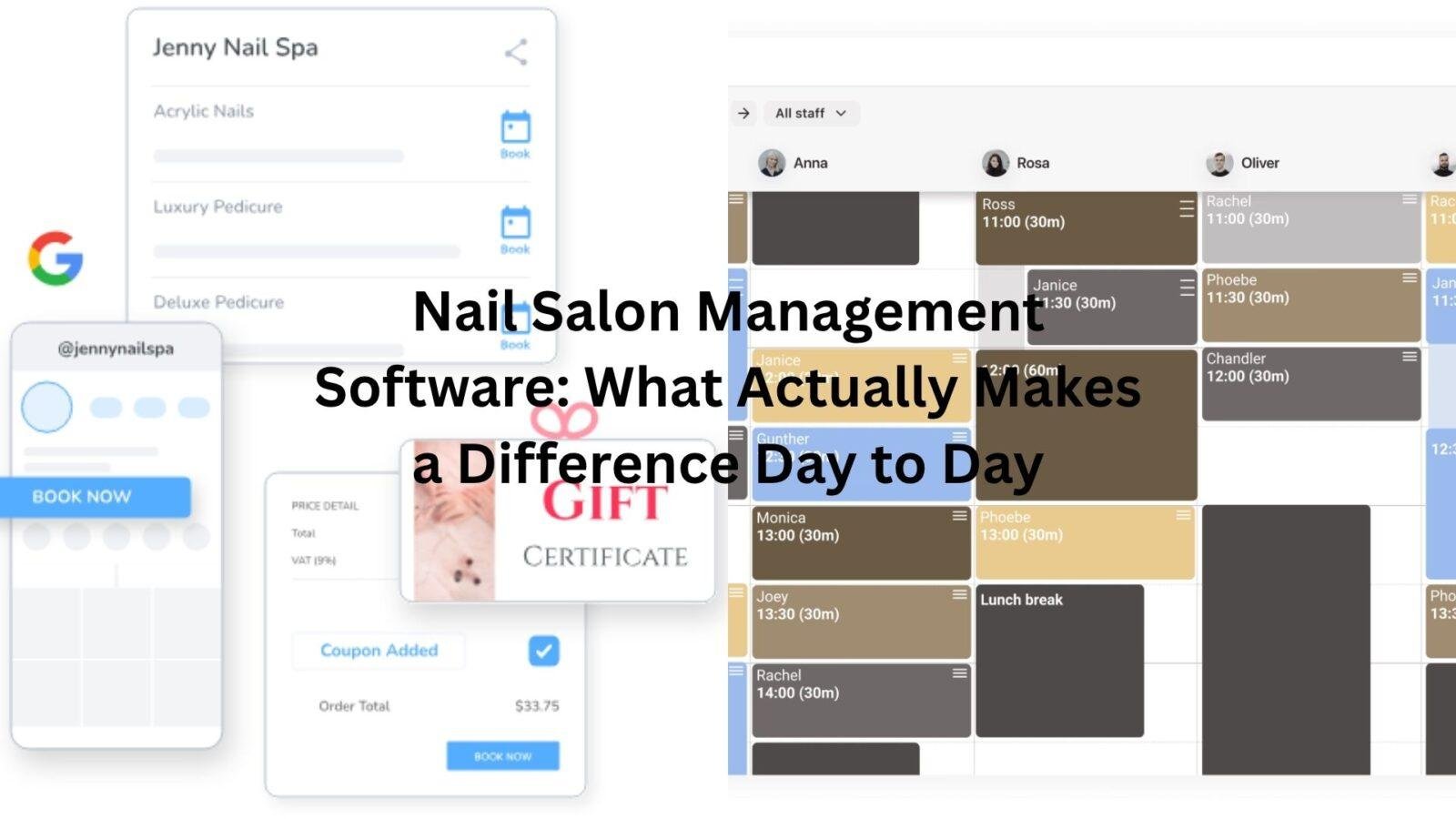
Walk into any busy nail salon on a Saturday afternoon and you’ll see the same thing: phones ringing, clients walking in without appointments, someone asking how long the wait is, a technician trying to remember which polish was used last time, and a front desk person juggling it all with a slightly stressed smile.
Now imagine that same scene—but smoother. Fewer interruptions. Less guesswork. More control.
That’s where nail salon management software quietly changes everything.
Not in a flashy, “this will transform your life overnight” way. More like removing friction you didn’t even realize was draining your energy.
Let’s get into what actually matters when you’re running or working in a nail salon.
The Chaos Most Salons Just Accept
Here’s the thing—many salons run on habits that worked years ago but don’t really hold up anymore.
Paper appointment books. Text messages scattered across personal phones. Loyalty cards that get lost. Inventory tracked in someone’s head.
It works… until it doesn’t.
A client shows up insisting they booked for 3 PM, but no one wrote it down. Someone double-books a technician. You run out of a popular gel color mid-week because no one noticed it was low.
None of these are huge problems on their own. But stacked together? They eat time, create stress, and quietly cost money.
That’s usually the point when salon owners start looking at software—not because they love tech, but because they’re tired of putting out small fires all day.
Booking Shouldn’t Feel Like a Game of Telephone
One of the first things people notice after switching to nail salon software is how much calmer booking becomes.
Instead of answering calls every few minutes, clients can book online. Late at night. Early morning. Whenever they remember they need a fill.
That alone removes a surprising amount of pressure.
Picture this: it’s 8:30 PM, and someone realizes they have an event Friday. Instead of waiting until morning (and maybe forgetting), they book right then. The slot gets filled without a single phone call.
And when the system shows real-time availability, double-bookings basically disappear.
Of course, not everyone books online right away. Some regulars will still call. But now you’ve got one clean system where everything lands—no scribbled notes or “I think I told her 2:30.”
It’s not about replacing human interaction. It’s about giving it some breathing room.
Client History Is More Useful Than You Think
At first glance, client profiles might sound like a nice-to-have feature. Names, phone numbers, maybe past visits.
But once you actually use them, it’s hard to go back.
Let’s say a client sits down and says, “I want the same color as last time.”
Instead of guessing or asking three follow-up questions, you just pull up their history. There it is. Brand, shade, even notes like “preferred shorter almond shape.”
That small moment feels seamless to the client. It also makes your team look sharp without extra effort.
Over time, these records become even more valuable. You start seeing patterns—who comes in regularly, who hasn’t been back in a while, who always books nail art, who prefers quick services.
It’s not about spying on clients. It’s about remembering details that used to slip through the cracks.
Payments, Tips, and the End of Awkward Math
Let’s be honest—checkout can get messy.
Splitting payments. Calculating tips. Handling cash and cards at the same time. Fixing small errors when something’s entered wrong.
Management software usually brings all of this into one place.
Clients can pay however they want. Tips can be preset or customized. Receipts are automatic. And at the end of the day, totals actually match up.
There’s a quiet relief in that.
One salon owner once described it as “closing the day without that lingering doubt that something didn’t add up.” That feeling alone is worth a lot.
It also makes life easier for staff. Clear records mean fewer disputes and less confusion about earnings.
Inventory: The Thing Everyone Ignores Until It Hurts
Inventory tends to live in the background—until you run out of something important.
A specific builder gel. A popular nude shade. Acrylic powder right before a busy weekend.
Then it becomes urgent.
Software that tracks product usage can feel like overkill at first. But once it’s set up, it gives you visibility you didn’t have before.
You start seeing which products move fast and which ones sit untouched. You get alerts when stock is low instead of discovering it mid-service.
It’s not perfect. You still need to input data and stay consistent. But it replaces guesswork with something much closer to reality.
And that’s usually enough to prevent those last-minute scrambles.
Staff Scheduling Without the Headaches
Managing a team adds another layer of complexity.
Who’s working when? Who’s fully booked? Who needs a break? Who prefers certain services?
Trying to track all that manually gets messy fast.
With scheduling tools, you can see everything in one view. Adjust shifts without rewriting a whole chart. Match technicians with services more efficiently.
Here’s a simple example: if one technician is especially good at detailed nail art, you can prioritize assigning those bookings to them. Not in a rigid way, just enough to improve quality and timing.

It also helps avoid burnout. When you can clearly see workloads, it’s easier to spot when someone’s overbooked.
And that matters more than people think. A tired technician isn’t just slower—they’re more likely to make mistakes or feel frustrated.
Marketing Without Feeling Pushy
Marketing a nail salon can feel awkward.
You don’t want to spam people. But you also don’t want them to forget about you.
Management software often includes simple tools for this—appointment reminders, follow-up messages, occasional promotions.
Used well, these don’t feel like marketing. They feel like helpful nudges.
A reminder the day before an appointment reduces no-shows. A quick message after a visit saying “thanks, see you soon” keeps the relationship warm.
You might send a promotion to clients who haven’t visited in a few months. Not aggressive, just a gentle “we’d love to have you back.”
It’s subtle. But over time, it keeps your calendar fuller.
Reports That Actually Tell a Story
Numbers can be boring—until they’re not.
When your software shows you revenue trends, busy hours, top services, and client retention, you start seeing patterns.
Maybe Saturdays are always packed, but Wednesdays are slow. Maybe one service is growing fast while another is fading out.
Without data, these are just guesses. With it, they become decisions.
You might adjust hours. Change pricing. Promote certain services more.
It doesn’t turn you into a data analyst. It just gives you a clearer picture of what’s already happening.
And clarity is powerful.
The Learning Curve (Yes, It’s Real)
It wouldn’t be honest to pretend switching to software is effortless.
There’s always a learning curve.
Staff need time to get comfortable. Some will resist at first. There might be small hiccups—missed settings, confusion about features, things entered incorrectly.
That’s normal.
The difference comes down to whether the system simplifies things after that initial adjustment.
Good software fades into the background once you learn it. Bad software keeps getting in the way.
If you’re considering it, this is worth paying attention to. The goal isn’t more complexity—it’s less.
Not Every Salon Needs the Same Setup
A small two-chair salon doesn’t need the same system as a large, multi-location business.
Some places just need basic booking and payments. Others want full reporting, inventory tracking, and staff management.
It’s easy to overdo it—choosing a system with every feature imaginable and then using only 30% of it.
On the flip side, going too simple can mean outgrowing it quickly.
The sweet spot is something that fits how you actually run your salon right now, with a bit of room to grow.
Not perfect. Just practical.
The Subtle Shift You Notice Over Time
What’s interesting is that the biggest benefits aren’t always obvious on day one.
They show up gradually.
Fewer scheduling mistakes. Shorter wait times. More consistent client experiences. Less mental load on you and your staff.
You stop relying on memory for everything. You spend less time fixing small issues. The day feels a bit more controlled.
Clients notice too, even if they don’t say it directly. Things just feel smoother.
And in a service business, that feeling matters.
Final Thoughts
Nail salon management software isn’t about turning your salon into a tech company. It’s about removing friction from the parts of the job that don’t need to be hard.
Booking, payments, scheduling, inventory—these are all necessary, but they shouldn’t drain your energy.
When the systems behind the scenes work well, you and your team can focus more on the actual experience: the service, the atmosphere, the client relationships.
That’s the part people remember.
The software just helps everything else stay out of the way.