

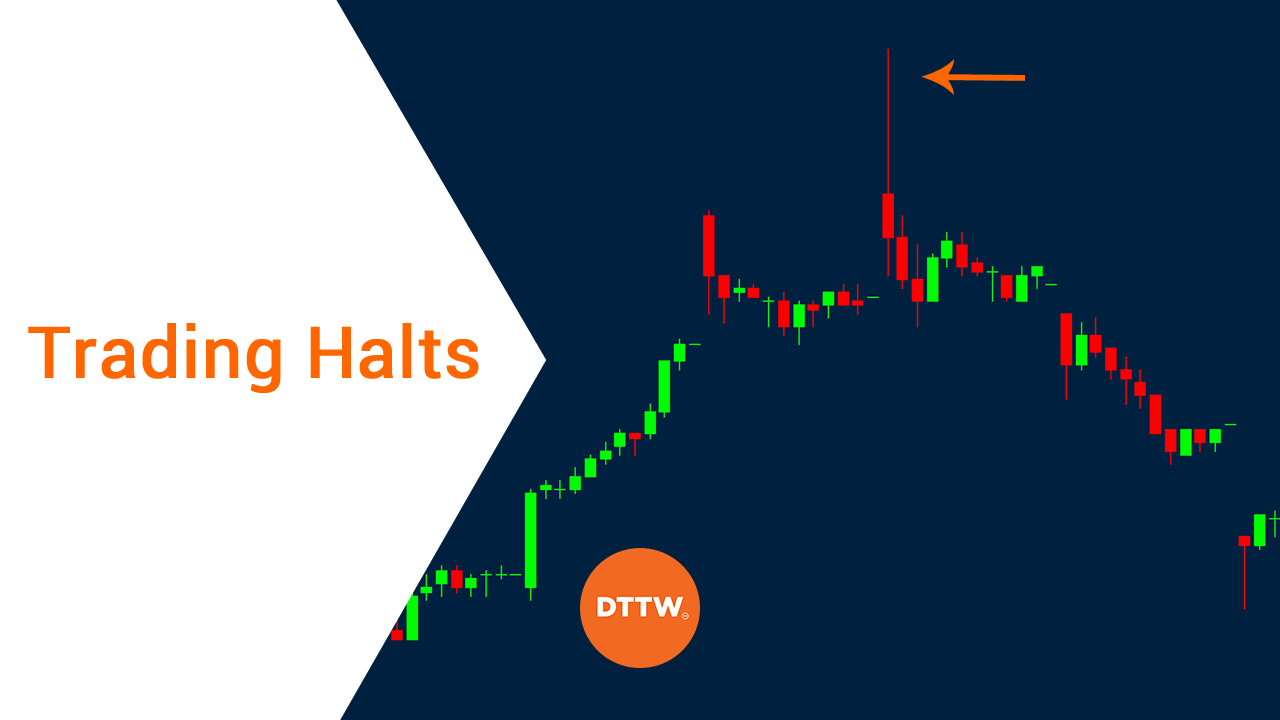
Understanding the Mechanics of Modern Trading Halts
The stock market operates as a complex ecosystem where speed and liquidity are paramount. However, there are moments when the velocity of price movement exceeds the capacity of the market to process information rationally. This is where trading halts come into play. A trading halt is a temporary suspension of trading for a particular security or the entire market. These pauses are designed to prevent panic selling, allow for the dissemination of critical news, or correct technical glitches that could compromise market integrity.
When a stock experiences a massive surge or a precipitous drop within a very short timeframe, the exchange triggers a circuit breaker. These are not arbitrary decisions made by individuals but are governed by automated rules established by the Securities and Exchange Commission and major exchanges like the NYSE and NASDAQ. Understanding these mechanics is the first step for any serious trader who wants to navigate the volatile waters of current trading halts today alongside advanced visualization tools like Bookmap.
The primary goal of a halt is to level the playing field. In an era dominated by high frequency trading algorithms, a human trader cannot possibly react to millisecond price shifts. By pausing the action, the exchange ensures that all market participants have an opportunity to digest new information and reassess their positions without the pressure of a runaway price chart.
The Role of Regulatory Bodies in Market Stability
Market stability is maintained through a rigorous framework of rules enforced by regulatory bodies. The Financial Industry Regulatory Authority and the Securities and Exchange Commission work in tandem with exchanges to monitor every single transaction. Their primary objective is to ensure that markets remain fair, orderly, and efficient.
One of the most common reasons for a regulatory halt is the pending release of material news. If a company is about to announce a merger, a major lawsuit settlement, or a significant change in leadership, the exchange will stop trading to ensure that the news is distributed widely before the price reacts. This prevents insiders or those with faster news feeds from gaining an unfair advantage over the general public.
Another critical function of these regulators is the oversight of Limit Up Limit Down rules. These rules are specifically designed to address extraordinary market volatility in individual symbols. By setting price bands around a security, the regulators prevent trades from occurring outside of specified price parameters. If a stock tries to trade outside these bands for more than fifteen seconds, a five minute pause is triggered to allow the market to find a new equilibrium.
Identifying Different Types of Trading Suspensions
Not all halts are created equal, and knowing the difference can mean the difference between a profitable exit and a total loss. Traders usually encounter three main categories of halts. The first is the news pending halt, often signaled by a specific code such as T1 on the NASDAQ. This tells the market that the company has requested a pause to release information.
The second category is the volatility halt, often referred to as a circuit breaker. These occur automatically when a stock moves too far or too fast. These are generally shorter, lasting five to ten minutes, and are meant to cool off the buying or selling pressure. Traders often look for current trading halts today to find stocks that are experiencing high momentum, as these often present the best opportunities for day trading.
The third category involves more serious issues, such as regulatory concerns or a lack of current financial information from the company. These halts can last for days, weeks, or even months. If the SEC suspects fraudulent activity or if a company fails to file its required earnings reports, they may suspend trading indefinitely until the issue is resolved. These are the most dangerous for investors, as the stock often reopens at a fraction of its previous value.
Tools and Platforms for Monitoring Current Trading Halts Today
To stay ahead of the curve, traders must utilize professional grade tools that provide real time data. Relying on standard news outlets is often too slow, as the halt usually happens before the news story is even written. Most professional trading platforms offer a dedicated window or scanner specifically for monitoring halts.
1. Exchange Websites: The NASDAQ and NYSE both maintain public RSS feeds and web pages that list every halt as it happens. These pages provide the symbol, the time of the halt, the reason code, and eventually, the time the stock will resume trading.
2. Proprietary Scanners: Software like Trade-Ideas or Benzinga Pro can be programmed to alert a trader the moment a circuit breaker is triggered. These tools are invaluable for momentum traders who thrive on volatility.
3. Market Depth Visualization: Using a tool like Bookmap allows traders to see the limit order book in real time. This is crucial because it reveals where the big buyers and sellers are waiting once the halt is lifted.
4. Social Media and News Aggregators: While less reliable than direct exchange feeds, platforms like X or dedicated Discord rooms can provide context and rumors regarding why a stock might be halted before the official news is released.
By combining these resources, a trader can form a complete picture of the market landscape. Knowing that a stock is halted is only half the battle; understanding why it is halted and where the liquidity sits is what leads to successful execution.
Analyzing the Reason Codes
Each halt is accompanied by a code that explains the situation. For example, a Code M on the NASDAQ indicates volatility, while a Code LUDP signifies a Limit Up Limit Down pause. Understanding these alphanumeric signals is essential for quick decision making. A news related halt might lead to a massive gap up or down, whereas a volatility halt might simply be a brief pause in an ongoing trend.
How Bookmap Enhances Visibility During High Volatility
When a stock is halted, the standard candlestick chart becomes a flat line. This lack of visual data can lead to anxiety and poor decision making. However, sophisticated traders use Bookmap to observe the evolution of the order book during the suspension. Even when no trades are occurring, market participants are often still placing, cancelling, or modifying their limit orders in the background.
By visualizing the heatmap of these orders, a trader can identify significant levels of support and resistance that are forming before the stock even resumes trading. This level of transparency is a game changer. Instead of guessing where the price might go, you can see the literal weight of the market leaning in one direction. Bookmap provides a clear view of the liquidity landscape, making it easier to spot institutional interest that remains hidden on traditional charts.
Furthermore, observing the order book during the cooling off period of a volatility halt can reveal whether the momentum is likely to continue or reverse. If large buy orders are stacking up just below the halt price, it suggests that the bulls are still in control and the stock may continue its upward trajectory once the five minute window expires.
Strategies for Trading Out of a Halt
Trading a stock immediately after a halt requires a disciplined approach and a clear plan. The moments following a resumption are often the most volatile of the entire trading day. One common strategy is the resumption pop, where traders look to buy a stock that has been halted on the way up, betting that the pent up demand will cause a quick spike in price.
1. Wait for the First Candle: Many professionals suggest waiting for the first one minute or five minute candle to close after resumption. This allows the initial chaos to settle and provides a clearer signal of the prevailing trend.
2. Identify Liquidity Pockets: Look for areas where the order book is thick. If a stock is resuming and there is a massive wall of sell orders just above the price, the upside may be limited regardless of the news.
3. Use Small Position Sizes: Because the spreads can be incredibly wide during a resumption, slippage is a major risk. Reducing your position size ensures that a sudden move against you doesn’t result in a catastrophic loss.
4. Monitor the Tape: Reading the Time and Sales window is critical. You want to see large green prints moving quickly to confirm that the resumption is being met with aggressive buying.
Another strategy involves the halt reversal. Sometimes a stock is halted due to a panic sell off. If the news is not as bad as the market feared, or if the stock was simply overextended, the resumption can lead to a violent bounce. Traders who can identify these exhaustion points often find the most lucrative entries.
The Psychological Impact of Market Suspensions on Retail Traders
The sudden cessation of trading can trigger a variety of emotional responses. For those caught in a long position during a downward volatility halt, the feeling of helplessness is intense. You cannot sell, you cannot hedge, and you are forced to wait while the market potentially reprices significantly lower. This is why many retail traders struggle with halts; they react with fear rather than logic.
To combat this, it is helpful to view a halt as a professional time out. It is a moment to step back from the screen, breathe, and review your original thesis. If the halt was caused by a technical circuit breaker and not a fundamental change in the company, there is often no reason to panic. Maintaining an objective mindset is what separates the consistently profitable traders from those who eventually wash out of the market.
Education is the best antidote to fear. By studying past halts and observing how prices typically behave upon resumption, you can build a mental database of scenarios. This preparation allows you to remain calm when the current trading halts today occur, as you will have a pre-defined set of rules to follow.
Risk Management Protocols During Unscheduled Halts
Risk management should always be the priority, especially when dealing with volatile securities prone to suspensions. One of the most important rules is to avoid holding large positions into known news events, such as FDA decisions or earnings reports, unless you are prepared for the possibility of a gap that bypasses your stop loss.
Stop loss orders are not guaranteed during a halt. If a stock is halted at fifty dollars and resumes at forty dollars, your stop loss at forty eight dollars will be filled at the next available price, which is forty. This is known as slippage, and it can be devastating. To manage this, traders should diversify their positions and never over leverage on a single ticker.
Another protocol is to monitor the overall market sentiment. If the S&P 500 or the NASDAQ 100 is hitting its own market wide circuit breakers, the risk of individual stocks being halted increases exponentially. In these high stress environments, the best position is often no position at all. Protecting your capital is more important than catching every single move.
Future Trends in Automated Market Regulation
The landscape of market regulation is constantly evolving. As artificial intelligence and machine learning become more integrated into trading algorithms, regulators are also upgrading their systems to keep pace. We are likely to see more dynamic circuit breakers that can adjust in real time based on the specific volatility profile of a stock rather than following a one size fits all approach.
There is also an increasing push for greater transparency. Tools like Bookmap are already providing retail traders with data that was once only available to institutional desks. As this technology becomes more widespread, the advantage held by high frequency firms may diminish, leading to a more democratic and stable market environment.
Furthermore, the integration of blockchain technology could eventually lead to instantaneous settlement, which would fundamentally change how halts are handled. If every trade is settled on a distributed ledger, the need for certain types of regulatory pauses might disappear, though the need for volatility cooling periods will likely remain a staple of the financial markets for the foreseeable future. Understanding these shifts is vital for anyone looking to maintain a competitive edge in the years to come.