

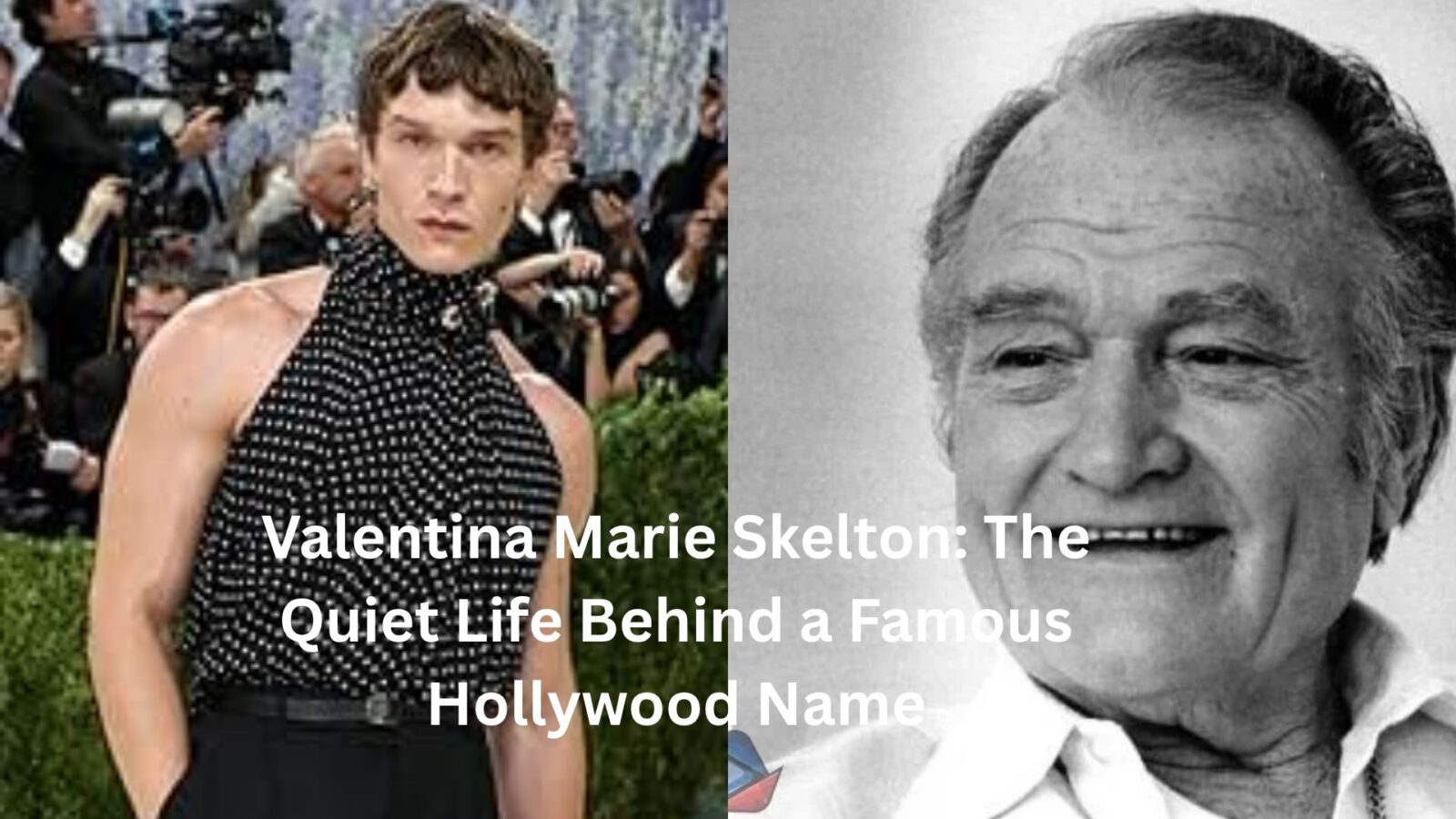
Some people grow up around fame and spend the rest of their lives chasing it. Valentina Marie Skelton did the opposite.
She was born into one of America’s most recognizable entertainment families, appeared on television as a child, and had every reason to stay in the spotlight. But over time, she stepped away from the noise and built a quieter life centered on art, family, animals, and privacy.
That’s probably why people still search for her today. There’s something interesting about someone who had access to Hollywood glamour and simply chose not to live there emotionally.
Valentina Marie Skelton was the daughter of legendary comedian Red Skelton, but reducing her story to that alone misses the point. Her life carried loss, creativity, resilience, and a very human struggle with identity. She spent decades balancing her father’s giant public legacy with her own deeply personal one.
Growing Up as Red Skelton’s Daughter
Being the child of a celebrity sounds glamorous until you think about the reality of it.
Your family isn’t fully yours. Parts of your childhood become public property. People already think they know you before you’ve even figured yourself out.
Valentina was born in Santa Monica, California, in 1947 during the height of old Hollywood culture. Her father, Red Skelton, was one of the biggest entertainers in America at the time. Millions watched him on television every week. He was funny, expressive, larger than life. At home, though, things were more complicated.
As a child, Valentina occasionally appeared on The Red Skelton Hour. She also became known for co-hosting a 1959 television presentation of The Wizard of Oz alongside her father. Imagine being a kid and already standing in front of a national audience before you’ve even started high school. That kind of exposure changes people.
Still, accounts from people around the family suggest she wasn’t naturally drawn to fame itself. She seemed more comfortable observing than performing.
That difference matters.
A lot of celebrity children either rebel loudly or fully embrace the machine. Valentina appeared to do neither. She drifted toward a quieter existence instead.
A Childhood Marked by Tragedy
Here’s the thing about famous families: the public often remembers the jokes and the red carpets, not the grief.
Valentina’s younger brother, Richard Skelton, died from leukemia in 1958 at only nine years old. The loss devastated the entire family. Red Skelton reportedly never fully recovered emotionally from it, and many historians point to that tragedy as a turning point in his life and comedy.
Now imagine being Valentina.
She was still a child herself, trying to process the death of a sibling while her family lived under public attention. There’s no clean way through that kind of experience. People either harden, hide, or quietly carry it forever.
From what’s publicly known about her later life, Valentina seemed to carry it quietly.
You can often see traces of childhood grief in the adults people become. Some throw themselves into busy careers. Others seek peace, routine, solitude, nature. Valentina leaned toward the second path.
Why She Walked Away From Hollywood
This is probably the most interesting part of her story.
She could have pursued acting seriously. She had the connections. She already had television exposure. Doors would’ve opened for her automatically in the 1960s entertainment industry.
Instead, she moved toward art.
Not celebrity art. Not the kind built for branding deals or gallery headlines. Just painting. Horses. Landscapes. Personal creative work.
That choice says a lot.
There’s something refreshing about someone who doesn’t confuse visibility with fulfillment. Today especially, people often treat public attention as proof of value. Valentina seemed uninterested in that equation.
She attended school in California, later studied at College of the Desert, and gradually built a life away from mainstream entertainment culture.
In 1966, she was named Queen of the Palm Springs Rodeo, which feels very different from the Hollywood image people might expect. That detail actually paints a clearer picture of who she was becoming: outdoorsy, grounded, connected to horses and local community life rather than studio culture.
It’s easy to romanticize fame from a distance. But many people born into it spend years trying to escape the pressure that comes with it.
Valentina’s life looks a bit like that.
Her Life as an Artist
Most public information about Valentina later in life revolves around her artwork.
She reportedly created hundreds of paintings over the years, including watercolor work, desert scenes, and equestrian themes. People close to her described her as deeply connected to animals and nature.
And honestly, that tracks emotionally.
Creative people who value privacy often gravitate toward art forms that allow expression without constant public performance. Painting lets someone communicate while still protecting part of themselves.
There’s a difference between being seen and being understood.
Valentina seemed to prefer the second.
One heartbreaking detail from her later years stands out. Reports say much of her earlier artwork was lost in the Paradise Fire in California. If you’ve ever lost creative work, even on a smaller scale, you know how brutal that feels. Paintings aren’t just objects. They’re time. Memory. Entire versions of yourself captured in physical form.
What’s striking is that she apparently kept painting afterward.
That says resilience more than any polished biography ever could.
Marriage, Motherhood, and Privacy
Valentina married Carlos Jose Alonso in 1969, and the couple later had a daughter, Sabrina. The marriage ended in divorce a few years later, but by most accounts, motherhood became one of the defining parts of her life.
She stayed largely out of celebrity media coverage through adulthood, which is increasingly rare for anyone connected to a major entertainment family.
And let’s be honest, that level of privacy takes intention.
Especially when your father was someone as culturally famous as Red Skelton.
Most people only resurfaced her name publicly during moments connected to her father’s legacy. That included appearances tied to the Red Skelton Museum of American Comedy and historical retrospectives about classic television.
Even then, she didn’t become a public personality in the modern sense. No constant interviews. No celebrity memoir circuit. No effort to reinvent herself as a media figure.
In a strange way, that restraint became part of what makes her story compelling now.
Preserving Her Father’s Legacy Without Losing Herself
Family legacies can become heavy.
Especially when the parent involved is iconic.
Children of famous entertainers often spend years trapped between honoring the past and trying not to disappear inside it. Valentina walked that line carefully.
She remained involved in preserving Red Skelton’s memory and artistic contributions while still maintaining her own identity as a painter and private individual. She attended museum events, contributed family history, and supported efforts tied to her father’s work.
That balance isn’t easy.
Imagine constantly meeting people who mainly want stories about your father. Over time, many people would either resent it or lean into it completely. Valentina seemed to approach it with quiet respect rather than bitterness.
And honestly, that probably helped preserve her father’s legacy in a more authentic way.
Not every tribute needs to be loud.
The Public Fascination With Valentina Marie Skelton
There’s a reason people continue searching her name decades later.
Part of it is curiosity about old Hollywood families. But another part comes from the contrast she represented.
Modern celebrity culture rewards exposure. Oversharing is practically a business model now. Valentina came from an earlier era where privacy still existed, and she protected hers carefully.
That mystery naturally draws attention.
People want to understand those who walk away from fame because most modern culture pushes relentlessly in the opposite direction.
There’s also something deeply human about her story. It contains recognizable emotional threads:
- Growing up in a parent’s shadow
- Experiencing family loss early
- Trying to define your own identity
- Choosing peace over status
- Creating art privately instead of publicly
Those themes connect with people far beyond Hollywood history.
You don’t have to be the daughter of a television legend to understand the pressure of expectations.
Her Final Years and Lasting Impression
Valentina Marie Skelton passed away in 2022 at age 74. Reports say she spent her later years surrounded by the things she cared about most: family, painting, animals, and personal creativity.
That feels fitting somehow.
Not dramatic. Not flashy. Just consistent with the way she lived.
And maybe that’s the real takeaway from her life.
She grew up next to enormous fame yet chose something quieter and more grounded. She experienced tragedy without turning her pain into spectacle. She created art because she loved creating it, not because it guaranteed attention.
That kind of life rarely trends online. But it often leaves a deeper impression.
Valentina Marie Skelton may always be remembered publicly as Red Skelton’s daughter. Still, the fuller picture is more interesting than that. She was someone who spent a lifetime carefully deciding which parts of herself belonged to the public and which parts didn’t.
In today’s world, that almost feels radical.