

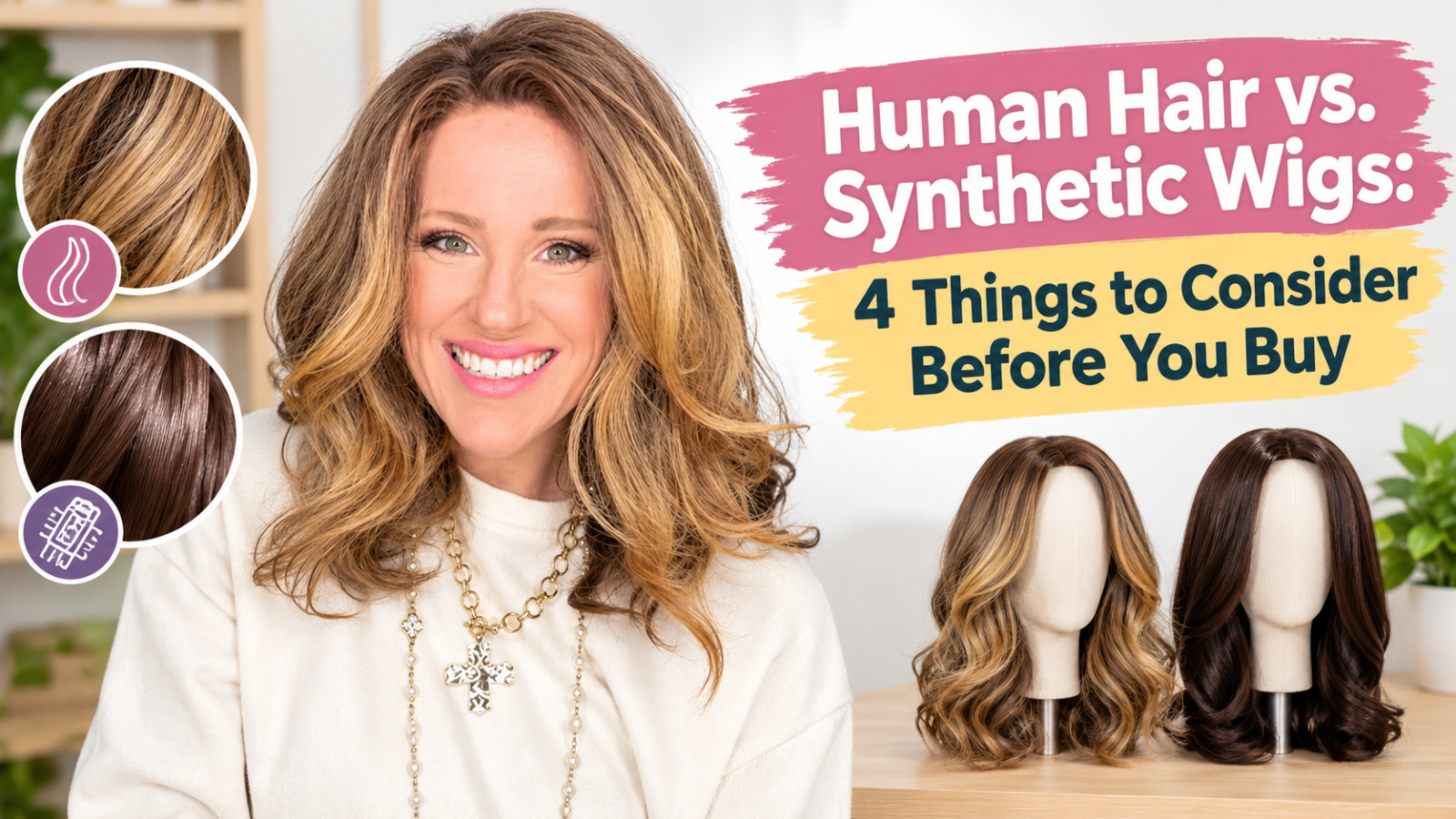
Choosing a wig is about more than finding a style you love or a price that fits your budget. You also need to think about how often you’ll wear it, how much time you want to spend styling it, and what kind of look you want to achieve.
Human hair wigs and synthetic wigs each have their own benefits. Human hair offers a natural texture and more styling freedom, while synthetic wigs are often easier to maintain and can hold their original style with less effort.
Before making your decision, here are four important factors to consider.
1. How Often Will You Wear Your Wig?
Your daily routine can help you decide which type of wig makes the most sense for you.
If you only want a wig for special occasions, vacations, or occasional style changes, a synthetic wig may be a practical choice. Many synthetic styles come ready to wear and require little restyling after washing, depending on the fiber and care instructions.
If you plan to wear a wig regularly, you may want to consider a human hair wig. With proper care, a well-made human hair wig can last a long time, making it a worthwhile option for people who want to use the same piece throughout different seasons.
However, the lifespan of any wig depends on several factors, including hair quality, cap construction, how frequently it is worn, and how it is maintained. Human hair wigs also need regular washing, conditioning, and careful styling to keep them looking their best.
Think about your long-term needs before choosing. A lower upfront price doesn’t always mean a lower overall cost, especially if you need to replace your wig frequently.
2. Consider Hair Quality and Natural Appearance
The quality of the hair affects how a wig looks, feels, and moves.
Human hair wigs are made from real hair, so their texture and movement can look similar to natural hair. They are often a good choice if you want a realistic finish, especially when you prefer styles that move freely rather than maintaining a fixed shape.
When shopping for human hair wigs, pay attention to the texture, shine, softness, and overall construction. High quality human hair wigs should also be evaluated by how well the hair is prepared and how carefully the wig is made, not just by the product description or price.
Synthetic wigs are made from specially designed fibers. Modern synthetic fibers can look very natural, and many styles are available in a wide range of colors, lengths, and textures. Some synthetic wigs also hold their original shape well, which can be helpful if you prefer a ready-to-wear hairstyle.
The main difference is that synthetic fibers generally do not behave exactly like real hair. Depending on the fiber, they may have more limited styling options and different movement or texture.
Neither option is automatically right for everyone. Consider how natural you want your wig to look and feel, as well as the amount of styling and maintenance you’re comfortable with.
3. Think About Your Styling Preferences
Do you like changing your hairstyle often, or would you rather put on your wig and go?
Your answer can help narrow your options.
Human Hair Wigs: More Styling Flexibility
Human hair wigs can usually be straightened, curled, and blow-dried with appropriate heat protection and careful technique. Many can also be restyled to suit different occasions, although frequent heat styling may cause damage over time.
Some human hair wigs can be dyed darker by an experienced professional. However, coloring results depend on the original hair color and previous processing, and lightening or bleaching can be particularly damaging.
If you enjoy experimenting with different looks, a human hair wig gives you more room to personalize your hairstyle.
For example, human hair lace front wigs can offer a natural-looking hairline when properly fitted and styled. This construction may be a good option if you like wearing your hair away from your face or want a more realistic front hairline.
Always check the product’s styling and care instructions before using heat or chemical treatments.
Synthetic Wigs: Convenient, Ready-to-Wear Styles
One of the biggest advantages of synthetic wigs is that many are designed to maintain a specific style. After washing, they may return to their original shape when cared for according to the manufacturer’s instructions.
This can save time if you prefer a consistent hairstyle and don’t want to spend much time styling your hair every morning.
However, standard synthetic wigs generally cannot be restyled with regular heat tools. Some heat-friendly synthetic fibers allow limited heat styling, but the permitted temperature varies by product. Always confirm the fiber type and instructions before applying heat.
Consider your lifestyle as well as your styling preferences. If convenience is your priority, synthetic hair may work well. If you want greater freedom to change your look, human hair may be a better fit.
4. Check the Wig Cap Construction
The hair itself is only one part of a wig. Cap construction also affects comfort, appearance, and how the wig sits on your head.
Different cap designs offer different benefits, so it’s worth understanding the main options before purchasing.
Lace front caps
A lace front creates the appearance of a natural hairline at the front of the wig. It can be helpful for styles that expose the forehead or sweep the hair away from the face.
Monofilament caps
A monofilament section uses a fine, breathable material to create a scalp-like appearance. Depending on the design, it may allow the hair to be parted in different directions and provide a more natural-looking part.
Wefted caps
Wefted caps are made by attaching hair to strips of material. They are commonly used in wig construction and can provide a practical, lightweight design. The amount of ventilation depends on the cap’s overall construction.
Hand-tied caps
In hand-tied sections, individual hairs are attached by hand. This can allow more natural movement and reduce the stiff appearance sometimes associated with less flexible constructions.
Some wigs combine multiple cap features. For example, a wig may have a lace front and a monofilament top, giving the wearer a natural-looking hairline and a realistic parting area.
When comparing human hair lace front wigs, look beyond the lace itself. Consider the cap size, fit, hair density, parting options, and whether the construction suits your everyday needs.
The right cap should balance the appearance you want with the comfort and styling flexibility you need.
Human Hair or Synthetic: Which Is Right for You?
Before you make a final decision, compare the two options based on what matters most to you.
| Factor | Human Hair Wigs | Synthetic Wigs |
| Appearance | Natural texture and movement | Varies by fiber quality and design |
| Styling | Generally allows more styling options | Often maintains its original style |
| Heat styling | Usually possible with proper care | Depends on whether the fiber is heat-friendly |
| Maintenance | Requires regular washing, conditioning, and styling | Often requires less daily restyling |
| Longevity | Can last a long time with suitable care | Lifespan varies by fiber, wear, and care |
| Initial cost | Usually higher | Often more affordable |
Use this comparison as a starting point rather than a strict rule. Wig quality varies, and a well-made synthetic wig may be a better fit for some lifestyles than a human hair wig.
If you value styling flexibility and a natural texture, human hair may be worth the investment. If you prefer a ready-to-wear style with less daily maintenance, synthetic hair may suit you better.
Final Thoughts
Choosing a wig is a personal decision. The best option depends on how often you plan to wear it, the look you want, your styling routine, and the level of care you’re willing to provide.
Human hair wigs offer natural movement and greater styling freedom, while synthetic wigs can provide convenient, easy-to-maintain styles. Cap construction is equally important, especially if you want a realistic hairline, flexible parting, or a particular fit.
Take time to compare the materials, construction, and care requirements before buying. Rather than focusing on price alone, choose a wig that fits your lifestyle and helps you feel comfortable and confident every day.