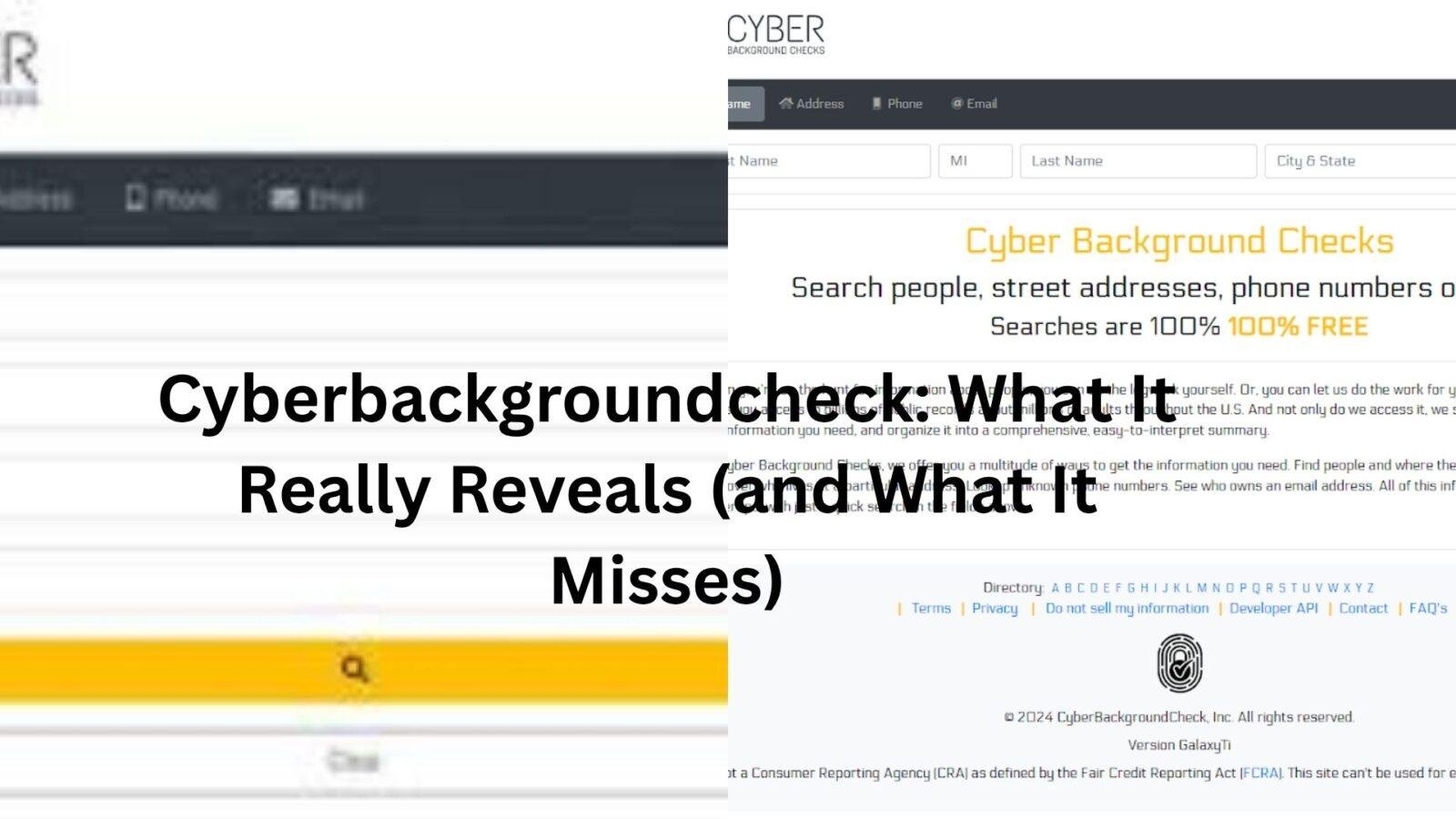
Type someone’s name into a search bar and you’ll get a flood of results. Social profiles, old posts, maybe a news mention or two. Now imagine a tool that pulls together far more than that—quietly scanning databases, public records, digital traces. That’s the world of a cyberbackgroundcheck.
It sounds powerful. Maybe even a little intrusive. And honestly, it’s a bit of both.
People use these checks for all kinds of reasons—hiring, dating, renting out a room, even reconnecting with someone from the past. But the reality behind them isn’t always what people expect. Some assume they’re foolproof. Others think they’re shady or unreliable. The truth sits somewhere in the middle.
Let’s dig into what a cyberbackgroundcheck actually is, what it can show, and where things get murky.
What a Cyberbackgroundcheck Actually Does
At its core, a cyberbackgroundcheck is a digital sweep of publicly available data tied to a person. That includes obvious stuff like social media, but it goes deeper—court records, property ownership, business filings, sometimes even archived forum posts from years ago.
Here’s a simple example.
Say you’re about to hire a freelance designer you found online. Their portfolio looks great. Before signing a contract, you run a cyberbackgroundcheck. Suddenly, you see they’ve been involved in multiple small claims disputes with past clients. That doesn’t automatically mean they’re unreliable—but it gives you pause. It adds context.
That’s the real value: context.
These checks don’t just answer “who is this person?” They start to answer “what’s their pattern?”
The Illusion of Completeness
Now here’s where things get tricky.
A lot of people treat these reports like a final verdict. As if whatever shows up is the full truth. It’s not.
Cyberbackgroundchecks depend heavily on what’s publicly available and properly indexed. If a record is sealed, outdated, misfiled, or simply never digitized, it won’t show up. On the flip side, outdated or incorrect information can linger far longer than it should.
Imagine someone who had a minor legal issue ten years ago that was resolved and expunged. In real life, it’s behind them. But online? It might still float around in some database snapshot. A cyberbackgroundcheck could surface that and make it look current.
That gap between reality and digital residue is where people get misjudged.
Social Media: The Loudest Signal
Let’s be honest—social media tends to dominate these reports.
Not just profiles, but behavior. Comments, likes, shared posts, old usernames. Sometimes things people forgot they ever posted.
And context matters a lot here.
A sarcastic joke from 2012 might look completely different when stripped of tone and timing. A heated argument in a comment thread might say more about a bad day than a person’s character.
Still, patterns show through.
If someone consistently posts aggressive or offensive content across platforms, that’s hard to ignore. On the flip side, a quiet or minimal online presence doesn’t necessarily mean anything suspicious. Some people just don’t live online.
That’s an important balance to keep in mind.
Why People Use Cyberbackgroundchecks
The motivations are usually practical.
Hiring is the big one. Employers want to avoid risk. A resume tells you what someone claims. A cyberbackgroundcheck hints at what they don’t mention.
Then there’s online dating. This one has grown a lot. People want a sense of safety before meeting a stranger. A quick check can confirm basic details—or raise red flags.
There’s also everyday curiosity.
A neighbor moving in next door. A new business partner. Even a seller on a marketplace asking for a large upfront payment. People want reassurance, and these tools offer a shortcut.
But that shortcut can be misleading if taken too literally.
The Ethics Question Nobody Loves to Talk About
Here’s the uncomfortable part.
Just because you can look someone up doesn’t always mean you should—or at least, not without thinking it through.
There’s a difference between verifying someone in a high-stakes situation and digging into someone’s past out of pure curiosity. The line isn’t always clear, but intent matters.
Think about it this way.
If you’re hiring someone to manage finances, doing a background check makes sense. If you’re scrolling through someone’s past just to form a quick judgment before a first date, things get murkier.
There’s also the issue of consent. Most people don’t realize how much of their information is accessible or aggregated. That lack of awareness creates a kind of imbalance—one person knows a lot, the other has no idea.
It doesn’t mean cyberbackgroundchecks are wrong. It just means they come with responsibility.
False Positives and Mixed Identities
This is one of the most common—and frustrating—problems.
Names aren’t unique. Even with additional identifiers like location or age, it’s easy for data to overlap. A cyberbackgroundcheck might pull records that belong to someone else with the same name.
Now imagine making a decision based on that.
You pass on a job candidate because of a legal issue that wasn’t even theirs. Or you distrust someone you’re dating because of a record tied to a completely different person.
It happens more often than people think.
The better tools try to filter this out, but no system is perfect. That’s why it’s risky to rely on a single report without cross-checking details.
What These Checks Miss
For all their reach, cyberbackgroundchecks leave out a lot of what actually matters.
They don’t show how someone treats people day to day. They don’t capture growth, context, or nuance. They don’t tell you why something happened—only that it did.
Picture two people with similar records.
One made a mistake years ago and changed completely. The other repeats the same behavior quietly without leaving a digital trail. A cyberbackgroundcheck might flag the first and miss the second.
That’s the limitation of data without interpretation.
Real life is messier than any report.
Practical Ways to Use Them Wisely
So where does that leave you?
The smartest approach is to treat a cyberbackgroundcheck as a starting point, not a conclusion.
If something concerning shows up, pause. Look deeper. Try to verify. Context can completely change the meaning of what you’re seeing.
Let’s say you find a lawsuit tied to someone you’re about to work with. Instead of assuming the worst, you dig a bit further. Turns out it was a business dispute that got resolved quickly, with no wrongdoing. That’s very different from a pattern of unresolved conflicts.
Use the information to ask better questions, not to jump to instant answers.
And when nothing shows up? That doesn’t guarantee safety or reliability either. It just means there’s no obvious digital footprint.
The Future of Cyberbackgroundchecks
These tools aren’t going away. If anything, they’re getting more sophisticated.
More data sources, faster aggregation, smarter matching. Some are starting to incorporate AI-driven summaries, trying to interpret patterns rather than just list them.
That sounds helpful, but it also raises the stakes.
The more polished the output looks, the easier it is to trust it without questioning. And that’s where mistakes can scale.
At the same time, there’s growing awareness about digital privacy. Laws are evolving. People are pushing back against how their data is collected and used.
So the future will likely be a tug-of-war between access and control.
The Human Layer Still Matters Most
Here’s the thing.
A cyberbackgroundcheck can tell you a lot about someone’s past footprint. But it can’t replace direct interaction, judgment, or common sense.
You still need conversations. You still need to read tone, consistency, and behavior in real time.
Think of it like this: the report is a map, not the terrain.
It can point you in a direction. It can highlight areas to pay attention to. But it won’t walk the path for you.
And sometimes, the most important details never show up in a database at all.
Final Thoughts
Cyberbackgroundchecks sit at an interesting crossroads between curiosity, safety, and privacy. They’re useful, no question. In some situations, they’re genuinely important.
But they’re not magic. And they’re definitely not infallible.
Use them with a bit of skepticism. A bit of patience. And a willingness to look beyond the surface.
Because at the end of the day, no report—no matter how detailed—can fully capture a person.