

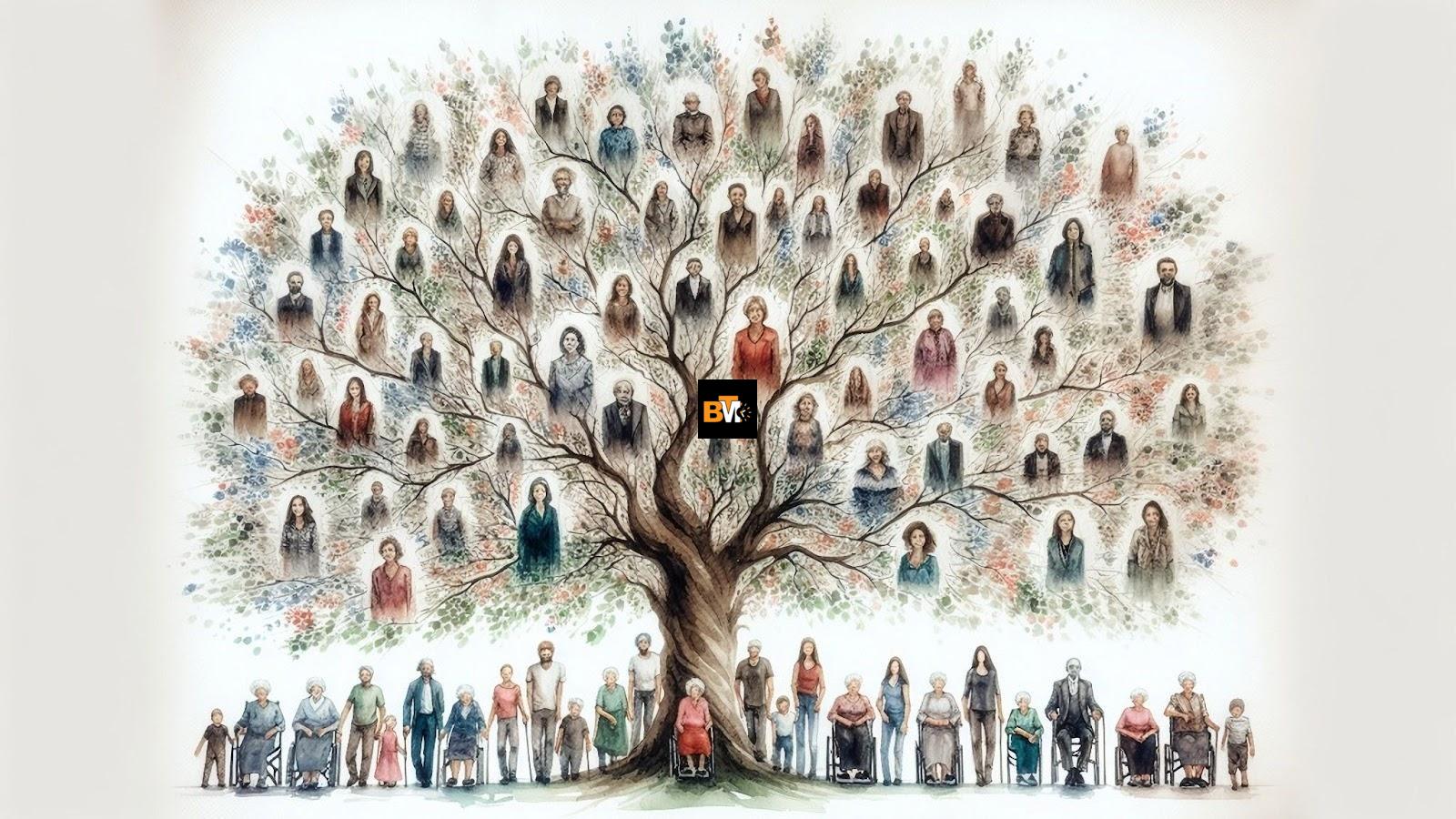
For centuries, family trees were a privilege of the powerful. Royal houses, noble families and influential dynasties hired heralds and archivists to record every marriage, alliance and heir. Their bloodlines were carefully drawn, not just to preserve memory, but to justify power.
Everyone else had stories. A few dates in a Bible. A name on a gravestone. A place someone remembered leaving. No charts. No illustrated scrolls. No official record of how one generation flowed into the next.
That imbalance is starting to fade. In the last decade, artificial intelligence has quietly turned genealogy into something far more democratic. The tools once reserved for tracing royal bloodlines are now available for anyone who is willing to look for their own.
How royalty set the template for family trees
Royal genealogies were never just about curiosity. They were political documents. Whoever could prove a particular ancestor could claim a throne, land or title. That is why royal trees were meticulously kept, copied and updated.
They blended fact and myth, recorded lineages across countries and often stretched so far back that they eventually connected to legendary figures. Even when sections were exaggerated, the underlying idea remained clear: lineage matters.
What is different now is that the ability to map lineage has moved from palaces to living rooms.
AI as the new court genealogist
Where court genealogists relied on limited records and manual cross checking, modern AI systems can sift through millions of documents and data points in seconds. These systems learn how names change spelling, how families move, how records contradict and how to recognise the same person across multiple sources.
In practical terms, that means AI can:
- suggest likely matches in old census and parish records
- flag when two tree entries probably represent the same person
- highlight new sources that may confirm or correct what you already have
- detect patterns in locations and dates that link branches together
The work is similar to what human genealogists have always done, but at a scale that was previously impossible.
This is what powers many of the hints and suggestions users now see on free genealogy sites. Behind each small green leaf or glowing suggestion is a model that has looked at thousands of similar trees and records and learned what is likely to fit.
When DNA joins the story
Documents tell you what was written down. DNA tells you what survived.
At home DNA testing has added a new layer to genealogy. Once someone has their file, they can upload raw DNA data to platforms that specialise in deeper ancestry analysis and matching. AI models then compare their genetic segments with those of millions of other users to find relatives, clusters and shared origins.
Alongside that, DNA upload platforms interpret the same data for traits, ancient ancestry and broader patterns that give more texture to the story. None of this replaces traditional research, but it changes how quickly people can see where they might fit into larger population histories.
Royal houses once used marriage alliances to connect families across borders. Today, ordinary people are using shared DNA segments to reconnect branches that lost touch generations ago.
From scrolls to interactive maps
One of the most striking changes AI has brought to genealogy is the way family trees are displayed. Instead of static charts on paper, people now use family tree mapping tools that turn data into interactive experiences.
You can:
- zoom in on a single ancestor and see their relatives unfold
- watch migration paths animate across maps
- overlay historical events on top of your family timeline
- trace how different branches merged through marriage
For royal families, trees were often visual statements of power. For everyone else today, these visuals become statements of survival, movement and connection. They reveal how far a family has travelled, how many borders it has crossed and how history has shaped its path.
The quiet power of ordinary lineages
There is something humbling about seeing a royal family tree laid out across centuries. It feels large and distant. Yet when AI helps you build your own, you start to see that the basic structure is the same.
Generations flow into each other. Lives intersect. Children move away. New lines appear. Some branches end quietly. Others spread without anyone important ever writing their names down.
In many ways, AI is giving ordinary families the one thing they never had before: continuity. The sense that their story, too, stretches back beyond what anyone living can remember.
The difference is that this continuity is not reserved for a few. It is available to anyone with patience and a willingness to use the tools.
A tool, not a replacement for judgment
As powerful as AI has become, it is not infallible. It can misread handwriting, overestimate match strength or suggest links that look plausible but are not supported by evidence. That is why traditional genealogical skills still matter.
Good research still involves:
- checking sources
- comparing dates and places carefully
- talking to relatives
- keeping track of where each conclusion came from
AI is at its best when it acts like a tireless assistant, not an unquestioned authority. The royal scribes of the past sometimes bent facts to suit those in power. Modern systems can bend facts accidentally if users accept every suggestion without verification.
What this means for the future of family history
The combination of AI, DNA and digital records has created a moment that would have been hard to imagine only a generation ago.
Someone with no experience can now build in a few months what once took experts years. A person whose family thought they had no history can discover branches in other countries, cousins on other continents and patterns that explain why their life looks the way it does.
Royal families used their trees to prove they belonged on a throne. The rest of us can use ours to prove that we belong in a much larger, shared story.
As the tools continue to evolve, family history will become less about who had the resources to record their lives and more about who is willing to explore them.