

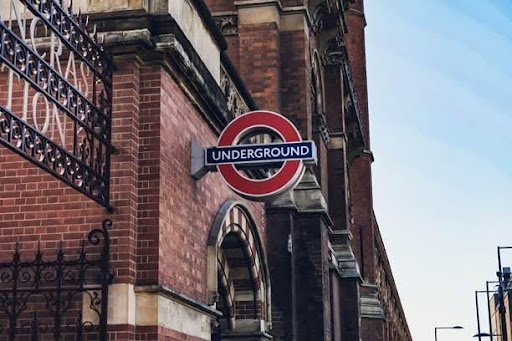
Is London safe to travel around and go out at night? In short: yes. London’s public transport network is one of the most extensively monitored and heavily policed systems in the world, and the majority of the million journeys taken on it everyday pass without incident. Nightlife across the city is similarly safe for most visitors. The main risks aren’t violent crime — they’re preventable ones: unbooked minicabs, phone and bag theft, and getting stranded after the last train home. Here are seven practical, up-to-date ways to stay safe on London’s transport network and during a night out in 2026.
1. Never get into an unbooked minicab
This is the single most important nightlife safety rule in London. Transport for London (TfL) is explicit that unbooked minicabs put you at risk of attack, including sexual assault and robbery, because there’s no record of the driver, the vehicle, or your journey. Minicabs cannot legally be hailed on the street — even if one is parked outside a club with a driver in a hi-vis jacket holding a clipboard, accepting that fare directly is illegal and unsafe. Always book through a licensed operator, an app, or a minicab office, and check that the driver and vehicle match the details in your booking confirmation before getting in. Black cabs are the one exception — they’re licensed to be hailed directly on the street.
2. Use the Night Tube and night buses wisely
London’s Underground and bus network run through the night on Fridays and Saturdays on several lines, giving you a safe, affordable alternative to a late-night minicab. The Met Police’s own advice is to avoid sitting in an empty carriage where you’re more vulnerable, and on a double-decker night bus, to sit downstairs or close to the driver where they can see you. Passenger alarms are fitted in every Tube carriage, and Help Points on every platform connect you directly to staff if you need assistance.
3. Know your last train home before you go out
Plan your route home before your night starts rather than working out when tired or after a few drinks. Check the time of your last Tube, bus, or train back to your accommodation, since services on some lines stop running well before the last Underground trains, and weekend engineering works regularly close entire sections of the network with little warning. Download the TfL Go app or check tfl.gov.uk before you leave and build in a buffer in case of last-minute disruption.
4. Watch your belongings on transport and in queues outside venues
Over 70% of pickpocketing cases in London happen in crowded areas, and transport hubs and queues outside popular bars and clubs are prime spots. Keep bags zipped and worn across your body rather than over one shoulder, keep your phone in a zipped inner pocket rather than a back pocket or your hand, and be extra alert around ticket barriers, escalators, and busy interchanges like King’s Cross, Victoria, and Waterloo, where distraction is easiest to exploit.
5. Stick together and watch your drink on a night out
Nightlife areas including Soho, Shoreditch, Camden, and parts of the West End are safe for the great majority of visitors, but alcohol-related disorder and opportunist theft cluster around closing times when crowds spill onto the street. Stay with people you know, agree a meeting point in case your group splits up, and never leave your drink unattended. If you ever feel unsafe or uncomfortable around staff or other customers in a bar or club, most London venues participate in the “Ask for Angela” scheme — asking a member of staff for “Angela” at the bar is a discreet way to get help.
6. Report anything that doesn’t feel right
You don’t need an emergency to get help. You can text the British Transport Police on 61016 to report suspicious behaviour or a non-urgent problem anywhere on the Tube, rail, or Overground network, and TfL encourages reporting any taxi or minicab driver behaviour that makes you uncomfortable, even if it doesn’t feel like a crime. For a genuine emergency involving police, ambulance, or fire services, call 999; for a non-urgent crime report, use 101.
7. Check for strikes, planned disruption, and large protests before you travel
London Underground strikes and planned engineering works are common and can shut entire lines or sections with little notice, pushing much larger crowds onto the remaining services. This isn’t a safety risk, but overcrowded platforms and rushed connections are when accidents and theft are most likely to happen. Large-scale protests add a similar layer of disruption: London sees frequent, large political demonstrations, including recurring pro-Palestinian marches, and some have drawn crowds in the thousands with mass arrests — over 500 people were arrested at a single Trafalgar Square demonstration in April 2026. For transport and nightlife purposes, the practical effects are road closures, station restrictions, and diverted bus routes around Westminster, Trafalgar Square, and Whitehall on protest days, along with much heavier crowds on nearby Tube lines and buses. Check TfL’s live status page or the TfL Go app before setting out, avoid walking or driving directly through a demonstration, build extra time into any journey to the airport or a time-sensitive booking, and consider the Elizabeth line as an alternative to the Piccadilly line when heading to Heathrow during any kind of disruption.
The bottom line: is it safe to use London’s transport and nightlife in 2026?
Yes. London’s transport network is extensively staffed, monitored by CCTV, and backed up by dedicated transport police, and its nightlife districts are used safely by millions of visitors every year. The realistic risks — unbooked minicabs, theft in crowded spots, and missing the last train home — are all avoidable with a small amount of planning. Book your rides properly, know your route home before you need it, keep your valuables close, and you’re very likely to get around London, and enjoy its nightlife, without any trouble at all.