

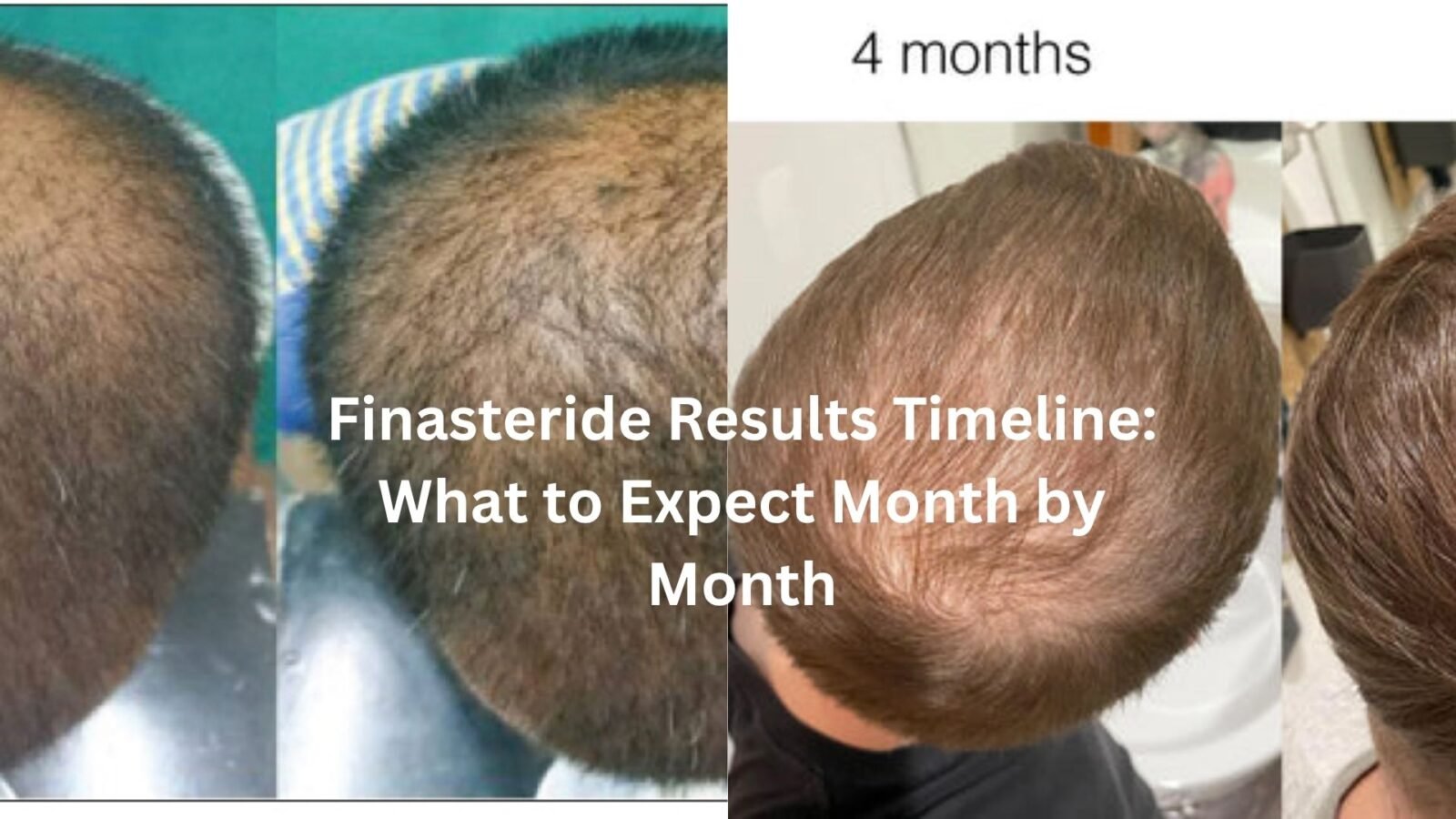
Finasteride works by blocking DHT production within 24 hours, reducing levels by 65% after your first dose. However, visible hair regrowth takes 3-12 months because your hair follicles need time to respond and grow through their natural cycle. Most men see reduced shedding by month 3, initial regrowth by month 6, and maximum benefits after 12 months of consistent use.
How Finasteride Works in Your Body
Finasteride is a 5-alpha-reductase inhibitor that prevents testosterone from converting into dihydrotestosterone (DHT). DHT is the primary hormone responsible for male pattern baldness, binding to hair follicle receptors and gradually shrinking them until they stop producing visible hair.
According to clinical pharmacology studies, finasteride achieves peak DHT suppression within the first 24 hours of treatment. This rapid biochemical change is not immediately visible because existing hair growth cycles must complete before you’ll notice differences in density or regrowth.
Is finasteride effective for everyone? No. Finasteride works best for men with vertex (crown) and mid-scalp thinning. It is less effective for frontal hairline recession and does not work if hair follicles are already completely inactive. Effectiveness also depends on starting treatment early in the hair loss process.
Isn’t finasteride only for older men? No. Finasteride is approved for men aged 18 and over. Younger men often see better results because their follicles respond more readily to DHT reduction when they haven’t been miniaturized for extended periods.
| Timeframe | DHT Reduction | Visible Hair Changes | What You’ll Notice |
| 24 hours | 65% reduction | None | No visible changes yet |
| 1-3 months | Sustained 70% | Possible shedding | Less hair in shower drain |
| 3-6 months | Sustained 70% | Early regrowth | Finer hairs becoming visible |
| 6-12 months | Sustained 70% | Significant density | Noticeable thickness increase |
| 12+ months | Sustained 70% | Maximum benefit | Maintenance phase begins |
Months 0-3: The Adjustment Period
During your first three months on finasteride, don’t expect dramatic visual changes. Your body is adjusting to reduced DHT levels, and your hair follicles are beginning their recovery process beneath the scalp surface.
Some men experience a temporary shedding phase during months 1-2. According to dermatology research, this occurs because finasteride pushes weak, DHT-damaged hairs into their natural shedding phase faster, making room for healthier growth cycles. This shedding is actually a positive sign that the medication is working at the follicle level.
By the end of month 3, many men report subtly reduced hair loss. You might notice fewer hairs on your pillow, in the shower, or when running your hands through your hair. This reduction in daily shedding is often the first encouraging sign that treatment is progressing as expected.
What to Track During Early Treatment
Keep a simple log of your hair loss patterns. Note how many hairs you count in the shower drain or on your pillowcase each morning. These baseline measurements help you identify genuine progress when visible changes are still minimal. Taking standardized photos in the same lighting conditions also provides objective comparison points for later months.
Months 3-6: Early Signs of Recovery
The 3-6 month window is when most men begin seeing the first real evidence of hair recovery. According to clinical trials published in the Journal of the American Academy of Dermatology, participants showed measurable increases in hair count and clinically significant improvements in appearance by the 6-month mark.
During this phase, you’ll likely observe fine “baby hairs” emerging in previously thinning areas. These new hairs start as barely visible vellus hairs before gradually thickening into terminal hairs over subsequent months. The crown and vertex areas typically respond first, with frontal regions following more slowly.
Your existing hair may also appear healthier. Strands become less brittle, breakage decreases, and overall texture improves as DHT’s miniaturizing effects reverse. This quality improvement combines with new growth to create visibly denser coverage.
| Month | Expected Changes | Percentage Seeing Results | Key Indicators |
| 3 | Reduced shedding | 40-50% | Fewer hairs in shower/pillow |
| 4 | Vellus hair emergence | 30-40% | Fine hairs at hairline/crown |
| 5 | Texture improvement | 50-60% | Stronger, less brittle strands |
| 6 | Measurable density gain | 60-70% | Photos show visible improvement |
Months 6-12: Visible Transformation Phase
The second half of your first year on finasteride brings the most dramatic improvements. According to large-scale clinical studies involving over 1,500 participants, this period delivers peak regrowth rates and maximum density gains.
By month 9, men typically see their new baby hairs maturing into thicker terminal hairs. The coverage gap between thinning sections and healthy areas becomes less pronounced. Your scalp becomes less visible through your hair, and styling becomes easier as overall volume increases.
Month 12 marks a significant milestone. Clinical data shows that men completing a full year of finasteride treatment achieve maximum hair count increases. Any regrowth you’ll experience from finasteride alone has typically manifested by this point, though continued improvements in hair quality can extend beyond the one-year mark.
Managing Expectations
Not everyone responds identically to finasteride. According to research, approximately 65% of men experience regrowth, while 90% maintain their existing hair without further loss. The remaining 10% may see continued thinning despite treatment, often due to genetic factors or starting treatment after follicles became permanently inactive.
Long-Term Results and Maintenance
After reaching the 12-month milestone, finasteride transitions from an active regrowth phase into a maintenance phase. Your results stabilize, and the primary benefit shifts to preserving the density you’ve gained rather than continuing dramatic monthly improvements.
According to longitudinal studies tracking men for 2-5 years on finasteride, those who responded well in year one typically maintain their gains indefinitely as long as they continue treatment. Small incremental improvements can occur in year two, but they’re usually subtle compared to first-year changes.
Isn’t maintenance just as important as regrowth? Yes. Even if you don’t see dramatic regrowth, preventing further hair loss is clinically valuable. Men who maintain their hair density at age 30 instead of continuing to lose it have significantly better coverage at age 40 and beyond.
What Happens If You Stop Taking Finasteride
Discontinuing finasteride reverses its benefits within 6-12 months. DHT levels return to baseline, and any hair regrown or preserved during treatment will gradually miniaturize and shed. This is not a rebound effect but simply a return to your natural hair loss progression pattern.
Enhancing Your Results
While finasteride is effective as a standalone treatment, many men combine it with complementary therapies to maximize results. Combining finasteride with minoxidil addresses hair loss through two different mechanisms, potentially delivering superior outcomes compared to either treatment alone.
According to dermatology research, minoxidil improves blood flow to hair follicles and extends the growth phase of the hair cycle, while finasteride reduces DHT’s damaging effects. This dual-action approach benefits men who respond partially to finasteride but want additional density gains.
Other evidence-based complementary treatments include:
- Low-level laser therapy (LLLT) devices that stimulate cellular activity in follicles
- Microneedling sessions that enhance topical treatment absorption
- Nutritional optimization ensuring adequate biotin, zinc, and iron levels
- Specialized hair care products designed for thinning hair
Consult a qualified healthcare provider before combining treatments. Professional guidance from Sons ensures your treatment plan addresses your specific pattern of hair loss and medical history.
Frequently Asked Questions
How long does it take to see finasteride results?
Most men notice reduced hair shedding by month 3 and visible regrowth by month 6. Maximum results typically appear after 12 months of consistent daily use. Individual response varies based on age, extent of hair loss, and how early in the process you started treatment.
Can I speed up finasteride results?
No medication or intervention accelerates finasteride’s timeline significantly. Hair growth follows biological cycles that require several months to complete. However, combining finasteride with minoxidil may produce more substantial overall results compared to finasteride alone.
What if I don’t see results after 6 months?
Continue treatment through month 12 before evaluating effectiveness. Some men respond more slowly, and subtle improvements may not be immediately apparent. Standardized photos in identical lighting help identify changes you might miss in daily mirror checks. If you see no improvement after 12 months, consult your healthcare provider about alternative or combination therapies.
Does finasteride work better if I start early?
Yes. Finasteride is most effective when hair follicles are miniaturized but still active. Once follicles become completely dormant, they cannot be reactivated. Starting treatment at the first signs of thinning preserves more hair long-term compared to waiting until significant loss has occurred.
Will I need to take finasteride forever?
Finasteride requires ongoing use to maintain results. Stopping treatment allows DHT levels to rise again, and hair loss resumes its natural progression. Most men who benefit from finasteride continue treatment indefinitely to preserve their improvements and prevent further thinning.
About the Author: This article was researched and written by the clinical team at Sons, a UK-based men’s health platform providing evidence-based treatments for hair loss, sexual health, and overall wellness. All medical content is reviewed by GMC-registered healthcare professionals.
Medical Disclaimer: This article is for informational purposes only and does not constitute medical advice. Finasteride is a prescription medication. Consult a qualified healthcare provider to determine if finasteride is appropriate for your specific situation. Individual results vary.