

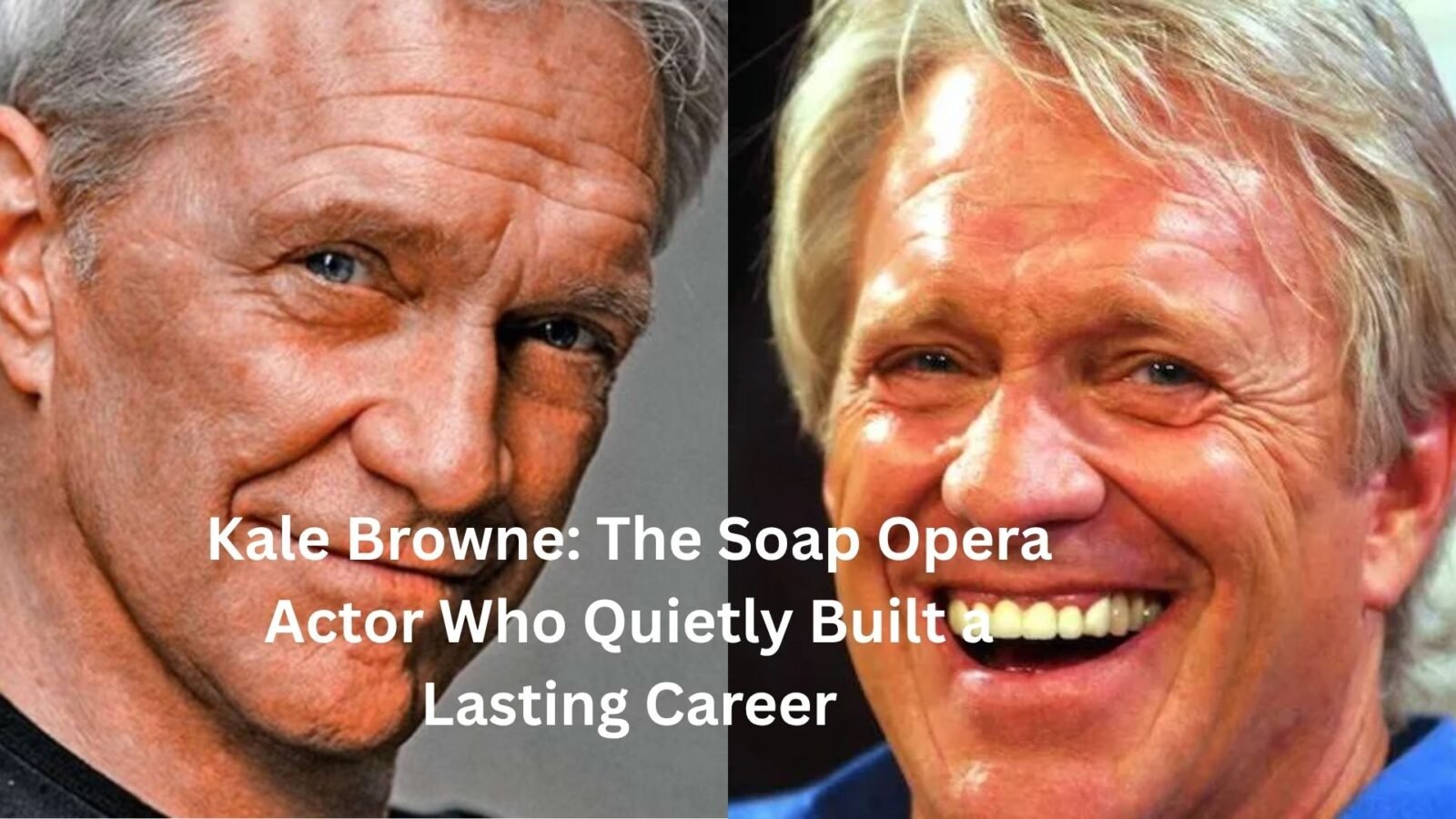
Some actors become huge stars for a few years and then disappear. Others take a slower, steadier route. They keep working, keep improving, and somehow stay familiar to audiences across decades without constantly chasing headlines. Kale Browne falls into that second category.
If you watched daytime television anytime from the late 1980s through the early 2000s, chances are you’ve seen him. Maybe you remember him as Michael Hudson on Another World. Maybe as Sam Rappaport on One Life to Live. Or maybe you caught him in one of those classic network dramas that used to fill evening television schedules before streaming swallowed everything whole.
What makes Browne interesting isn’t just longevity. It’s the kind of career he built. Quietly consistent. Professional. Never overly flashy. The sort of actor casting directors trust because he can step into complicated roles and make them feel believable without turning every scene into a performance contest.
That kind of career rarely gets enough attention.
Kale Browne didn’t arrive with celebrity energy
Here’s the thing about actors from Browne’s era. A lot of them came up through working television, not social media visibility or franchise fame. They earned recognition episode by episode.
Born David Charles Browne in San Rafael, California, in 1950, he entered television during a period when networks were pumping out dramas, soap operas, and made-for-TV films constantly.
That environment created a certain kind of actor. You had to be reliable. Fast. Prepared. Soap operas especially were brutal in terms of schedule. Massive scripts. Tight shooting windows. Emotional scenes every day. There wasn’t time for endless retakes or method-acting theatrics.
And honestly, you can see that discipline in Browne’s performances.
Even when he’s playing emotionally heavy material, there’s restraint there. He doesn’t overplay scenes. That’s harder than it sounds.
A lot of younger viewers who discover old soap clips online are surprised by how grounded some of those performances actually were. They expect exaggerated melodrama and instead find actors carrying entire emotional storylines with subtle facial expressions and carefully timed dialogue.
Browne was good at that.
His years on Another World mattered more than people realize
Soap operas used to shape television culture in a way that’s difficult to explain now.
People organized lunch breaks around them. College students rushed back to dorm rooms for episodes. Stay-at-home parents built daily routines around familiar characters. These shows weren’t background noise for loyal viewers. They were part of everyday life.
Browne’s role as Michael Hudson on Another World became one of the defining parts of his career. He played the character across multiple stretches between 1986 and 1998.
That’s a long time to live inside one fictional personality.
And maintaining audience trust for that many years isn’t easy. Soap viewers notice everything. A slightly false emotional beat. A rushed line. A relationship storyline that suddenly feels disconnected. Fans remember details actors themselves probably forgot decades ago.
What worked in Browne’s favor was credibility. He felt like someone who belonged in those complicated emotional storylines.
There’s also something else worth mentioning. Soap actors often get unfairly dismissed by people who’ve never watched the format seriously. But the workload is intense. Imagine filming emotional confrontations, romantic scenes, courtroom dialogue, family drama, and major character twists with almost no downtime.
That environment either sharpens actors quickly or exposes weaknesses fast.
Browne stayed relevant there for years.
That says something.
He became familiar without becoming overexposed
A strange thing happens with actors who work steadily for decades. They become part of television memory.
You see them and think, “I know that guy from somewhere.”
Browne had appearances across a huge range of shows including Dallas, Dynasty, Knots Landing, L.A. Law, Matlock, Law & Order, and JAG.
That list basically reads like a tour through classic American television.
And while he rarely became the center of tabloid culture or celebrity obsession, there’s value in that kind of career path. Maybe even more now than before.
Let’s be honest. Fame burns people out. Fast.
The actors who quietly work for forty years without constant reinvention often end up with something more stable: respect inside the industry.
You can almost imagine producers saying, “Get Kale Browne. He’ll nail it.”
That reputation matters more than magazine covers.
His connection to Karen Allen added another layer to public interest
For a period, Browne’s personal life also drew attention because of his marriage to actress Karen Allen, best known for playing Marion Ravenwood in Raiders of the Lost Ark.
The two were married from 1988 to 1998 and had a son together.
What’s interesting is how low-key the relationship remained compared to modern celebrity culture. There wasn’t constant public drama attached to it. No endless social media commentary because social media didn’t exist yet in the form we know today.
People learned about celebrity relationships mostly through magazine interviews or entertainment segments on television.
That older version of fame feels almost peaceful now.
And Browne himself always seemed more connected to the work than to celebrity performance. Some actors clearly enjoy being public figures. Browne came across more like someone focused on craft and consistency.
There’s a reason soap opera fans stay loyal to actors like him
Soap opera fandom is different from most television fandom.
It’s deeply personal.
When viewers spend years watching characters move through marriages, betrayals, illnesses, custody battles, career disasters, and family conflicts, those actors become emotionally tied to certain periods of people’s lives.
Someone might remember watching Another World with their grandmother after school. Another viewer remembers maternity leave afternoons spent watching daytime TV while holding a newborn baby. Someone else remembers watching during difficult years because the routine felt comforting.
Actors become connected to memory itself.
That’s part of why performers like Browne still have loyal fans decades later. They weren’t just entertainment. They became part of viewers’ routines and emotional landscapes.
That kind of connection is hard to manufacture today because entertainment habits are more fragmented. Everyone watches different things at different times.
Back then, millions of people watched the same episodes together every day.
Browne also worked outside daytime television
One thing that often gets overlooked is how versatile Browne’s career actually was.
He appeared in films, television movies, radio productions, and even voice work connected to the NPR Star Wars radio adaptation where he voiced Biggs Darklighter.
That’s a surprisingly cool credit.
And it reflects something true about many working actors: the career path is rarely linear. You move between genres, formats, and opportunities constantly.
One year it’s a courtroom drama guest role. Next year it’s daytime television. Then a TV movie. Then voice acting.
The actors who survive longest are usually adaptable.
Browne clearly was.
His style feels different from modern television acting
Watching older television performances now is interesting because the rhythm feels different.
Modern acting often leans heavily toward ultra-naturalism or hyper-intensity. Everything is either understated mumbling or emotionally explosive prestige drama.
Actors from Browne’s television generation tended to sit somewhere in the middle. Clear speech. Strong presence. Emotional control without feeling robotic.
You can see traces of stage training in many performers from that era. Dialogue mattered. Timing mattered. Listening mattered.
And yes, sometimes the style feels more formal than today’s performances. But there’s also clarity there that modern television occasionally loses.
Browne’s acting fits that tradition well. Calm authority. Emotional steadiness. Professional rhythm.
Not every role needs fireworks.
Sometimes a story works because one actor in the scene feels believable enough to hold everything together.
The quiet durability of his career is probably the real story
If you step back and look at Browne’s career as a whole, the most impressive thing may simply be endurance.
Entertainment industries change fast. Trends disappear. Formats collapse. Entire audiences shift platforms within a few years.
Yet Browne kept appearing in projects decade after decade.
That kind of staying power usually comes from a combination of talent, professionalism, adaptability, and reputation. People need to want to keep hiring you.
And unlike actors who become trapped by one role forever, Browne managed to move across multiple television worlds without losing recognition.
That balance is difficult.
Too much anonymity and audiences forget you. Too much typecasting and nobody sees beyond one character.
He managed to land somewhere in between.
Why Kale Browne still matters to television fans
Not every meaningful television career becomes massively famous.
Sometimes importance comes from consistency instead of spectacle.
Kale Browne represents a generation of actors who helped build the emotional backbone of network television during its peak decades. They showed up episode after episode, scene after scene, creating characters audiences trusted enough to keep watching year after year.
That contribution matters more than people sometimes admit.
Especially now, when entertainment moves at a frantic pace and shows disappear from public conversation within weeks, there’s something refreshing about actors whose careers were built slowly over time.
Browne’s career reminds people that success in entertainment doesn’t always have to look loud.
Sometimes it looks like reliability. Longevity. Quiet professionalism.
And honestly, there’s something admirable about that.