

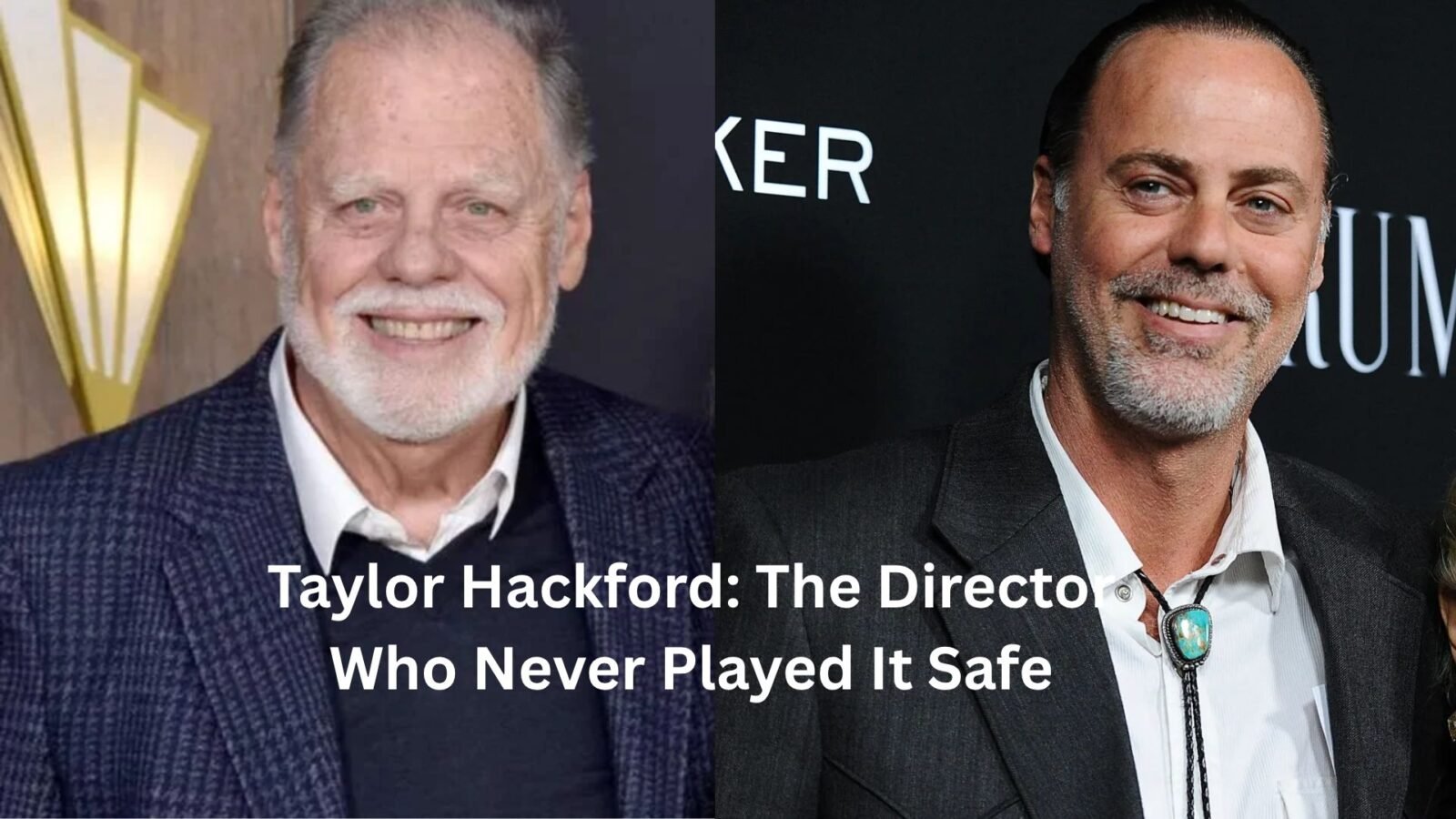
Taylor Hackford has spent decades making films about pressure, ambition, ego, and survival. Not the shiny Hollywood version of those things either. His movies usually feel lived-in. Messy. Human. Sometimes uncomfortable. That’s probably why they’ve lasted.
A lot of directors become known for one signature style. You can spot their movies instantly. Hackford never really worked that way. He moved between music documentaries, crime dramas, courtroom thrillers, romance, and biographical films without seeming trapped by one formula. Yet there’s still a thread connecting his work: characters pushed to the edge of something important.
And honestly, that flexibility might be why he doesn’t always get mentioned alongside the flashier “auteur” names from his era. But when you look closely at his career, it’s hard not to notice how many films stuck in popular culture came through his hands.
From An Officer and a Gentleman to Ray, Hackford built a career around intensity. Not spectacle for the sake of spectacle. Emotional intensity. The kind that lingers after the credits.
Early life and the road into filmmaking
Taylor Hackford was born in Santa Barbara, California, in 1944. His background wasn’t the typical straight-to-Hollywood story people sometimes imagine. Before directing films, he studied international relations and economics at the University of Southern California.
That detail matters more than it sounds.
A lot of his films feel deeply aware of systems — power systems, class structures, institutional pressure. Whether it’s military culture in An Officer and a Gentleman or the brutal business side of the music industry in Ray, there’s usually more happening underneath the surface drama.
Before becoming a filmmaker, Hackford worked with the Peace Corps in Bolivia. That experience reportedly shaped how he viewed people and conflict. You can see traces of that observational style later in his directing. His movies rarely feel detached from real-world consequences.
He eventually entered the film industry through television and documentary work. Like many directors of the 1970s generation, he came up during a time when filmmakers had more room to experiment. Studios were willing to take risks on directors who had something personal to say.
That era produced some rough edges. Which was a good thing.
Movies felt less polished back then, but often more alive.
The Oscar-winning beginning most people forget
A surprising number of people don’t realize Hackford won an Academy Award before becoming famous for his major Hollywood dramas.
In 1979, he directed Teenage Father, a short film about adolescent parenthood. It won the Oscar for Best Live Action Short Film. The subject matter alone says something about his interests as a storyteller. He wasn’t chasing escapism. He leaned toward emotional realism and social pressure.
Then came The Idolmaker in 1980, a music-industry drama loosely inspired by producer Bob Marcucci. The film didn’t become a massive blockbuster, but it developed a strong reputation over time. You can already see Hackford’s fascination with ambition there — talented people chasing validation while navigating manipulation and fame.
That theme would keep returning throughout his career.
An Officer and a Gentleman changed everything
Then came the film that made him a major Hollywood director.
An Officer and a Gentleman released in 1982 and became a huge success. The movie starred Richard Gere as Zack Mayo, a Navy aviation candidate dealing with brutal training and unresolved emotional baggage.
Now, let’s be honest. This could’ve easily turned into a standard romantic drama with military aesthetics layered on top.
Instead, the film feels tougher than people remember.
Louis Gossett Jr.’s performance as drill instructor Emil Foley gave the movie its backbone. His scenes with Gere crackle because Hackford understood tension. He knew when to let silence sit. When to let frustration build. When not to overplay emotion.
That restraint matters.
There’s a reason the “I got nowhere else to go!” scene still gets referenced decades later. It works because it feels earned.
The film earned multiple Oscar nominations and won Gossett Jr. an Academy Award. It also cemented Hackford as a director capable of balancing commercial appeal with emotional grit.
That balance is harder than it looks.
Music became one of his defining strengths
Hackford always had a strong connection to music storytelling.
Not just soundtracks. Character through music.
One of his most respected projects was the documentary Chuck Berry: Hail! Hail! Rock ‘n’ Roll in 1987. The film captured legendary musician Chuck Berry while also revealing his difficult personality and complicated relationships with fellow performers.
Hackford didn’t smooth out Berry’s rough edges for audience comfort. That honesty gave the documentary energy.
You can tell Hackford genuinely respected musicians, but he wasn’t interested in turning them into saints. That approach later became crucial for Ray.
Before that, though, he directed movies like Against All Odds and White Nights. Both leaned heavily into atmosphere and music culture. The soundtrack for Against All Odds became iconic on its own, especially the Phil Collins title song.
There’s something very 1980s about those films, but not in a shallow nostalgic way. They carry emotional seriousness beneath the style.
Ray was the career-defining masterpiece
If there’s one Taylor Hackford film that fully defines his legacy, it’s probably Ray.
Released in 2004, the movie explored the life of Ray Charles, played by Jamie Foxx in one of the most celebrated performances of the 2000s.
Biopics often fall into the same trap. They become chronological highlight reels. Childhood trauma. Rise to fame. Addiction. Redemption. Awards music swells. Credits roll.
Ray avoided that formula better than most.
Hackford approached Ray Charles as a complicated genius rather than a clean inspirational figure. The film deals directly with addiction, infidelity, trauma, and control. At the same time, it never loses sight of Charles’ musical brilliance.
Jamie Foxx deservedly won the Academy Award for Best Actor, but Hackford’s direction deserves equal credit. The performance worked because the film gave it room to breathe.
There’s a scene where Ray negotiates ownership of his master recordings. It’s not flashy. No explosions. No huge dramatic reveal. Yet it’s one of the most satisfying moments in the movie because Hackford understood power dynamics.
He knew victories don’t always look cinematic in obvious ways.
Sometimes they happen across a table during contract discussions.
That realism gave Ray weight.
He wasn’t afraid of flawed characters
One thing that stands out across Hackford’s filmography is how often he centers deeply imperfect people.
Not antiheroes in the trendy modern sense. Just people carrying damage.
In Dolores Claiborne, Kathy Bates plays a woman accused of murder while confronting decades of buried trauma. The film mixes psychological drama with mystery, but the emotional core feels painfully grounded.
In The Devil’s Advocate, Al Pacino delivers one of the most over-the-top performances imaginable as a satanic law firm leader. Yet beneath the supernatural setup, the movie is really about ambition corrupting identity.
That movie could’ve become completely ridiculous in the wrong hands. And yes, parts of it are gloriously excessive. But Hackford keeps the emotional stakes surprisingly believable.
You understand why Keanu Reeves’ character keeps compromising himself.
Success has momentum. People adapt to environments faster than they realize.
Hackford understood that uncomfortable truth.
His directing style feels invisible in the best way
Some directors announce themselves constantly through visual tricks or hyper-stylized filmmaking.
Hackford tends to disappear into the story.
That’s not criticism. In many ways, it’s a skill that gets undervalued now.
His camera work usually serves performance first. Actors often give some of their strongest work under his direction because he allows scenes to unfold naturally. Conversations breathe. Reactions matter. Emotional escalation builds gradually instead of being forced every few seconds.
There’s also a toughness to his pacing.
He doesn’t rush emotional conflict just to keep things moving. Modern films sometimes fear stillness. Hackford didn’t.
You can imagine him on set pushing actors toward emotional honesty instead of surface-level intensity.
And honestly, that approach ages well.
A movie built around real human tension usually survives trends better than one built around temporary visual style.
His influence stretches further than people realize
Hackford served as president of the Directors Guild of America from 2009 to 2013, which says a lot about how respected he became within the industry.
Directors often appreciate craftsmanship differently than audiences do. They notice discipline. Consistency. Leadership.
Hackford built a reputation as a filmmaker who could manage large productions while still protecting character-driven storytelling. That combination matters enormously in Hollywood.
Not every director can handle actors, studios, budgets, and audience expectations at the same time.
Hackford could.
And while he never became a celebrity director in the way someone like Quentin Tarantino did, his career arguably reflects something more durable: longevity without complete reinvention.
He adapted across decades without losing his instincts.
That’s rare.
The movies feel human because the stakes do
What keeps people returning to Taylor Hackford’s work isn’t visual spectacle alone. It’s emotional pressure.
His characters usually want something badly — respect, freedom, success, love, redemption — and they’re willing to risk parts of themselves to get it.
That tension feels universal.
You see it in Zack Mayo pushing through military training. In Ray Charles fighting for creative control. In lawyers selling pieces of their morality in The Devil’s Advocate. Even smaller moments in his films often carry that same emotional negotiation.
Who are you becoming while chasing what you want?
That question sits quietly underneath much of Hackford’s work.
And maybe that’s why the films continue connecting with audiences years later. The settings change. The industries change. Human ambition doesn’t.
Final thoughts on Taylor Hackford
Taylor Hackford never seemed interested in making perfectly polished movies. He made emotionally charged ones instead.
Some are messy. Some are intense to the point of discomfort. A few are wildly ambitious. But they almost always feel alive.
That’s harder to achieve than technical perfection.
His career reflects a filmmaker drawn to conflict, vulnerability, and people under pressure. Whether directing a military drama, a courtroom thriller, or a music biopic, he consistently focused on emotional truth over surface-level style.
And while trends in Hollywood have shifted repeatedly since the 1970s, Hackford’s best films still hold attention because they trust audiences to engage with complicated people.
No easy heroes. No clean answers.
Just human beings trying to survive the consequences of their choices.