

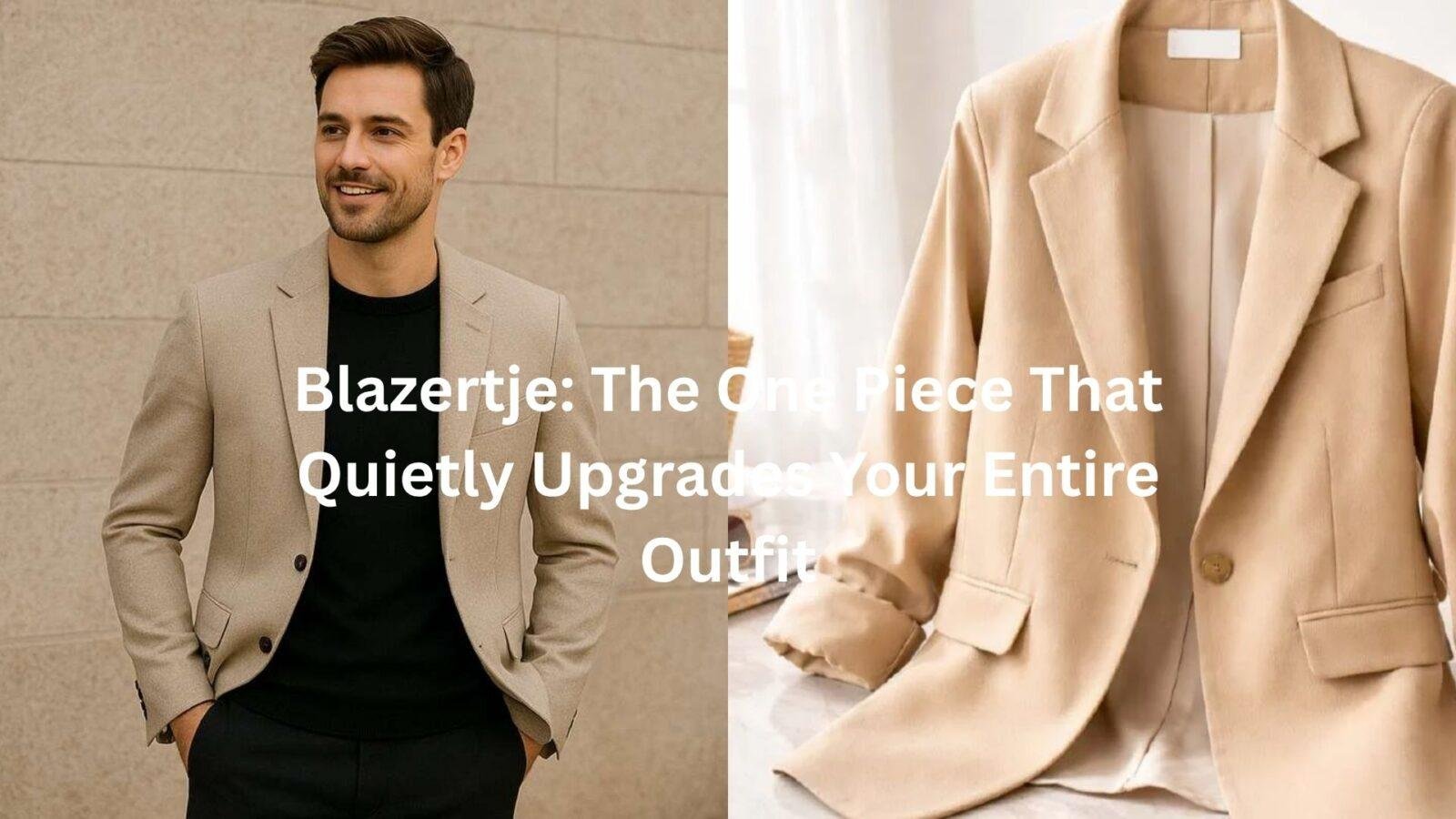
There’s something about a blazertje that just works.
You can throw it over almost anything—jeans, a simple tee, even a slightly wrinkled shirt—and suddenly you look like you’ve got your life together. Not in a stiff, overdressed way. More like you made a small effort, and it paid off.
That’s the magic of it. It sits somewhere between casual and polished, and that middle ground is exactly where most of us live day to day.
Why a Blazertje Works So Well
Let’s be honest, most wardrobes are built around comfort. We reach for what’s easy. Soft fabrics, neutral colors, things that don’t require too much thought at 7:30 in the morning.
A blazertje slips right into that routine without demanding a full style overhaul.
It doesn’t scream for attention. It just sharpens the edges.
Picture this: you’re wearing a plain white T-shirt and your favorite jeans. It’s fine. Nothing wrong with it. But add a fitted blazertje—suddenly it feels intentional. Like you chose that outfit instead of just landing on it.
That’s the key difference. Effort versus the appearance of effort.
The Fit Makes or Breaks It
Here’s where people often go wrong.
A blazertje isn’t just a smaller blazer. It’s more tailored, more precise. If the fit is off, even slightly, the whole effect disappears.
Too tight, and it feels restrictive. You’ll notice it every time you move your arms.
Too loose, and it starts drifting into “borrowed jacket” territory.
What you want is structure without stiffness. The shoulders should sit cleanly. The sleeves shouldn’t swallow your hands. And the length—this matters more than people think—should hit around your hips, not halfway down your thighs.
Try sitting down in it. Seriously. If it pulls awkwardly or rides up too much, you’ll feel it throughout the day.
A good blazertje moves with you. You shouldn’t have to think about it after you put it on.
Casual, But Slightly Smarter
One of the best things about a blazertje is how easily it bridges two worlds.
You can wear it to a casual lunch, then head straight into a meeting without feeling underdressed. It adapts.
Let’s say you’re grabbing coffee with a friend. Sneakers, jeans, maybe a basic knit. Add a blazertje, and suddenly you look a bit sharper without losing that relaxed vibe.
Now imagine the same outfit at work. Swap the sneakers for something cleaner—loafers or simple boots—and you’re good to go.
It’s not about dressing up. It’s about leveling up just enough.
Fabric Changes Everything
Not all blazertjes feel the same, and fabric plays a bigger role than most people realize.
A heavier wool version gives off a more structured, classic feel. Great for cooler months or situations where you want to look a bit more put together.
Then you’ve got lighter fabrics—cotton blends, linen. These feel more relaxed. They wrinkle a bit. They breathe better. They’re perfect for spring and summer, when the last thing you want is something stiff.
There’s also stretch fabrics, which are a quiet game-changer. If you move around a lot during the day—commuting, working, running errands—you’ll notice the difference immediately.
You don’t need a closet full of options. One or two well-chosen pieces can carry you through most situations.
Color: Keep It Simple (At First)
It’s tempting to go bold. A deep green, a bright check pattern, something that stands out.
But if you’re just getting into wearing a blazertje regularly, start simple.
Navy, black, or a soft grey. These colors work with almost everything you already own.
Once you’ve worn it a few times, you’ll start to see how it fits into your wardrobe. That’s when you can experiment a bit.
Maybe you add a subtle pattern. Maybe a warmer tone. But the foundation matters.
A neutral blazertje becomes a kind of default. You don’t have to think too hard about it, and that’s exactly what makes it useful.
It’s Not Just for “Dressed-Up” Days
There’s this idea that a blazer—any blazer—is reserved for moments when you need to look polished.
That’s outdated.
A blazertje actually works best when it’s part of your everyday rotation.
Think about running errands. Meeting someone briefly. Working from a café. These aren’t formal situations, but they’re still public. You still want to look decent without overdoing it.
Throwing on a blazertje takes about five seconds. But it changes how you’re perceived—and, honestly, how you feel.
There’s a subtle shift. You stand a bit straighter. You carry yourself differently. Not dramatically, just enough to notice.
Small Details That Make a Difference
You don’t need to obsess over every detail, but a few things are worth paying attention to.
Buttons, for one. Cheap-looking buttons can drag the whole piece down. It’s a small thing, but it stands out more than you’d expect.
Then there’s the lining. A well-lined blazertje feels better to wear and usually hangs better on the body.
Pockets matter too. Some are purely decorative, which can be frustrating when you instinctively try to use them. Others are functional but stitched shut when new. A quick snip, and they’re usable.
None of these details will make or break your day. But together, they shape the overall impression.
Mixing It with What You Already Own
You don’t need to rebuild your wardrobe to make a blazertje work.
In fact, it’s better if you don’t.
Start with what you already wear. Your go-to jeans. Your usual shirts. Even your slightly worn-in sneakers.
Try adding the blazertje on top.
Some combinations will feel off at first. That’s normal. Not every pairing clicks immediately.
But then you’ll find one that does. And it’ll stick.
For example, a soft grey blazertje over a black T-shirt and dark jeans. Simple, but it works almost every time.
Or a navy version with a light button-down and chinos. Clean, easy, reliable.
Once you find a few combinations that feel right, getting dressed becomes quicker. Less guesswork.
When It Doesn’t Work
Not every situation calls for a blazertje, and forcing it can backfire.
If you’re heading somewhere very relaxed—like a beach day or a casual workout setting—it can feel out of place.
The same goes for overly formal events where a full suit is expected. A blazertje might look underdone.
There’s also personal comfort. If you’re constantly adjusting it, pulling at the sleeves, or feeling restricted, it’s not the right piece for that moment.
Style shouldn’t feel like a chore.
The Confidence Factor
Here’s something people don’t always say out loud: clothes affect how you move through the world.
Not in a dramatic, life-changing way. But in small, noticeable shifts.
A blazertje sits right in that sweet spot. It’s not flashy. It doesn’t demand attention. But it adds a layer of confidence.
You’re not overdressed. You’re just… ready.
Ready for a conversation. A quick meeting. An unexpected plan.
That feeling builds over time. The more you wear it, the more natural it becomes.
Taking Care of It (Without Overthinking)
You don’t need a complicated routine to keep a blazertje in good shape.
Hang it properly. That’s the big one. A decent hanger helps it keep its shape.
Avoid over-washing. Most of the time, it doesn’t need it. Airing it out is often enough.
If it wrinkles, a bit of steam goes a long way. You don’t need to press it perfectly every time.
Treat it like a regular part of your wardrobe, not something fragile or precious.
A Piece That Grows on You
At first, wearing a blazertje might feel slightly different. Maybe even a bit unnecessary.
But give it a few days. Try it in different settings. Pair it with what you already like wearing.
It starts to make sense.
You’ll notice how often it solves the “this outfit needs something” problem. How it adds just enough structure without complicating things.
And then, one day, you’ll reach for it without thinking.
That’s when you know it’s become part of your routine—not because you have to wear it, but because it makes everything else work a little better.
