

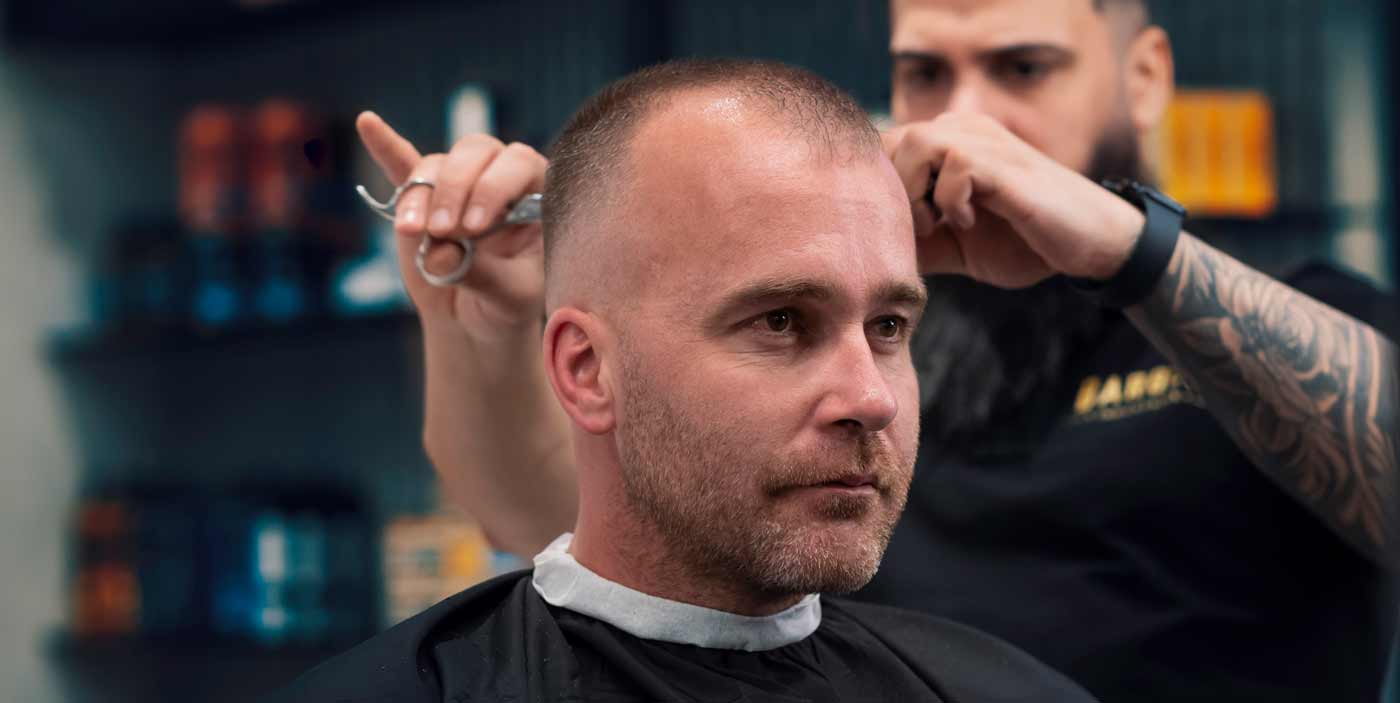
“Something different” is an understandable request at the barber’s, but it is difficult to act on. Different could mean a cleaner outline, a longer front, more visible texture, or simply a finish that feels less formal. Those changes need different conversations. You can prepare for the appointment by making three decisions about priorities while leaving the technical choices to the professional.
The decisions are about the role of the front, the relationship between the sides and top, and the routine you will actually maintain. They do not require expertise in haircut terminology. They require a careful look at your current hair and an honest account of what you want your next version to do.
Decision one: what should the front do?
The front is often the most noticeable part of a hairstyle when you see yourself in a mirror or on a video call. Decide whether you want it mostly away from the forehead, directed to one side, or allowed to fall forward. These are useful directions to discuss even if you do not know the name of the style in your reference.
Think about why a change appeals. You might want a clearer view around your eyes, a softer line at the front, or a style that feels less dependent on a precise parting. Explain that intention. A barber can then consider how much length and what shape might support it with your existing growth pattern.
Do not judge the front only in a carefully posed photograph. Look down as if reading, turn your head, and consider what happens after wearing a hat. If you dislike having to reposition the front repeatedly, mention that. The haircut needs to work when you are engaged in the rest of your day.
Decision two: where should the outline feel neat?
“Short sides” leaves considerable room for interpretation. You may care most about the hair above the ears, the back of the neck, or the amount of contrast with the top. Identify the area that makes your current haircut feel untidy to you. That is more helpful than describing the whole head as too long.
Also identify any feature you prefer to keep. Perhaps you like some coverage at the sides or a softer transition rather than a sharp contrast. If a reference shows only the front, look for another view or make the missing information explicit. Avoid assuming that the unseen back has the shape you imagine.
A good reference can demonstrate an outline without dictating every measurement. Point to the area and say what you like about it: “This looks compact around the ear,” or “I prefer the gentler connection here.” That language helps the professional understand the impression you want and suggest a suitable method.
Decision three: how much daily structure do you want?
Some men enjoy a deliberate styling routine. Others want to wash, dry, and move on. Both approaches can inform a good haircut, but they should not be confused. Tell the barber which tools and products you already use and whether you are willing to add a new step. Describe your ordinary morning rather than your most organized one.
Think about how you want the style to look when it is less controlled. A formal shape that you love immediately after styling may feel too demanding if you often skip that stage. Conversely, you may enjoy the process of creating a structured finish. The relevant question is whether the routine fits your preference and schedule.
Build a reference card with two examples
Once those priorities are clear, select a primary reference and a backup. Give each a short caption. One might show the front direction you prefer; the other might demonstrate a softer outline. Keep celebrity identity and clothing out of the explanation. You are asking about hair features rather than trying to reproduce somebody else’s whole appearance.
Personal-photo online hairstyle previews can provide an additional way to compare those broad directions. They are illustrations of possibilities, not evidence about the density, texture, or behavior of your own hair after cutting. If you save a result, label the feature that interests you so it supports the consultation instead of becoming a rigid instruction.
Bring the inconvenient details
A useful consultation includes information that an attractive picture omits. Mention if you regularly wear headphones, need hair clear of your face for work, or prefer a particular kind of headwear. Explain whether you can return for frequent appointments. These details help the barber consider the whole life of the haircut.
Show what your hair does before applying your usual styling products if that is practical. You can describe where it separates or changes direction without deciding what causes it. Let the professional assess those features. Your role is to provide accurate observations and preferences, not to translate them into a technique you have seen in a short video.
Agree on the visible result before starting
Ask the barber to explain the proposed change in terms you can picture. Where will the front sit? How much of the ear will be visible? Will the top connect softly to the sides or create more contrast? What can you expect when you do not style it? These questions reveal more than repeating a haircut name.
If you are uncertain about a major change, say which part feels uncertain and ask about alternatives. A gradual change may suit your decision process, or you may be comfortable committing to a new direction after the explanation. Either way, the choice should reflect an understood result rather than pressure to appear decisive.
Make the next appointment easier
After living with the haircut, note one thing you like and one thing you would adjust. Be specific: “The front is easier at work,” or “I would like a softer line at the neck.” Save an ordinary photograph if you want a record. These observations give your next conversation a much stronger starting point than “the same again, but different.”
Clear priorities do not guarantee an identical result to a reference, and they cannot replace a professional assessment. They do give both people a shared language. When you know what the front should do, where the outline should feel neat, and how much styling you want, a different haircut becomes a more concrete decision.