

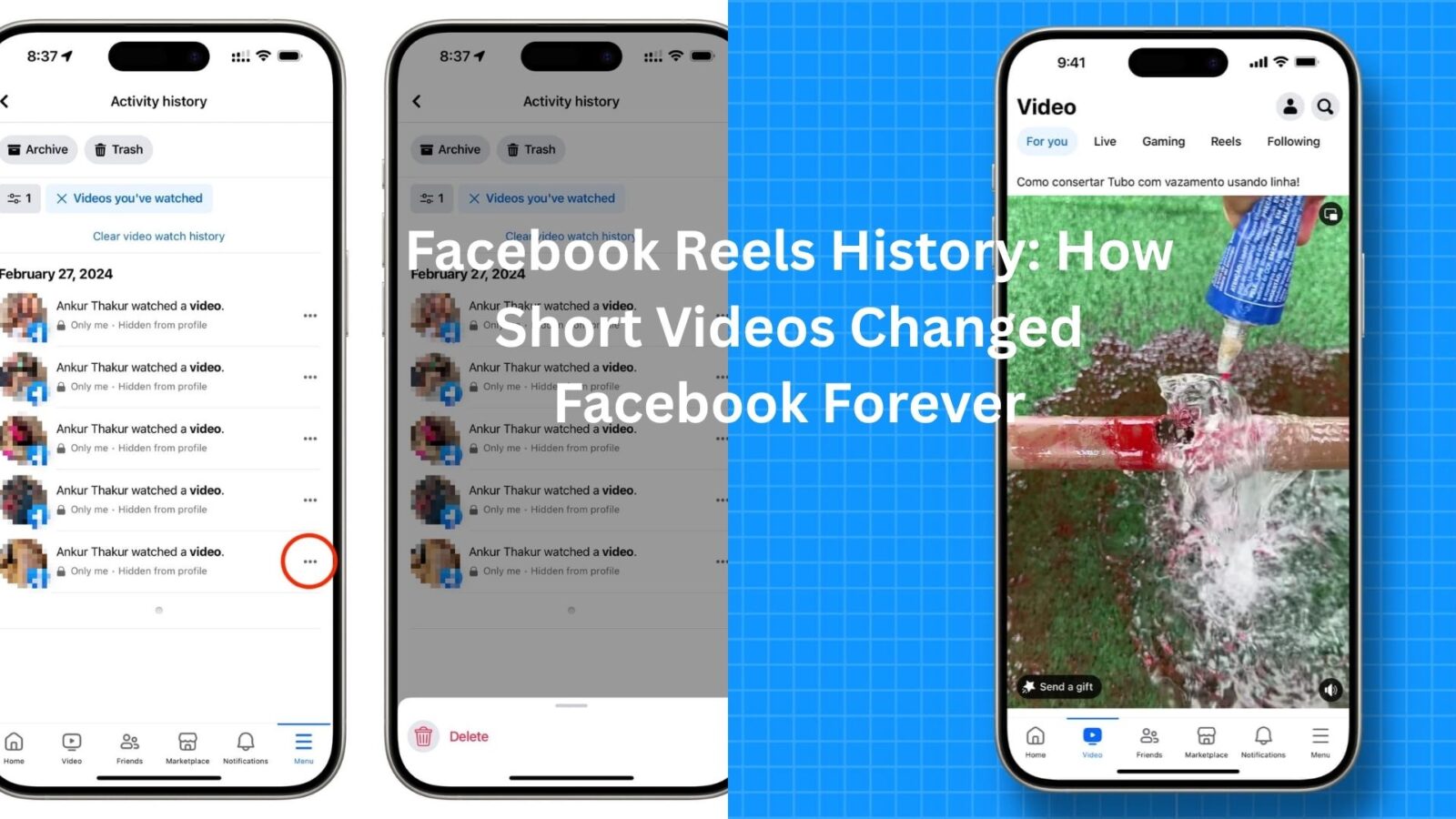
A few years ago, Facebook was mostly a place for status updates, family photos, event invitations, and the occasional viral video. Then short-form video took over the internet.
Suddenly, people weren’t spending ten minutes reading posts. They were spending ten minutes watching dozens of quick clips without even realizing it. Facebook noticed the shift and responded with one of its biggest content changes in years: Facebook Reels.
What started as an answer to the growing popularity of short-video platforms quickly became a major part of the Facebook experience. Today, Reels appear everywhere across the platform, from personal feeds to creator pages and recommendations.
Understanding Facebook Reels history isn’t just about looking back. It helps explain why Facebook looks and feels so different today.
Table of Contents
- The Social Media World Before Reels
- Why Facebook Decided to Launch Reels
- The Early Days of Facebook Reels
- How Reels Expanded Across the Platform
- The Influence of Instagram Reels
- Features That Changed Over Time
- How Creators Helped Reels Grow
- Facebook’s Recommendation Engine and Reels
- The Business Impact of Reels
- Challenges Facebook Faced
- Where Facebook Reels Stands Today
- What Facebook Reels History Tells Us About the Future
The Social Media World Before Reels
To understand Facebook Reels history, it helps to remember what social media looked like before short videos dominated everything.
Back in the early 2010s, Facebook revolved around text posts, shared links, and photo albums. Videos existed, but they weren’t the main attraction. Most people still used Facebook to keep up with friends and family rather than consume endless entertainment.
Then platforms like Vine introduced ultra-short videos. Vine eventually disappeared, but it proved something important: people loved quick, entertaining content.
TikTok later took that idea and turned it into a global phenomenon.
Users could scroll for hours, watching clips that lasted only seconds. The format was addictive, simple, and highly personalized.
Facebook couldn’t ignore that trend.
Why Facebook Decided to Launch Reels
Let’s be honest. Facebook wasn’t creating Reels because short videos were merely interesting.
The company saw a major shift in user behavior.
People were spending more time watching vertical videos and less time engaging with traditional posts. Younger audiences especially preferred fast, visual content over lengthy updates.
Meta, Facebook’s parent company, had already introduced Instagram Reels in 2020. The feature gained traction quickly.
Seeing that success, it made sense to bring a similar experience to Facebook.
The goal wasn’t just to compete with other platforms. Facebook also wanted to keep users engaged inside its own ecosystem.
If someone could watch entertaining short videos on Facebook instead of leaving for another app, that was a win for the platform.
The Early Days of Facebook Reels
Facebook first began testing Reels through limited rollouts before making them widely available.
The feature didn’t arrive with a huge splash. Many users discovered it gradually as Facebook placed Reels in feeds and menus.
Early versions were fairly simple.
Creators could upload short vertical videos, add music, use basic editing tools, and share content designed for quick consumption.
At first, some users viewed Reels as a copy of other short-video formats. That’s a common reaction whenever a major platform adopts a successful trend.
Still, the feature continued expanding.
The reason was straightforward.
People watched them.
When users spend more time engaging with a type of content, platforms naturally invest more resources into it.
How Reels Expanded Across the Platform
One interesting part of Facebook Reels history is how quickly the feature moved from being optional to becoming highly visible.
Initially, Reels appeared in limited locations.
Then Facebook started integrating them into multiple sections of the platform.
Users began seeing Reels in:
- News Feed
- Watch Tab
- Groups
- Creator Pages
- Recommended Content Sections
The more Facebook promoted Reels, the more creators started producing them.
A simple example illustrates this perfectly.
Imagine a small cooking page with 5,000 followers.
A standard photo post might reach a few hundred people.
A Reel, however, could potentially reach thousands of users who had never heard of that page before.
That discovery potential encouraged more creators to embrace the format.
The Influence of Instagram Reels
You can’t discuss Facebook Reels history without mentioning Instagram.
Both platforms belong to Meta, and many development strategies overlap.
Instagram Reels essentially served as a testing ground.
Meta observed how creators used short videos, what features they preferred, and what types of content generated the highest engagement.
Lessons learned from Instagram helped shape Facebook Reels.
Cross-platform sharing became especially important.
Creators could often share content between Instagram and Facebook with minimal effort.
That made adoption easier.
Instead of creating entirely separate content strategies, creators could repurpose videos across multiple audiences.
For busy content creators, that convenience mattered a lot.
Features That Changed Over Time
Like most digital products, Facebook Reels didn’t remain static.
The feature evolved continuously.
Early tools were relatively basic compared to what’s available today.
Over time, Facebook introduced:
Better Editing Tools
Creators gained more control over trimming clips, adjusting timing, and combining video segments.
Music and Audio Libraries
Popular sounds became an important part of Reel culture.
Users could easily add trending music to their content, making videos feel more engaging and relevant.
Effects and Filters
Visual effects gave creators more creative freedom without requiring professional editing software.
Monetization Opportunities
Facebook gradually introduced ways for eligible creators to earn revenue through their content.
This was a significant step.
When creators can potentially earn money, they become more invested in producing content consistently.
How Creators Helped Reels Grow
Technology alone doesn’t make a platform successful.
People do.
Facebook Reels gained momentum because creators embraced the format.
Some creators were already producing videos elsewhere and simply expanded their presence.
Others discovered audiences through Reels for the first time.
A fitness coach, for example, might share a 15-second workout tip.
A local baker could post a cake decorating clip.
A travel enthusiast might showcase a beautiful destination in under thirty seconds.
These quick snippets often attracted attention faster than traditional posts.
The barrier to entry was low.
You didn’t need expensive cameras, elaborate production teams, or professional studios.
A smartphone and a good idea were often enough.
That’s part of what made Reels so powerful.
Facebook’s Recommendation Engine and Reels
Here’s where things became especially interesting.
Facebook’s recommendation system played a huge role in Reels’ success.
Unlike traditional social media content that mainly reaches followers, Reels frequently reach people who have never interacted with a creator before.
The platform analyzes viewing habits, engagement patterns, interests, and behavior.
Then it recommends videos that users are likely to watch.
You’ve probably experienced this yourself.
You watch one gardening Reel.
Then another appears.
Soon you’re learning how to grow tomatoes even though you never intended to become interested in gardening.
That’s the strength of algorithm-driven discovery.
For creators, it opened doors to audiences far beyond their follower count.
The Business Impact of Reels
Facebook Reels history isn’t only about entertainment.
It also reflects major business changes.
Brands quickly realized that short videos could capture attention more effectively than many traditional marketing formats.
A local restaurant might show a sizzling dish being prepared.
A clothing store could display new arrivals in a quick styling video.
A technology company might demonstrate a product feature in under thirty seconds.
These videos often feel less formal than traditional advertisements.
As a result, viewers are sometimes more willing to engage with them.
Businesses adapted because consumer attention habits had changed.
Short-form content matched the way people were already browsing online.
Challenges Facebook Faced
The journey wasn’t completely smooth.
Facebook encountered several obstacles along the way.
Competition remained intense.
TikTok continued growing rapidly, and other platforms invested heavily in short-form video.
Content moderation also became a challenge.
Millions of videos are uploaded regularly, making quality control difficult.
There was also the issue of user adaptation.
Not everyone welcomed the shift toward short videos.
Some longtime Facebook users preferred the older experience centered around friends, family updates, and community interaction.
For those users, the growing emphasis on Reels sometimes felt overwhelming.
Balancing old and new user expectations remains an ongoing challenge.
Where Facebook Reels Stands Today
Today, Reels has become one of the most prominent features on Facebook.
It’s no longer viewed as an experiment.
It’s a core part of the platform’s strategy.
Creators use it to build audiences.
Businesses use it to reach customers.
Everyday users use it to share moments, jokes, hobbies, and experiences.
The feature has matured significantly since its introduction.
Video quality has improved.
Editing tools have expanded.
Recommendation systems have become more sophisticated.
Most importantly, user behavior has adjusted.
Watching short videos now feels like a natural part of the Facebook experience.
For many people, it’s one of the first things they see when opening the app.
What Facebook Reels History Tells Us About the Future
Looking back at Facebook Reels history reveals something larger than the story of a single feature.
It shows how quickly digital habits can evolve.
Just a few years ago, long text posts dominated Facebook. Today, short videos attract a massive share of user attention.
That doesn’t mean every trend lasts forever.
Social media changes constantly.
New formats emerge. User preferences shift. Platforms adapt.
Still, the rise of Reels demonstrates that people increasingly value content that is quick, visual, and easy to consume.
Facebook recognized that reality and reshaped a significant portion of its platform around it.
The takeaway is simple. Facebook Reels wasn’t just another feature added to an existing platform. It represented a response to changing online behavior. From its early rollout to its current position at the center of Facebook’s content strategy, Reels has played a major role in transforming how people create, discover, and share content. Whether you’re a casual user, a creator, or a business owner, understanding that journey helps make sense of the Facebook experience we see today.