

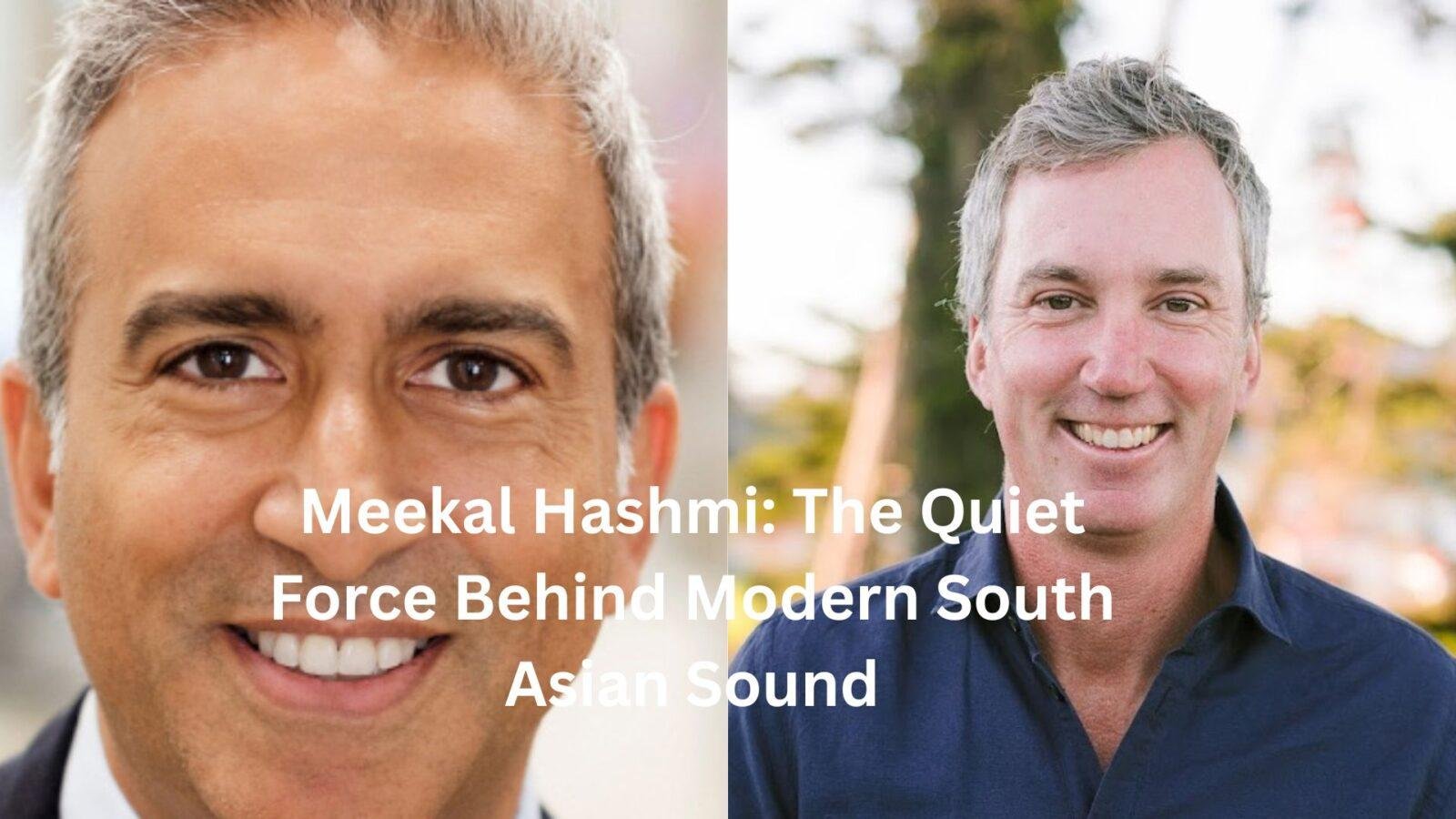
Some artists chase the spotlight. Others shape the sound of an era from just behind it. Meekal Hashmi belongs firmly in the second group.
If you’ve spent any time listening to contemporary Pakistani music—especially the kind that blends tradition with modern edge—you’ve heard his work. Maybe not his name right away. But the sound? It sticks. Clean, layered, emotional without trying too hard.
And that’s kind of his thing.
The Musician Who Never Needed to Shout
There’s something refreshing about a musician who doesn’t try to dominate every room. Meekal Hashmi has built his reputation quietly, through consistency rather than noise.
Born into a family where music wasn’t exactly a casual hobby, he had a head start—but not in the way people assume. Having a legendary ghazal singer as a father (Fareed Ayaz’s lineage connects deeply into classical traditions) doesn’t guarantee success. It sets expectations. Heavy ones.
Instead of leaning fully into classical, Meekal carved his own lane. Guitar in hand, influences wide open. Western rock, Eastern classical, blues, ambient textures—you can hear it all if you listen closely.
That mix is what gives his music its distinct identity. It doesn’t feel forced. It feels lived in.
Strings, Layers, and That Signature Feel
Here’s the thing about Meekal’s guitar work: it doesn’t scream for attention, but it pulls you in anyway.
A lot of modern guitarists go for flash—fast solos, complex runs, the kind of playing that makes you pause and think, “Okay, that’s impressive.” Meekal’s approach is different. He builds mood first. Technique comes in quietly, almost as a supporting character.
Picture this: you’re driving late at night, city lights flickering past, and there’s a track playing that somehow fits the exact rhythm of your thoughts. That’s where his sound often lands.
He understands space. Knows when not to play.
That’s harder than it sounds.
The Birth of Meekal Hasan Band
If there’s one project that defines his public identity, it’s the Meekal Hasan Band (MHB).
Formed in the early 2000s, MHB quickly stood out—not because they were loud or controversial, but because they were precise. Tight arrangements, layered compositions, and vocals that didn’t feel overproduced.
Their music sits in an interesting space. It’s not fully mainstream pop, but it’s not underground either. It’s accessible without being simplistic.
Songs like “Sampooran” and “Saij” show that balance perfectly. There’s depth there, but you don’t have to work hard to feel it.
And then came Coke Studio.
Coke Studio and the Turning Point
For a lot of artists in Pakistan, Coke Studio has been a career-defining platform. For Meekal Hashmi, it was more like a natural extension of what he was already doing.
His performances—especially “Chal Bulleya” with Shilpa Rao—didn’t just trend. They lingered.
There’s a difference.
Some songs go viral and fade. Others stay in rotation years later, quietly collecting new listeners. “Chal Bulleya” falls into the second category. It blends Sufi poetry with modern instrumentation in a way that feels organic, not engineered.
That’s where Meekal shines. He doesn’t treat tradition like a museum piece. He treats it like something alive.
A Producer’s Mindset
It’s easy to focus on his guitar work, but that’s only part of the story. Meekal Hashmi is, at his core, a producer.
And not the kind who just polishes tracks. He builds them from the ground up.
You can hear it in how his songs are structured. Layers come in gradually. Nothing feels rushed. There’s patience in the arrangement.
Think about how some songs hit you instantly but burn out quickly. Then there are others that grow on you—each listen revealing something new. Meekal leans toward the second type.
That’s not accidental.
He understands dynamics. When to hold back. When to let a track breathe. When to bring everything together for impact.
It’s a bit like cooking, honestly. Too many strong flavors at once, and you lose the dish. Balance is everything.
Staying Relevant Without Chasing Trends
Let’s be honest—staying relevant in the music industry today is messy. Trends shift fast. What works this month might feel outdated by the next.
Meekal Hashmi doesn’t seem overly concerned with that.
He adapts, sure. You can hear modern influences in his newer work. But he doesn’t abandon his core sound to fit into whatever’s trending.
That restraint matters.
Because when artists chase trends too aggressively, they often lose their identity. Meekal avoids that trap by evolving slowly. Intentionally.
It’s like someone who updates their style over time instead of switching wardrobes every season. You still recognize them.
Collaboration Without Losing Control
Another interesting thing about his career is how he collaborates.
He’s worked with a range of vocalists—each bringing their own tone, style, and energy. But the music still feels cohesive. Still feels like his.
That’s not easy.
In many collaborations, the strongest personality takes over. The track becomes more about the singer than the producer or composer. With Meekal, there’s a balance.
Take his Coke Studio work again. The vocal performances are powerful, no doubt. But the arrangements hold equal weight. The instrumentation doesn’t sit in the background—it converses with the vocals.
That’s a subtle skill.
The Role of Restraint
If there’s one word that keeps coming up when thinking about Meekal Hashmi, it’s restraint.
Not in a limiting sense. In a deliberate one.
He doesn’t overload his music. Doesn’t fill every second with sound. Leaves room for listeners to sit with what they’re hearing.
That approach stands out, especially in an age where a lot of music feels compressed—both literally and creatively.
Sometimes the most powerful moment in a track is the one where everything drops out for a second. He understands that.
Influence on the Modern Sound
You don’t always see his influence directly, but it’s there.
A lot of newer artists in Pakistan—and even across South Asia—are leaning into that same fusion of traditional and contemporary elements. Cleaner production. More thoughtful arrangements. Less reliance on formula.
Meekal didn’t start that movement alone, but he’s definitely one of the people who helped shape it.
And he did it without turning himself into a brand-first artist. The focus stayed on the music.
That’s rare.
A Career Built on Consistency
Some artists have big peaks followed by long quiet periods. Others maintain a steady presence over time.
Meekal Hashmi fits the second model.
He might not dominate headlines every year, but his work doesn’t disappear either. It stays relevant. Keeps finding listeners.
There’s something to be said for that kind of career. It’s less dramatic, sure. But often more sustainable.
Think of it like a long-distance run instead of a sprint.
Why His Work Still Matters
Now you might wonder—why does Meekal Hashmi still matter in today’s crowded music landscape?
Because he represents a kind of artistry that doesn’t rely on shortcuts.
His music rewards attention. It doesn’t demand it aggressively. It waits.
And when you do give it time, it gives something back.
In a world where content is often designed for quick consumption, that’s valuable.
The Subtle Legacy He’s Building
Not every legacy is loud.
Some are built quietly, through years of thoughtful work, careful decisions, and a refusal to compromise on core values.
Meekal Hashmi’s legacy is still unfolding, but the direction is clear. He’s shaping how modern South Asian music can sound—without disconnecting from its roots.
And he’s doing it on his own terms.
That might not make him the most talked-about artist at any given moment. But it does make his work last.
Final Thoughts
If you’re the kind of listener who likes music that reveals itself slowly, Meekal Hashmi is worth your time.
Start with a familiar track—maybe something from Coke Studio. Then go deeper. Listen to how the instruments interact. Notice the spaces between notes. Pay attention to the build, the release, the restraint.
It’s all intentional.
And once you hear it, it’s hard to unhear.
That’s the quiet power of his work.