

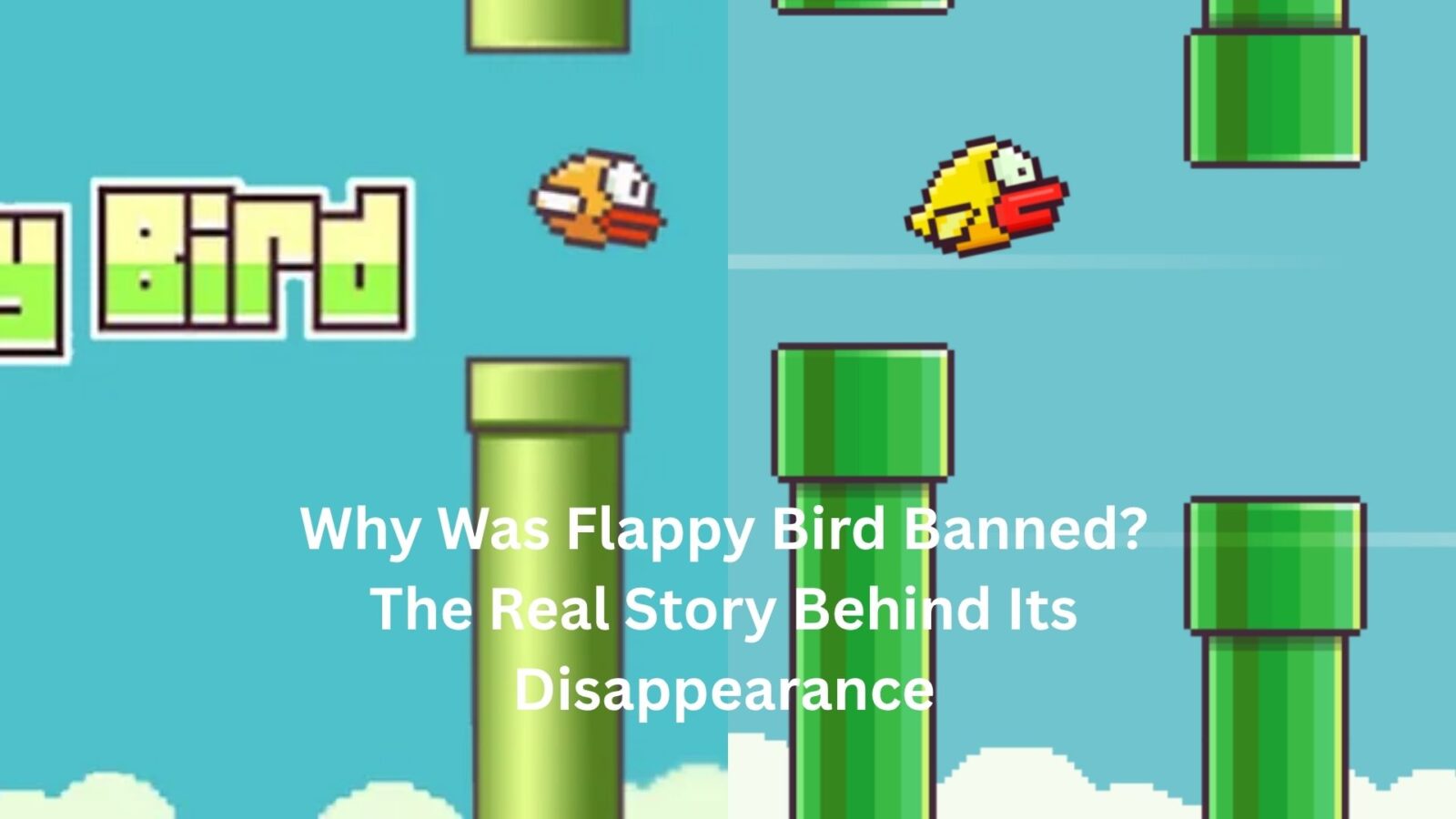
For a game that looked incredibly simple, Flappy Bird created one of the biggest surprises in mobile gaming history.
It had no flashy graphics. No complicated story. No massive marketing campaign. Yet millions of people around the world became obsessed with tapping a tiny bird through a series of green pipes. Some players spent hours trying to beat their high scores. Others deleted the game out of pure frustration, only to reinstall it a day later.
Then something strange happened.
At the height of its popularity, Flappy Bird suddenly disappeared.
The game vanished from app stores almost overnight, leaving players confused and sparking endless rumors. People wondered whether it had been banned, sued, or forced offline by a major company.
So why was Flappy Bird banned?
The short answer is that it wasn’t officially banned. The creator chose to remove it himself. But the real story is much more interesting than that.
The Rise of an Unlikely Hit
Flappy Bird was created by Vietnamese developer Dong Nguyen.
When the game first launched in 2013, hardly anyone noticed it. Like many mobile games, it sat quietly in app stores with little attention. Then, months later, something unexpected happened.
Players started sharing their scores online.
The game’s difficulty became part of its appeal. Reaching even a modest score felt like an achievement. Every failure made people want to try one more time.
Soon social media was filled with screenshots, challenges, and frustrated comments from players trying to beat their friends.
The momentum grew fast.
Within a short period, Flappy Bird became one of the most downloaded mobile games in the world. Reports suggested it was generating tens of thousands of dollars per day through advertising revenue alone.
For a solo developer, it was the kind of success most people only dream about.
But success can create problems that nobody sees coming.
Why People Thought Flappy Bird Was Banned
When Flappy Bird disappeared from app stores in February 2014, the timing made people suspicious.
Popular games don’t usually vanish at their peak.
Imagine waking up one morning and discovering that a blockbuster movie had been pulled from every streaming service for no obvious reason. Naturally, people would start asking questions.
That’s exactly what happened with Flappy Bird.
Rumors spread quickly. Some believed the game had violated app store rules. Others thought copyright lawsuits had forced its removal. A few even suggested that major gaming companies had pressured the developer.
The word “banned” became attached to the game’s disappearance because many players couldn’t imagine another explanation.
But the truth was far more personal.
The Creator Removed It Voluntarily
The biggest surprise in the Flappy Bird story is that neither Apple nor Google removed the game.
Dong Nguyen removed it himself.
Before taking the game down, he publicly announced that he planned to pull it from app stores. Then he followed through.
This decision shocked almost everyone.
Think about the situation for a moment. The game was earning enormous revenue. It had become a global phenomenon. Most developers would have been searching for ways to expand the brand, release merchandise, or launch sequels.
Instead, Nguyen walked away.
From a business perspective, many people considered it unthinkable.
From a personal perspective, it started to make more sense.
The Pressure Became Too Much
According to Nguyen, the game’s success created a level of attention he wasn’t comfortable handling.
Suddenly, journalists wanted interviews. Fans wanted answers. The gaming community analyzed every detail of his life and work.
What had started as a simple mobile game became an international news story.
Let’s be honest. Most people imagine success as a purely positive experience. More money, more recognition, more opportunities.
Reality is often messier.
A quiet developer who enjoys building games can suddenly find himself under a spotlight he never wanted. Every decision gets examined. Every comment becomes news.
Nguyen later explained that the attention and pressure were affecting his life.
For him, removing the game became a way to regain control.
Concerns About Addiction
Another reason frequently mentioned by Nguyen involved the game’s addictive nature.
Flappy Bird wasn’t designed with complex reward systems or endless progression mechanics. Yet players found it incredibly difficult to stop playing.
The formula was simple.
Tap to stay airborne.
Avoid pipes.
Fail instantly if you make a mistake.
Start again.
The cycle lasted only seconds, which made retrying feel effortless.
A player might think, “I’ll try one more round.”
Then another.
Then another.
Before long, thirty minutes had disappeared.
Nguyen expressed concern that the game had become too addictive for some players. He reportedly felt uncomfortable with the impact it was having on users.
Whether everyone agrees with that reasoning is another question.
Some people argued that players are responsible for managing their own screen time. Others respected his decision and saw it as a rare example of a developer putting personal values ahead of profit.
Either way, his concerns played a major role in the game’s removal.
The Copyright Rumors
One of the most persistent theories involved copyright issues.
Many observers noticed similarities between Flappy Bird’s visual style and classic Nintendo games.
The green pipes especially reminded players of those seen in the iconic world of Super Mario Bros..
As speculation grew, rumors spread that Nintendo had forced the game offline.
The theory sounded believable.
A massively popular game using familiar-looking elements suddenly disappears. People naturally connect the dots.
The problem is that there was never solid evidence supporting that claim.
Nintendo publicly stated that it had not taken action against Flappy Bird over copyright concerns.
That didn’t stop the rumor from circulating, but it weakened the argument that legal pressure caused the game’s removal.
While visual similarities certainly fueled discussion, they don’t appear to be the main reason the game disappeared.
The Internet Turned Flappy Bird Into a Legend
Here’s the thing.
If Flappy Bird had remained available, it might have eventually faded into the background like countless other mobile games.
Instead, its sudden disappearance transformed it into something larger.
The game became a mystery.
People rushed to keep devices that already had Flappy Bird installed. Some even attempted to sell phones containing the game for absurd prices online.
Stories circulated about old smartphones supposedly worth hundreds or thousands of dollars because they still had Flappy Bird.
Most of those listings never resulted in realistic sales, but they added to the legend.
The game wasn’t just popular anymore.
It became a cultural moment.
Scarcity often increases fascination. When something disappears unexpectedly, people want it even more.
Could Flappy Bird Have Survived Today?
It’s an interesting question.
The mobile gaming landscape has changed dramatically since 2014.
Today, viral games appear and disappear at a rapid pace. Developers are more familiar with sudden popularity. Social media attention has become part of the business.
Would Nguyen make the same decision if Flappy Bird launched today?
Nobody knows.
What is clear is that the circumstances were unusual. A solo developer created a global sensation almost by accident and then found himself dealing with pressures that many major companies struggle to handle.
Modern developers often have teams, managers, public relations staff, and support systems.
Nguyen largely faced the situation alone.
That context makes his decision easier to understand, even if people disagree with it.
What Happened After Flappy Bird?
The removal of Flappy Bird didn’t end Nguyen’s career.
He continued creating games and remained involved in game development.
Various clones also flooded app stores after Flappy Bird disappeared. Some copied the gameplay almost exactly. Others tried adding new twists to capture the same magic.
Most failed to recreate the original phenomenon.
That’s because Flappy Bird’s success wasn’t only about gameplay.
Timing mattered.
Social media mattered.
The surprise factor mattered.
Millions of people discovered the game at exactly the right moment, creating a wave of attention that couldn’t easily be repeated.
You can copy mechanics.
You can’t always copy the moment.
The Real Answer
So, why was Flappy Bird banned?
It wasn’t.
The game was voluntarily removed by its creator, Dong Nguyen, at the peak of its success. Despite widespread rumors about copyright disputes, app store violations, and corporate pressure, the evidence points to a much simpler explanation.
Nguyen felt overwhelmed by the attention surrounding the game and became concerned about its addictive impact on players. Rather than continue managing a global phenomenon he never expected, he chose to take it down.
That decision remains one of the most unusual moments in gaming history.
Most stories about viral success end with expansion, sequels, and bigger profits. Flappy Bird took a different path. Its creator stepped away while the world was still demanding more.
And ironically, that choice may be one of the biggest reasons people are still talking about Flappy Bird today.