

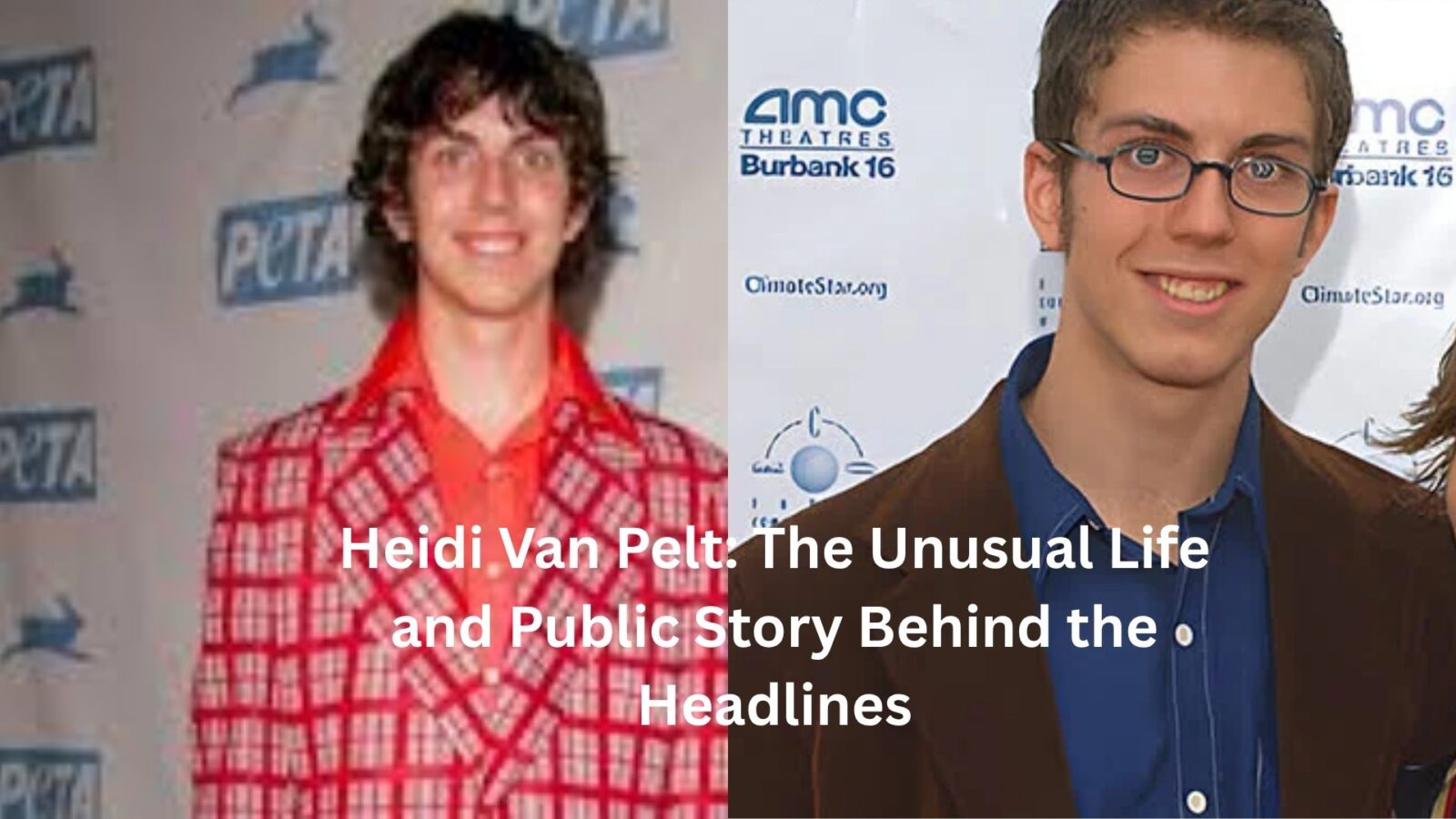
Some people become famous because they chase attention. Heidi Van Pelt became known almost by accident — and mostly because the public couldn’t stop talking about one relationship.
For years, her name has been tied to actor Taran Noah Smith, the former child star from Home Improvement. Their age gap relationship sparked endless tabloid coverage in the early 2000s, and once the media grabbed onto the story, it never fully let go. But reducing Heidi Van Pelt to “the older woman who married a sitcom actor” misses a lot of the real picture.
Her life has been messy, unconventional, entrepreneurial, and at times deeply misunderstood. And honestly, that’s probably why people still search for her today.
Before the Headlines, Heidi Van Pelt Lived a Pretty Different Life
Heidi Van Pelt was born in Missouri in 1968. Long before she became tabloid material, she was moving through a fairly ordinary Midwestern upbringing. But she didn’t exactly follow a predictable path after high school.
She reportedly attended several colleges over the years, including programs related to nutrition and philosophy, though she never settled into one long-term academic track. That detail matters because it says something about the kind of person she appeared to be: curious, restless, maybe searching for a lifestyle that felt meaningful instead of conventional.
By the 1990s, she had become heavily interested in health food, veganism, and alternative nutrition. Today that sounds normal. Walk into any grocery store and you’ll see oat milk, vegan snacks, and raw juice cleanses everywhere.
Back then? It was fringe.
Being deeply into raw vegan lifestyles in the mid-90s was the kind of thing people either admired or rolled their eyes at. Heidi leaned all the way into it.
The Relationship That Changed Everything
Most people first heard of Heidi Van Pelt because of her relationship with Taran Noah Smith.
Smith was the youngest son on Home Improvement, one of the biggest sitcoms of the 1990s. Millions of viewers watched him grow up on television. So when news broke that he was involved with someone significantly older, people reacted hard.
Heidi was around 16 years older than Smith.
That age gap became the entire story in the eyes of tabloids. Not their shared interests. Not their business ventures. Just the shock factor.
They married in 2001 when Smith was still very young. Public reaction was brutal. Entertainment media treated the relationship like a scandal, even though both were adults at the time of the marriage.
Here’s the thing about celebrity culture in the early 2000s: nuance barely existed. Headlines didn’t care about complexity. They wanted outrage, jokes, and controversy.
And Heidi became an easy target.
Some people saw her as manipulative. Others viewed the relationship as two unconventional people trying to build a life outside Hollywood norms. Depending on which interviews you read from that era, the truth probably sat somewhere in the middle.
They Tried Building a Business Together
One part of the story that often gets overlooked is that Heidi and Taran didn’t just disappear into celebrity gossip culture. They actually tried building something.
The couple launched a vegan food company called Playfood.
It focused on organic and non-dairy products at a time when vegan entrepreneurship was nowhere near as trendy or profitable as it is now. They sold vegan cheese substitutes and worked within natural food circles that were still pretty niche.
Today, vegan startups attract investors and celebrity endorsements. Twenty years ago, trying to sell plant-based cheese could make people laugh you out of a room.
So whether someone liked Heidi personally or not, she was arguably ahead of the curve on food trends.
People who worked in health food spaces during that period often describe it as a constant uphill battle. Imagine explaining oat-based dairy alternatives to the average American consumer in 2003. Most people were still arguing about low-carb diets and frozen TV dinners.
Their business reflected a genuine commitment to alternative living. It wasn’t just branding.
Why the Public Reaction Was So Intense
The fascination with Heidi Van Pelt says a lot about how society reacts to relationships that break expectations.
Age-gap relationships involving celebrities always draw attention, but this one hit a particular nerve because Taran Noah Smith had been a child actor that audiences felt emotionally attached to. Viewers still saw him as the little kid from television.
That creates a strange dynamic. Fans often struggle to accept child stars as adults making independent decisions.
People projected all kinds of assumptions onto Heidi. Some treated her like a villain without knowing much about her actual life. Others defended her aggressively because they saw the criticism as unfairly sexist.
Let’s be honest: if the genders had been reversed, the media conversation probably would’ve looked very different.
That doesn’t mean everyone approved of the relationship. Plenty of people were uncomfortable with the age difference. But public discourse around Heidi often became more emotional than factual.
And once someone gets trapped inside a tabloid narrative, escaping it is nearly impossible.
Heidi Van Pelt and the Struggles of Public Judgment
One uncomfortable truth about fame is that people often become symbols instead of humans.
Heidi turned into a symbol for debates about age, power, celebrity, and unconventional lifestyles. Very few people seemed interested in who she actually was day to day.
That kind of attention can wear people down.
Imagine going to dinner knowing strangers already think they understand your relationship based on headlines they skimmed at a grocery store checkout line. That’s not normal pressure.
The internet made things even worse. Early celebrity gossip blogs thrived on ridicule, and Heidi became easy material because she didn’t fit Hollywood beauty standards or public expectations.
There was a mean streak to entertainment culture during that era. Looking back now, some of the coverage feels excessive and oddly personal.
The Marriage Eventually Fell Apart
Heidi Van Pelt and Taran Noah Smith eventually separated and divorced.
Like many relationships formed under intense public pressure, theirs struggled over time. Reports suggested disagreements over finances and personal differences played a role.
Divorce is hard enough privately. Public divorce is another level entirely.
After the split, Smith spoke in interviews about wanting distance from parts of his earlier life, including fame itself. Heidi largely stepped away from the spotlight too.
That’s one reason information about her today feels scattered and inconsistent. She never became a full-time celebrity personality. She wasn’t chasing reality TV deals or influencer status.
In some ways, she simply faded from public visibility once the relationship ended.
There’s Still Curiosity About Her Today
Search interest around Heidi Van Pelt never completely disappeared.
Part of that comes from nostalgia culture. People revisit old sitcoms, then remember the strange celebrity stories connected to them. Someone watches Home Improvement reruns and suddenly wonders, “Whatever happened to Taran Noah Smith’s wife?”
But there’s another reason too.
Heidi represents a very specific type of early-2000s media figure — someone who became famous through controversy rather than entertainment itself. Those figures tend to linger in public memory because people never feel like they got the full story.
And honestly, they probably didn’t.
Most coverage focused on shock value instead of context.
The Vegan Lifestyle She Promoted Became Mainstream
One ironic twist in Heidi Van Pelt’s story is that many of the ideas she embraced decades ago are now widely accepted.
Plant-based eating exploded into mainstream culture. Organic grocery stores became common. Vegan restaurants stopped being tiny niche spots hidden in artsy neighborhoods.
Now you can order oat milk at gas stations.
Back when Heidi promoted those lifestyles, she was operating in a much more skeptical environment. That doesn’t make her a visionary exactly, but it does show she was aligned with cultural shifts before they became profitable trends.
There’s something interesting about people who arrive too early to movements. Society often mocks them first and validates them later.
Why People Still Talk About Heidi Van Pelt
The lasting fascination with Heidi isn’t really about celebrity gossip anymore.
It’s about how quickly public narratives form around unconventional people.
She challenged social expectations in multiple ways at once: lifestyle choices, relationship dynamics, age norms, and alternative business ideas. That combination made her impossible for tabloids to ignore.
But time changes perspective.
Stories that once seemed scandalous start looking more complicated years later. Public reactions soften. People reconsider whether media coverage was fair or simply sensational.
That doesn’t mean Heidi Van Pelt became universally admired. She remains a controversial figure for some. But the conversation around her today feels less reactive and more curious.
People want context now.
A Life That Never Fit Into Simple Categories
Trying to neatly define Heidi Van Pelt doesn’t really work.
She wasn’t a traditional celebrity. She wasn’t exactly a business mogul either. She wasn’t fully part of Hollywood culture or entirely outside it.
She lived somewhere in between.
That’s probably why her story still holds attention after all these years. Humans are drawn to people who don’t fit standard templates. Even when public opinion turns harsh, unconventional lives tend to stick in collective memory longer than predictable ones.
And Heidi’s life was definitely unconventional.
At different moments, she was portrayed as a health food advocate, controversial spouse, entrepreneur, outsider, and tabloid target. None of those labels fully captures the whole person.
That’s usually how real life works anyway.
People are rarely just the headline version of themselves.
Final Thoughts on Heidi Van Pelt
Heidi Van Pelt remains one of those unusual public figures whose name instantly pulls people back to a very specific era of celebrity culture.
Her relationship with Taran Noah Smith made her famous, but it also overshadowed nearly everything else about her life. Beneath the headlines was someone deeply interested in alternative nutrition, independent living, and building a lifestyle outside mainstream expectations.
Some readers will always view her story through the lens of controversy. Others may see someone unfairly reduced to gossip headlines during a particularly ruthless period of entertainment media.
Maybe both perspectives contain pieces of truth.
Either way, Heidi Van Pelt’s story still resonates because it touches on bigger themes — public judgment, unconventional choices, and how quickly society turns complicated people into simplified narratives.