

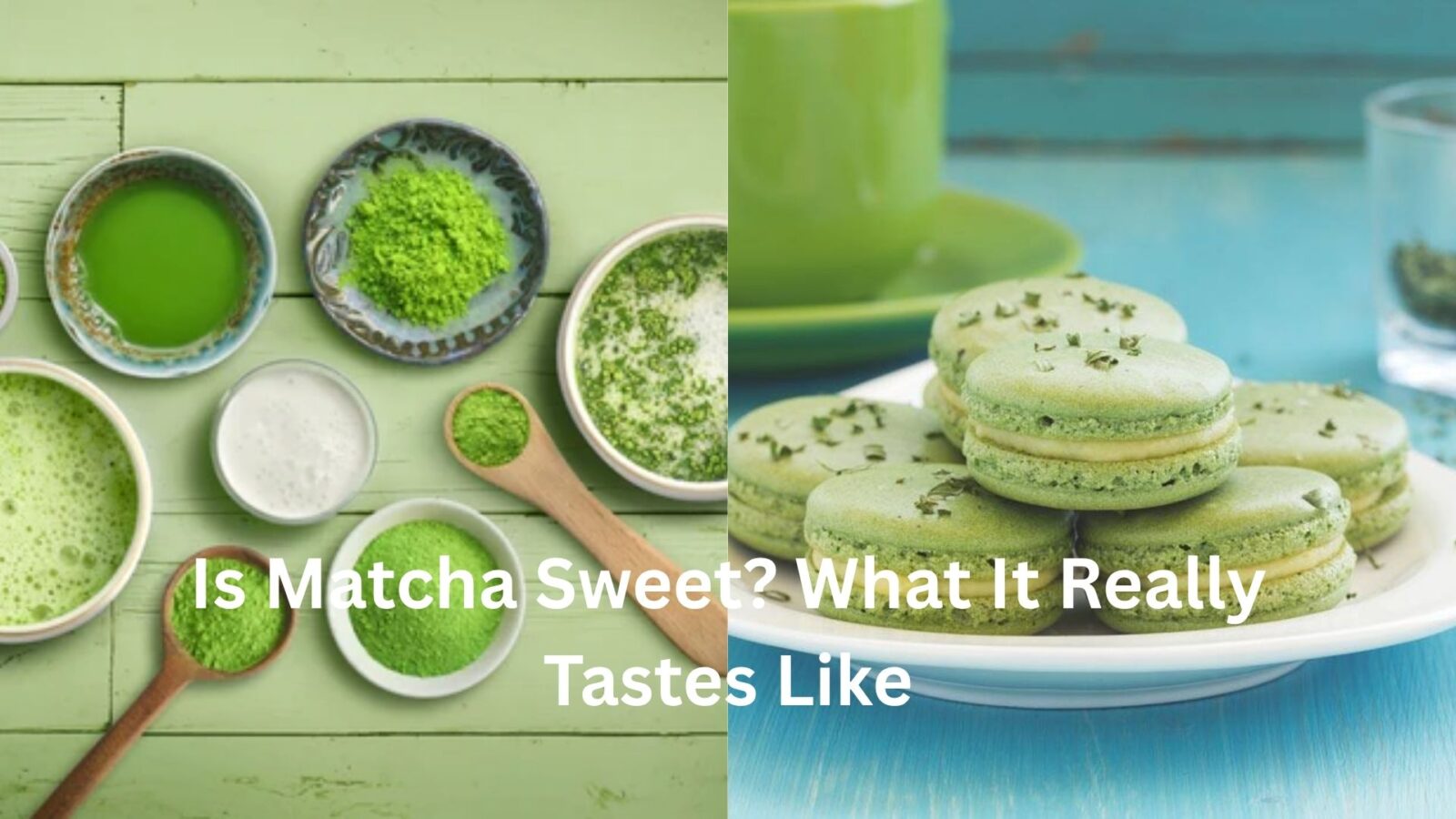
If you’re trying matcha for the first time, one question usually comes up before the first sip: is matcha sweet?
The short answer is no. Pure matcha isn’t naturally sweet in the way fruit, honey, or sweetened drinks are. But that doesn’t mean it tastes bitter either. Matcha sits in a more interesting place. Depending on the quality, preparation, and what you’re used to drinking, it can taste smooth, grassy, creamy, slightly vegetal, and even surprisingly mellow.
That’s why one person takes a sip and says, “Wow, that’s rich and smooth,” while another immediately reaches for sugar.
Understanding what matcha actually tastes like makes it much easier to enjoy and choose the right type.
Matcha Has Its Own Kind of Flavor
People often expect green tea powder to taste like regular tea. Then they try matcha and realize it’s something completely different.
Unlike standard green tea, where you steep the leaves and throw them away, matcha is made from finely ground tea leaves that you consume entirely. That creates a much fuller flavor.
The dominant taste in quality matcha is something called umami. If you’ve heard the term before, it’s the savory depth found in foods like mushrooms, broth, parmesan cheese, and soy sauce.
Now, that doesn’t mean matcha tastes like soup.
It simply has a rich, rounded quality that balances out the natural bitterness and grassy notes. Many people describe it as earthy, creamy, or slightly sweet even though there isn’t much actual sweetness present.
That’s where the confusion often starts.
Why Some Matcha Tastes Sweeter Than Others
Not all matcha tastes the same.
A high-quality ceremonial-grade matcha can have a naturally smoother profile with very little bitterness. Some even leave a gentle sweet impression on your tongue.
Lower-quality matcha often tastes sharper, more astringent, and more bitter.
The difference begins long before the tea reaches your cup.
Tea plants used for matcha are shaded for several weeks before harvest. This process increases amino acids, especially L-theanine, which contributes to the tea’s softer, richer taste. Young leaves generally produce sweeter and more delicate matcha, while older leaves can create a stronger, harsher flavor.
Imagine biting into a perfectly ripe peach versus an unripe one. They’re technically the same fruit, but the experience is completely different.
Matcha works in a similar way.
The Sweetness People Think They’re Tasting
Here’s the thing: when people say matcha is sweet, they’re often talking about perceived sweetness rather than sugar-like sweetness.
Taste is complicated.
Certain flavors can create an impression of sweetness even when very little sugar is present. Matcha’s amino acids help soften bitterness and create a smooth finish that many drinkers interpret as mildly sweet.
It’s similar to how some nuts or oat milk can seem sweet despite containing little sugar.
A good example is drinking plain oat milk for the first time. Many people are surprised because it tastes sweeter than expected, even though no sugar has been added. Matcha can create a similar effect.
The sweetness is subtle. You’re not going to mistake it for a vanilla latte.
Why Coffee Drinkers Often Find Matcha Sweet
Your usual drink habits matter more than you might think.
Someone who drinks black coffee every morning may find matcha surprisingly gentle. Compared with the roasted bitterness of coffee, quality matcha can feel softer and smoother.
On the other hand, if you regularly drink flavored lattes, sweet iced coffees, or soda, matcha may initially seem bitter.
Taste preferences develop over time.
Many longtime matcha drinkers say the flavor changed dramatically for them after a few weeks. Notes they couldn’t detect at first became much more noticeable.
The grassy character started feeling refreshing rather than strange. The subtle sweetness became easier to recognize.
What Matcha Actually Tastes Like
Describing matcha is challenging because it combines several flavors at once.
Most people notice a few common characteristics:
- Grassy
- Earthy
- Vegetal
- Creamy
- Slightly nutty
- Savory
- Mildly bitter
- Smooth
The balance between these flavors depends heavily on quality.
Premium matcha often feels silky and rounded. Lower-grade matcha can taste rougher and more bitter.
If you’ve ever eaten spinach, seaweed, or fresh greens, some of those plant-like notes may feel familiar. Matcha simply delivers them in a more concentrated form.
Does Matcha Need Sweetener?
Not necessarily.
Many traditional matcha drinkers enjoy it completely plain. When prepared properly, quality matcha can be satisfying without adding anything.
That said, there’s no rule saying you have to drink it that way.
If you’re new to matcha, adding a small amount of sweetener can help bridge the gap while you get used to the flavor.
A teaspoon of honey, maple syrup, or a flavored milk can soften the grassy notes and make the drink more approachable.
Let’s be honest. Plenty of people discover matcha through café lattes rather than traditional tea ceremonies.
That’s perfectly fine.
Enjoying matcha with milk and a little sweetness doesn’t make it less legitimate.
Why Matcha Lattes Taste Sweet
Many people first encounter matcha through a bright green latte from a coffee shop.
Those drinks often create the impression that matcha itself is sweet.
In reality, the sweetness usually comes from added ingredients.
Milk contributes natural sugars, particularly dairy milk. Many cafés also add syrups, sweetened matcha blends, vanilla flavoring, or other sweeteners.
A sweet matcha latte may contain significant added sugar, even though pure matcha contains very little.
That’s why someone who loves matcha lattes can be shocked when they try traditional matcha for the first time.
The green color is familiar.
The flavor is not.
Ceremonial Grade vs Culinary Grade
If you’re wondering whether matcha will taste sweet, the type you buy matters.
Ceremonial Grade Matcha
Ceremonial-grade matcha is designed to be enjoyed on its own.
It usually offers a smoother texture, richer umami, lower bitterness, and a more delicate finish. This is where you’ll find the subtle sweetness people often talk about.
Culinary Grade Matcha
Culinary-grade matcha is intended for recipes, smoothies, baked goods, and lattes.
It generally has a stronger flavor profile that can stand up to milk, sugar, and other ingredients.
On its own, culinary matcha often tastes more bitter and less sweet than ceremonial-grade options.
For someone drinking matcha plain, the difference can be surprisingly noticeable.
Temperature Makes a Difference
A common beginner mistake is using boiling water.
Hotter isn’t better when it comes to matcha.
Water that’s too hot can pull out more bitterness and make the drink taste harsher. Many matcha enthusiasts prefer water around 160°F to 175°F (70°C to 80°C).
A simple change in temperature can dramatically affect the flavor.
I’ve seen people dismiss matcha after one unpleasant, bitter cup, only to enjoy it later when prepared properly.
The tea didn’t change.
The technique did.
Can Matcha Ever Be Naturally Sweet?
Yes, but it’s important to keep expectations realistic.
Even exceptional matcha won’t taste like candy, fruit juice, or sweetened coffee drinks.
The sweetness is delicate.
Think of the natural sweetness in fresh vegetables, roasted nuts, or high-quality milk. It’s present, but it doesn’t dominate.
The best matcha balances sweetness, umami, and mild bitterness in a way that feels harmonious rather than sugary.
That’s part of what makes it appealing.
Every sip has a little complexity.
How Beginners Usually React to Matcha
First impressions tend to fall into a few categories.
Some people love matcha immediately. They enjoy the earthy depth and creamy texture from the first cup.
Others find it unusual but interesting.
Then there are those who take a sip and wonder why everyone is obsessed with what seems like liquid grass.
All of those reactions are normal.
Matcha is one of those flavors that often grows on people. Similar things happen with black coffee, dark chocolate, olives, or certain cheeses. The flavors become more appealing as your palate gets familiar with them.
That doesn’t mean everyone will eventually love it.
But it does mean your first sip probably won’t tell the whole story.
The Bottom Line on Matcha Sweetness
So, is matcha sweet?
Pure matcha isn’t naturally sweet in the sugary sense. Instead, high-quality matcha offers a subtle sweetness balanced by earthy, grassy, and savory flavors. The better the matcha, the smoother and less bitter it tends to be.
If your experience comes from sweetened matcha lattes, plain matcha may surprise you at first. Yet many people grow to appreciate its complexity and the gentle sweetness hidden beneath the surface.
The best way to find out where you stand is simple: try a good-quality matcha prepared correctly. You may discover that sweetness isn’t the main attraction. It’s the balance of flavors that keeps people coming back for another cup.